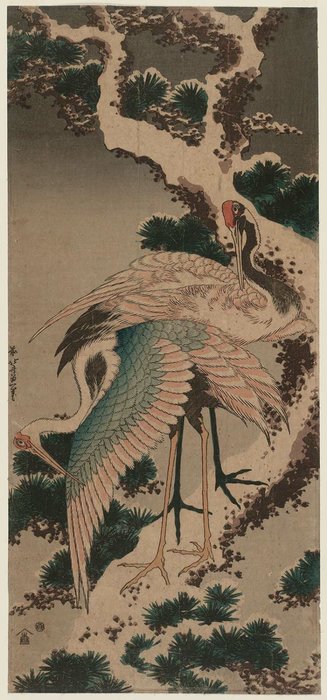
Discover 'Cranes On Snowladen Pine,' a traditional East Asian ink and watercolor artwork showcasing elegant cranes amidst a serene winter landscape. Perfect for art collectors seeking harmony, longevity, and cultural beauty.
江戸 (東京)
日本
葛飾北斎
葛飾復刻、北辰一雄
浮世絵の巨匠・葛飾北斎。『神奈川沖浪裏』や富士山シリーズで世界を魅了。
大胆な構図と鮮やかな色彩が特徴。
ジャポニスムに影響を与え、現代アートにも多大な足跡を残しました。
浮世絵
印象派
中国の山水画
1760年10月31日
1849年5月10日
葛飾北斎
日本
神奈川沖浪裏
百都名所図屏風
1
葛飾北斎の最も有名な浮世絵シリーズは何ですか?
Exquisite Subject and Symbolism
This captivating artwork features a majestic crane amidst a tranquil, snow-laden pine landscape, embodying the timeless beauty of nature and the profound symbolism rooted in East Asian culture. The crane, revered as a symbol of longevity, nobility, and good fortune, gracefully stands as the focal point, its elongated neck and delicate feathers rendered with meticulous detail. Surrounded by stylized pine trees and flowing natural elements, the scene evokes a sense of harmony, serenity, and reverence for the natural world. The subtle hints of pink and red on the crane’s head add a touch of vitality, contrasting beautifully with the muted greens and browns of the landscape, enhancing the overall sense of peaceful elegance.
Masterful Style and Technique
Created in the traditional East Asian ink and watercolor style, this artwork exemplifies the finesse of ukiyo-e aesthetics. The artist employs delicate brushwork, emphasizing fine lines and subtle tonal variations that bring the scene to life. The composition balances simplicity with expressive detail, capturing the fluidity of the crane’s form and the organic shapes of the surrounding foliage. The diffuse lighting and gentle gradations evoke ambient daylight filtering through the landscape, creating a soft, immersive atmosphere. This technique not only highlights the artist’s mastery of brushwork but also invites viewers to experience the tranquil mood and spiritual depth of the scene.
Historical Context and Cultural Significance
Rooted in the rich tradition of Japanese ukiyo-e art, this piece reflects a period when nature and symbolism were central themes in artistic expression. The crane, often depicted in classical Japanese art, symbolizes longevity and good fortune, making this work a meaningful addition to any collection. The snow-laden pine further emphasizes resilience and enduring strength, resonating with themes of perseverance and hope. As a product of traditional techniques passed down through generations, this artwork embodies the cultural heritage and aesthetic ideals of Edo-period Japan, offering viewers a glimpse into the spiritual and artistic values of that era.
Emotional Impact and Artistic Inspiration
This artwork evokes a profound sense of peace and introspection, inviting viewers to pause and reflect on the delicate balance of nature. The harmonious composition and refined execution inspire a sense of calm and reverence, making it an ideal piece for creating a serene atmosphere in any space. Whether displayed in a private collection, a sophisticated interior, or a cultural setting, this hand-painted reproduction serves as a timeless reminder of nature’s grace and resilience. Its emotional depth and artistic elegance make it a treasured piece for art lovers, collectors, and interior designers seeking to infuse their environment with beauty, symbolism, and tranquility.