The Dance Of The Chrysanthemum Boy: A Portrait of Harmony and Artistic Legacy
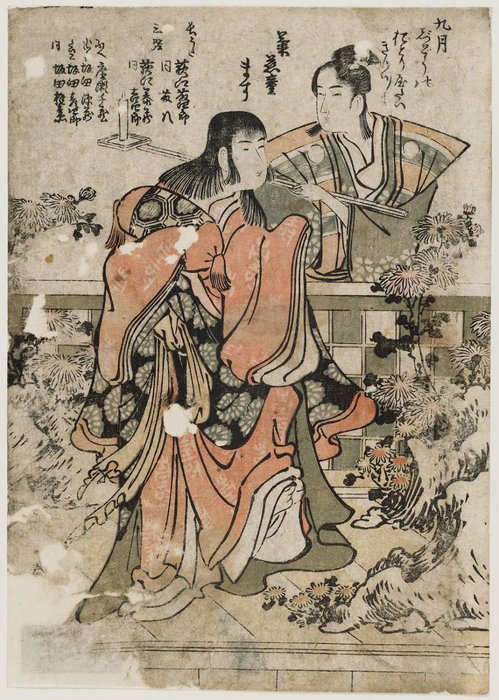
Katsushika Hokusai’s *The Dance Of The Chrysanthemum Boy*, created circa 1829, stands as a testament to the enduring power of Japanese art and its profound influence on Western aesthetics. More than just a depiction of two women engaged in conversation amidst a tranquil garden setting—a scene commonplace in Edo-period prints—this artwork embodies a deeper exploration of femininity, artistic collaboration, and the delicate balance between nature and human emotion.
- Subject Matter: The painting portrays two elegantly dressed women interacting peacefully. One woman speaks intently while listening attentively to her companion, fostering an atmosphere of connection and mutual respect. A potted chrysanthemum plant serves as a subtle focal point, symbolizing longevity and purity—values central to Japanese culture.
- Style & Technique: Executed in the traditional ukiyo-e style, *The Dance Of The Chrysanthemum Boy* exemplifies Hokusai’s masterful command of woodblock printing. The artist skillfully employs Prussian blue pigment – a revolutionary color imported from Europe during this period—to achieve breathtaking realism and luminosity within the monochrome palette characteristic of the genre. Precise linework and subtle shading contribute to an overall sense of serenity and understated beauty.
- Historical Context: Produced during Hokusai’s prolific output, *The Dance Of The Chrysanthemum Boy* reflects the artistic sensibilities of the Bunsei era (1829–1849). This period witnessed a flourishing of artistic experimentation, fueled by increasing engagement with Western ideas and influences. Hokusai's work aligns with broader trends toward portraying idealized female figures—a recurring motif in ukiyo-e prints—and capturing fleeting moments of everyday life.
- Symbolism: The chrysanthemum itself carries significant symbolic weight in Japan, representing imperial authority, nobility, and resilience. Its inclusion within the composition underscores themes of grace, refinement, and enduring beauty. Furthermore, the serene garden setting symbolizes harmony with nature – a core principle of Japanese philosophy and art.
- Emotional Impact: *The Dance Of The Chrysanthemum Boy* transcends mere visual representation; it evokes feelings of tranquility, contemplation, and appreciation for human connection. Hokusai’s ability to convey emotion through subtle gestures and facial expressions speaks to the enduring power of artistic expression—a legacy that continues to inspire artists and collectors alike.
This exquisite reproduction captures the essence of Hokusai's vision, allowing viewers to experience the beauty and sophistication of Edo-period art firsthand. Its placement in a thoughtfully curated interior space would undoubtedly enhance its visual impact and contribute to an atmosphere of refined elegance.