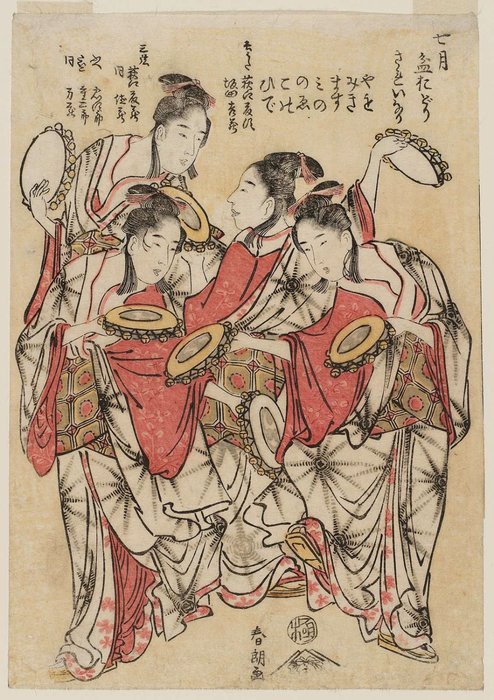
A Celebration of Rhythm and Tradition: Katsushika Hokusai’s “The Bon Festival Dance”
Katsushika Hokusai, a titan amongst ukiyo-e artists, transcends mere printmaking; he embodies the spirit of Edo Japan—a period defined by vibrant cultural exchange and an unwavering devotion to artistic innovation. Born in Tokyo around 1760, Hokusai’s journey wasn't one paved with privilege but forged through relentless dedication – a young boy diligently sketching alongside his father, a mirror maker, demonstrating an early aptitude for visual representation that would propel him into unparalleled fame. This formative influence instilled within him a lifelong fascination with observation and meticulous detail, qualities that would become hallmarks of his oeuvre.
- Subject Matter: The painting captures a pivotal moment in Japanese culture – the Bon Festival Dance (Shichigatsu Bon odori sairei nari), a ritualistic performance commemorating the seventh month of the lunar calendar. These dances are deeply rooted in Shinto beliefs and symbolize renewal, fertility, and gratitude for the harvest season.
- Style: Hokusai’s masterful execution aligns perfectly with the prevalent Romantic style of his time, prioritizing expressive brushwork and capturing fleeting moments of emotion rather than striving for photographic realism. The dynamism of the dance is brilliantly conveyed through swirling lines and vibrant colors.
Technique and Composition: Mastering Woodblock Printing
The artwork’s breathtaking beauty stems from Hokusai's mastery of woodblock printing, a technique perfected during the Edo period. Skilled artisans meticulously carved intricate designs onto wooden blocks—typically maple—before applying ink to create multiple impressions on paper. This process allowed for rapid dissemination of artistic ideas and ensured that images reached a vast audience. The artist’s use of Prussian blue pigment – an accidental discovery imported from Europe – dramatically expanded the palette available to ukiyo-e artists, adding depth and luminosity to landscapes and depictions of everyday life. Notice how the artist skillfully utilizes perspective—though stylized—to create a sense of space and movement within the frame.
Symbolism and Emotional Resonance: Capturing the Essence of Ritual
Beyond its aesthetic merits, “The Bon Festival Dance” speaks volumes about Edo society’s spiritual values. The five women performing embody grace and devotion as they execute their movements with precision and joy. Their scarlet attire symbolizes purity and vitality—essential elements in Shinto rituals aimed at ensuring prosperity and safeguarding the community. The artist's careful attention to detail – from the folds of the dancers’ robes to the expressions on their faces – elevates this scene beyond mere representation, conveying a profound sense of communal celebration and reverence for tradition.
Legacy and Influence: An Enduring Icon
“The Bon Festival Dance” stands as an enduring testament to Hokusai's genius and his indelible impact on Western art history. Impressionists like Claude Monet were profoundly moved by the print’s bold use of color and its ability to capture atmospheric conditions—a breakthrough achievement for artistic expression at the time. Its influence extends far beyond painting, inspiring artists across disciplines and cementing Hokusai’s place as one of Japan's greatest cultural icons. The image continues to captivate audiences today, reminding us of the power of art to transcend time and communicate universal themes of beauty, movement, and spiritual contemplation.