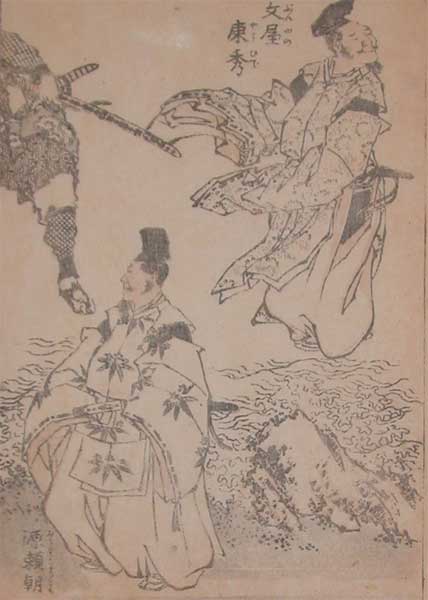
A Portrait of Literary Reverence: Katsushika Hokusai’s “The Poet Bunya no Yasuhide”
Katsushika Hokusai's "The Poet Bunya no Yasuhide," part of his celebrated series *Six Immortal Poets* (*Rokkasen*), transcends mere visual representation; it embodies a profound meditation on honor, duty, and the enduring legacy of classical scholarship. Executed around 1805-1815 during Hokusai’s prolific artistic output—a period marked by experimentation with new styles and techniques—this woodblock print offers a glimpse into Edo-period Japan's intellectual landscape alongside its aesthetic sensibilities. The artwork’s enduring appeal lies not only in its masterful composition but also in the subtle symbolism woven throughout, reflecting Hokusai’s deep understanding of Confucian ideals and his ability to translate them into captivating visual form.
- Subject Matter: The print depicts Bun'ya no Yasuhide (1736-1813), a prominent scholar and poet who served as an official under Emperors Seiwa and Yōzei, representing the pinnacle of literary achievement in his era.
- Style & Technique: Characteristic of Hokusai’s *Ukiyo-e* style—renowned for its bold lines, vibrant colors, and dynamic perspectives—the print utilizes a combination of *nishiki-e*, or polychrome printing, and *bokashi,* shading techniques to create an illusion of depth and luminosity.
- Composition: The central figure dominates the frame, positioned in a contemplative stance with outstretched arms, symbolizing aspiration and engagement with intellectual pursuits. Surrounding him are two attendants, reinforcing the importance of scholarly companionship and tradition.
Historical Context & Confucian Influence
“The Poet Bunya no Yasuhide” speaks directly to the Confucian values prevalent in Edo Japan—respect for elders, loyalty to rulers, and the pursuit of moral excellence. Bun'ya no Yasuhide’s posture and attire reflect these ideals, emphasizing the importance of upholding social hierarchy and honoring scholarly tradition. Hokusai skillfully captures this spirit within a visual narrative that resonates with audiences across centuries. The print’s placement within *Rokkasen*, a series dedicated to commemorating influential poets, underscores its significance as a tribute to intellectual prowess and moral virtue—a cornerstone of Japanese culture.
Symbolism & Artistic Expression
Beyond its depiction of a historical figure, the artwork is laden with symbolic meaning. The flowing robes of Yasuhide convey dignity and composure, while his outstretched arms represent openness to knowledge and contemplation. The attendants flanking him symbolize support for scholarly endeavors and reinforce the importance of collaborative learning. Hokusai’s masterful use of *bokashi* shading creates a sense of serenity and depth, mirroring the contemplative mood conveyed by the subject matter—a testament to his artistic genius and his ability to evoke emotion through visual imagery.
Legacy & Influence
“The Poet Bunya no Yasuhide” stands as an exemplar of Hokusai’s artistic vision—a fusion of meticulous observation, technical virtuosity, and profound philosophical reflection. Its influence extends beyond Japan, inspiring Impressionist artists like Monet and Van Gogh who sought to capture the beauty of nature with bold colors and expressive brushstrokes. Today, a high-quality reproduction allows viewers to appreciate Hokusai’s enduring legacy—a celebration of intellectuality and artistic innovation that continues to captivate audiences worldwide.