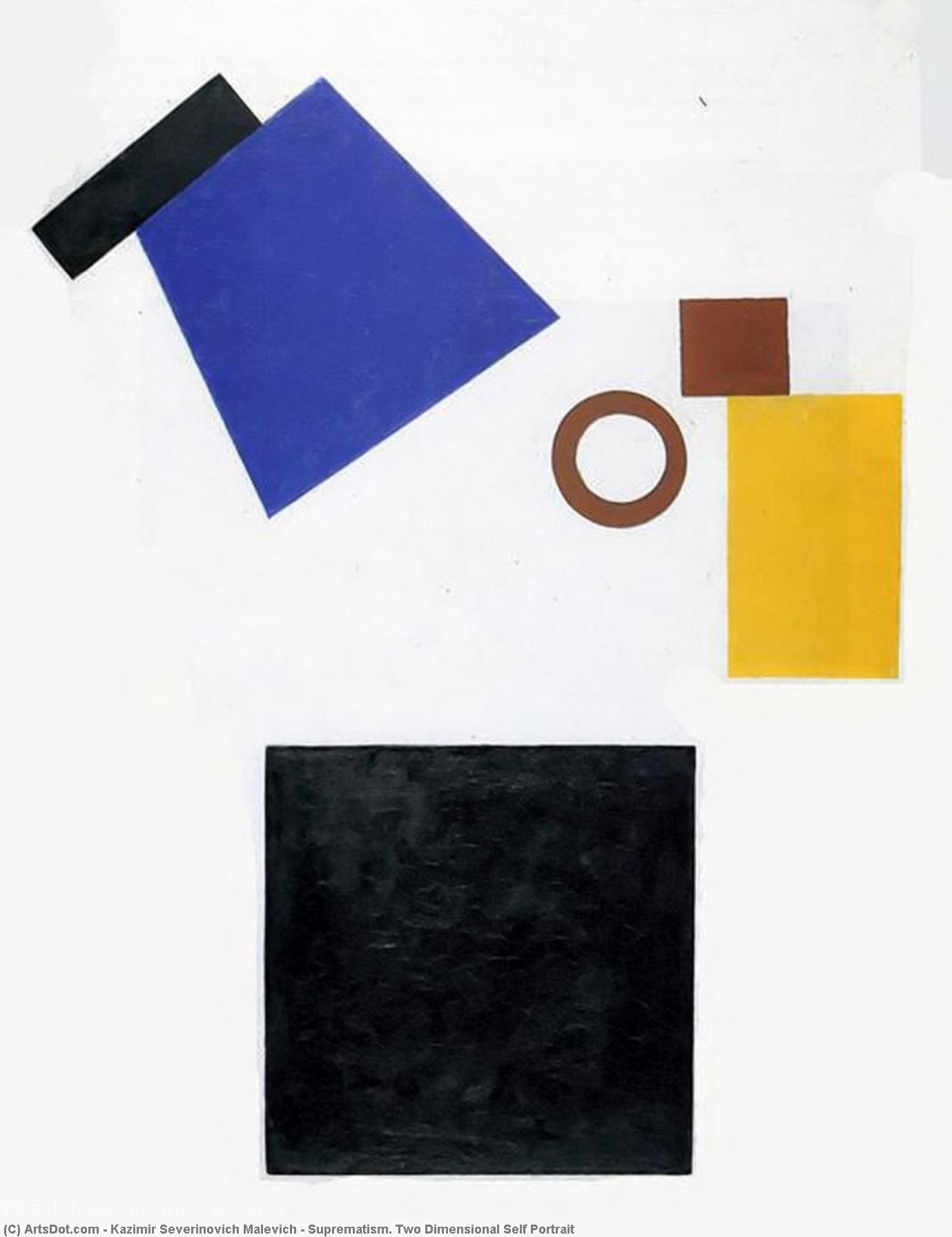
Explore Kazimir Malevich’s Suprematism. Two Dimensional Self Portrait (1915). A pioneering geometric abstraction showcasing pure feeling & order in a minimalist composition.
カジミール・マレーヴィチ(1878-1935): Suprematismの創始者であり、抽象芸術の先駆者。黒方や白の中に白といった革新的な作品で知られ、20世紀美術に多大な影響を与えました。
A Radical Departure: Kazimir Malevich’s ‘Suprematism. Two Dimensional Self Portrait’
Kazimir Malevich's 'Suprematism. Two Dimensional Self Portrait,' painted in 1915, is not a likeness in the traditional sense, but rather a profound statement about the very essence of painting and self-representation. This pivotal work embodies the core principles of Suprematism – an art movement founded by Malevich that sought to liberate art from the constraints of depicting the visible world. Measuring 80 x 62 cm, this composition is a deceptively simple arrangement of geometric forms on a stark white ground, yet it carries immense historical and philosophical weight.
Deconstructing Representation: Style & Technique
The artwork’s style is unequivocally Suprematist – characterized by its radical abstraction and rejection of representational imagery. Malevich eschews any attempt to mimic reality, instead focusing on the pure relationships between color and shape. The composition features five distinct rectangles in blue, yellow, brown, and black, meticulously arranged against a white background. The technique is remarkably flat and precise, with clean edges suggesting application with acrylics or similar mediums onto canvas or board. There’s no visible brushwork or texture; the surface appears smooth and deliberately impersonal. This deliberate lack of painterly gesture reinforces the idea that the artwork isn't about the artist’s hand, but about universal forms and feelings.
A New Visual Language: Composition & Form
The arrangement is carefully balanced, creating a sense of dynamic equilibrium. The composition subtly follows a triangular structure, anchored by a black square at the bottom and culminating in a blue rectangle at the apex. A yellow shape sits centrally above a brown square, establishing a visual hierarchy. These geometric forms aren’t merely shapes; they are ‘non-objective’ elements, existing solely for their own sake, devoid of any symbolic or representational meaning beyond their color and position. The white background isn't simply empty space but an active element – a field within which these forms interact and resonate. Depth is implied through overlapping, yet remains superficial, emphasizing the two-dimensional nature of the work.
Historical Context: The Birth of Pure Feeling
‘Suprematism. Two Dimensional Self Portrait’ emerged during a period of immense social and political upheaval in Russia, preceding and following the 1917 Revolution. Malevich believed that traditional art was tied to the material world and sought to create an art that expressed pure spiritual feeling – what he termed ‘supremacy.’ This artwork represents a pivotal moment in art history, marking a complete break from centuries of artistic tradition. It’s a visual manifesto declaring the independence of art from any obligation to depict or imitate reality. Malevich's theories, outlined in his writings like “From Cubism and Futurism to Suprematism” and "The Non-Objective World," profoundly influenced the development of abstract art throughout the 20th century.
Symbolism & Emotional Resonance
While deliberately non-representational, ‘Suprematism. Two Dimensional Self Portrait’ evokes a powerful emotional response. The stark simplicity and precise geometry convey a sense of order, clarity, and even detachment. The limited color palette contributes to this feeling of austerity. Some viewers perceive a spiritual quality in the work, seeing it as an attempt to access a higher realm of consciousness through pure form. The title itself is intriguing – a “self-portrait” rendered not through likeness but through abstract shapes, suggesting that true selfhood lies beyond physical appearance and resides in the realm of pure feeling.
For Collectors & Designers
This artwork, or a high-quality reproduction, offers a striking statement piece for any collection or interior design scheme. Its minimalist aesthetic lends itself well to modern spaces, adding a touch of intellectual sophistication and historical significance. The bold colors and geometric forms can serve as a focal point in a room, sparking conversation and inspiring contemplation. ‘Suprematism. Two Dimensional Self Portrait’ is more than just an artwork; it's a testament to the power of abstraction and a landmark achievement in the history of modern art.