The Profound Weight of Sacrifice: Christ on the Cross
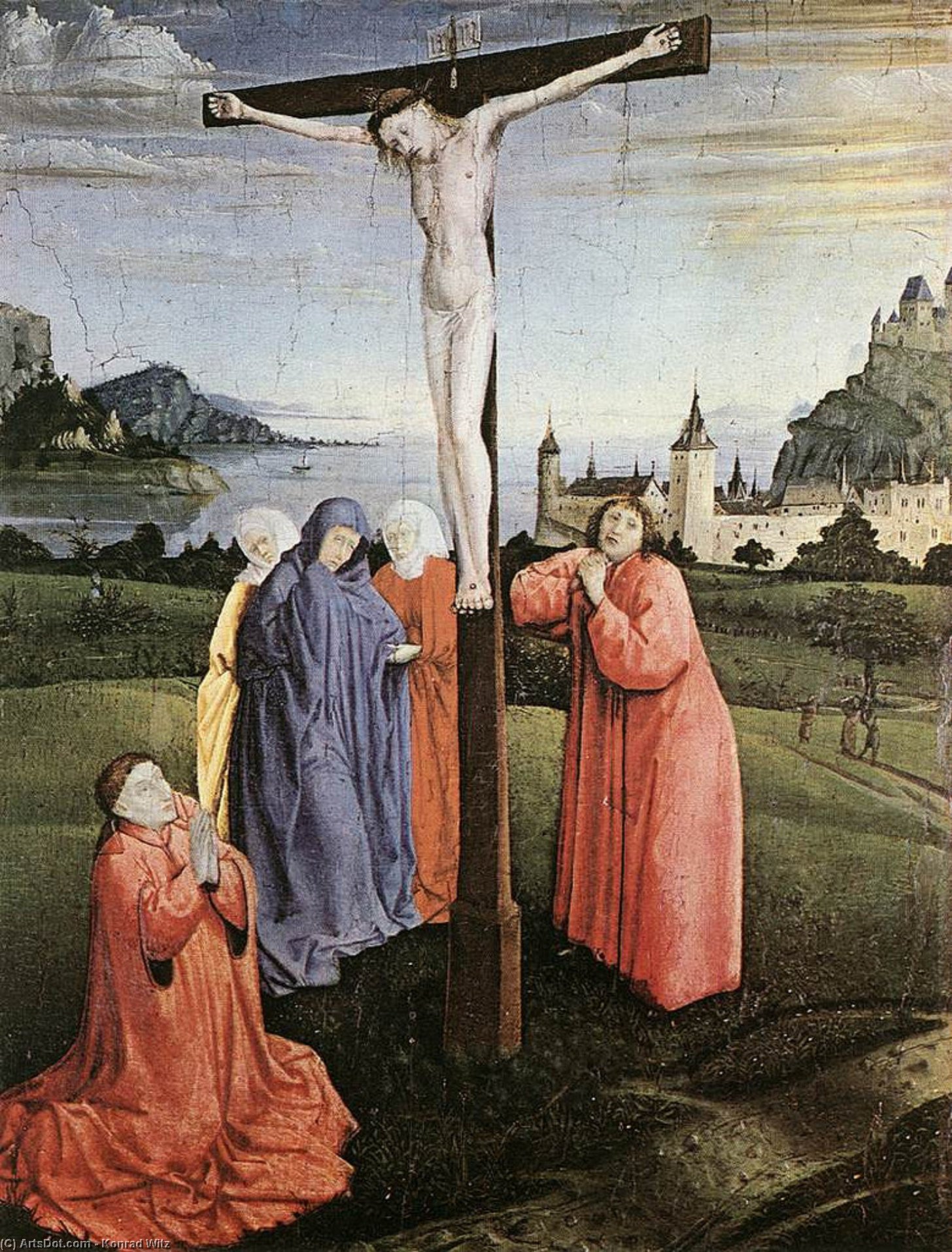
To stand before this depiction of Christ on the Cross is to confront one of humanity's most enduring and profound narratives. Painted in 1430, this work by Konrad Witz transcends mere religious illustration; it is a deeply felt meditation on sacrifice, suffering, and ultimate redemption. The composition immediately draws the eye to the central figure, Jesus, whose outstretched arms form a poignant geometry against the backdrop of rugged mountains. It is a scene charged with palpable emotion, capturing not just the physical moment, but the spiritual weight of divine love made manifest.
Mastery in Early Renaissance Realism
Konrad Witz, an artist pivotal to the transition between Gothic formality and burgeoning Renaissance naturalism, imbues this piece with a remarkable sense of immediacy. While his career saw him pioneer landscape painting, here, the setting—the distant mountains—serves not merely as decoration but as a monumental witness to the event unfolding below. Observe the handling of the figures surrounding the cross; they are rendered with an empathetic realism that speaks volumes. The two groups of mourners, positioned on either side and beneath, are caught in moments of profound grief or quiet contemplation. Witz masterfully balances the dramatic tension of the central crucifixion with the solemn, grounded humanity of those who bear witness.
Symbolism and Emotional Resonance
The symbolism woven into this canvas is rich and multilayered. The cross itself is the ultimate symbol of sacrifice, yet it is framed by the enduring permanence suggested by the mountainous landscape—a contrast between fleeting human agony and eternal divine promise. The surrounding figures embody different facets of devotion: shock, sorrow, acceptance. For the modern viewer, the emotional impact is immediate; one feels the gravity of the moment, a quiet ache that resonates with universal themes of loss and endurance. This painting invites the collector to pause, to breathe in the solemnity, and to contemplate the depth of human connection amidst ultimate suffering.
A Timeless Piece for Contemplative Spaces
For those seeking art that speaks to the soul, this reproduction offers an unparalleled opportunity. Its size, 34 x 26 cm, allows it to command attention without overwhelming a space—perfectly suited for a chapel niche, a formal study, or a thoughtfully decorated living area where contemplation is encouraged. Owning a piece echoing Witz’s pioneering spirit connects the admirer directly to the dawn of Renaissance artistic innovation. It is more than decoration; it is a devotional anchor, a visual poem rendered in paint that continues to evoke awe centuries later.
Technique and Craftsmanship
The technique employed showcases an advanced understanding of pictorial depth characteristic of the early 15th century. The interplay between the detailed drapery on the figures and the atmospheric perspective used for the background mountains gives the scene a breathtaking three-dimensionality. When considering a reproduction, one appreciates that this level of detail—the subtle modeling of flesh, the weight suggested in the folds of cloth—requires an expert hand to replicate faithfully. It is a testament to enduring craftsmanship, making it a treasured acquisition for any discerning art lover.