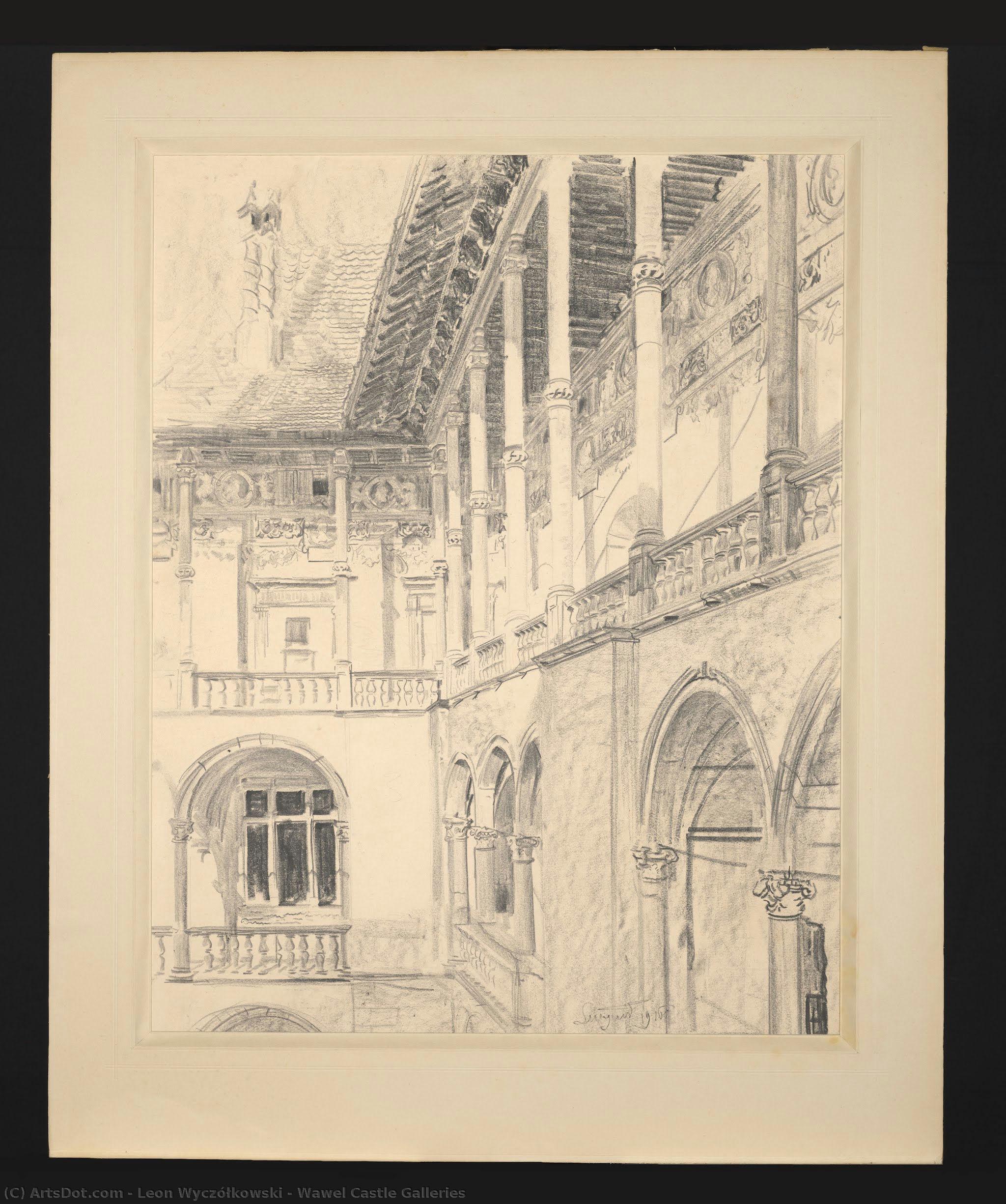
A Glimpse into Historical Grandeur: Wawel Castle Galleries
To gaze upon this evocative drawing of the Wawel Castle Galleries is to step across the threshold of time itself. The black and white medium lends an immediate air of timeless mystery, allowing the viewer to reconstruct not just a physical space, but an entire atmosphere steeped in centuries of Polish history. This image captures the quiet dignity of an architectural interior—a place where grand pronouncements and hushed secrets once mingled in the cool, echoing air.
Architectural Echoes and Compositional Harmony
The composition centers around a magnificent balcony, its structure defined by rhythmic windows that suggest both enclosure and connection to the outside world. The artist has masterfully rendered the interplay of light and shadow inherent in such grand halls. Notice the placement of the details: the stately clock mounted on one side acts as a silent sentinel, marking the passage of time against the permanence of stone. Further drawing the eye are the two simple chairs, positioned with an almost narrative thoughtfulness—one near the center, another slightly withdrawn to the right. They invite the imagination; who sat here? What conversations unfolded in this very spot?
The Hand of Leon Wyczółkowski: Realism and Atmosphere
Attributed to the hand of Leon Wyczółkowski, a master whose career spanned the vibrant currents of Polish modernism and profound realism, this work carries the weight of his observational skill. While Wyczółkowski is celebrated for his vivid depictions of everyday life, here he applies that keen eye to architecture. The technique, rendered in drawing, emphasizes texture—the cool smoothness of the stone, the delicate tracery of the windows, and the subtle patina of age on every surface. It speaks to a deep understanding not just of how things look, but how they feel after decades of human passage.
Symbolism of Place and Memory
The Wawel Castle itself is more than mere stone; it is the historical heart of Poland. By depicting its galleries, Wyczółkowski taps into potent symbolism—the enduring spirit of a nation housed within magnificent walls. The black and white palette strips away the distraction of color, forcing us to confront form, structure, and memory. It evokes a sense of noble melancholy, suggesting that while empires rise and fall, the beauty of thoughtful design remains an anchor to our shared human experience.
Bringing History Home: For the Collector and Designer
For those who cherish historical depth or seek inspiration for interiors echoing classical grandeur, this reproduction offers unparalleled resonance. It is not merely a picture of a room; it is a curated moment of contemplation. Imagine this drawing adorning a space—it lends an immediate patina of cultured sophistication, suggesting that the inhabitant appreciates history's narrative weight. Owning this piece allows one to curate an atmosphere of enduring elegance, transforming any gallery wall into a portal back to Poland’s storied past.