A Mechanical Reverie: Decoding Leonardo da Vinci’s Codex Madrid I, f.14r
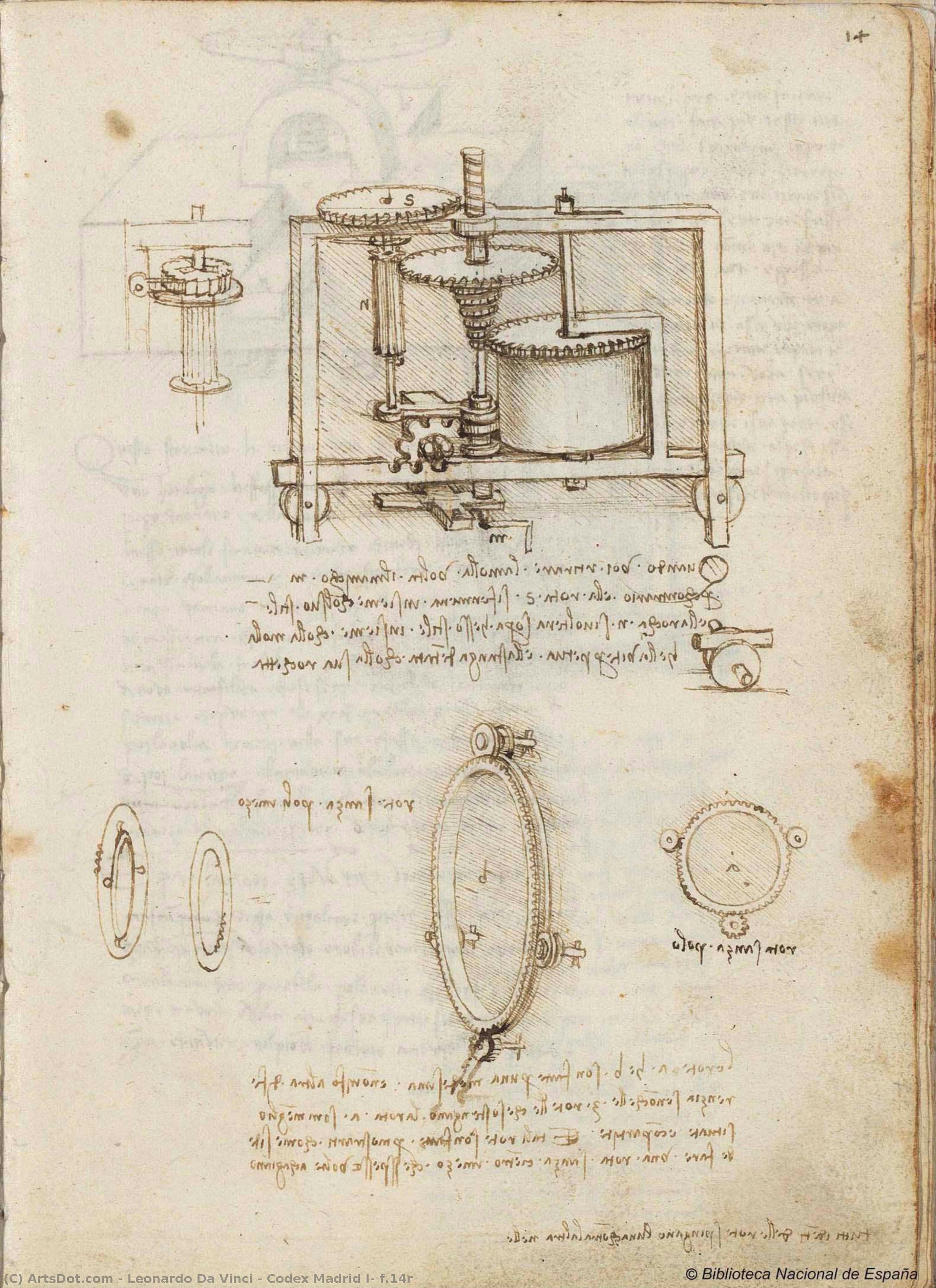
The Codex Madrid I, folio 14 recto – a deceptively simple drawing executed by Leonardo da Vinci – transcends its visual appearance to offer a profound glimpse into the mind of one of history's greatest innovators. More than just an illustration, it embodies Da Vinci’s relentless pursuit of understanding the natural world through meticulous observation and imaginative reconstruction. This page, housed in the Biblioteca Nacional de España, isn’t merely depicting a machine; it’s articulating a conceptual framework—a testament to Da Vinci’s belief that scientific inquiry could illuminate artistic expression.
- Subject Matter: The drawing portrays a complex apparatus designed for extracting oil from olives. While seemingly pragmatic, its construction is rendered with astonishing detail, showcasing Da Vinci's mastery of anatomical accuracy and spatial perspective.
- Style & Technique: Executed in ink and watercolor on parchment, the Codex Madrid I exemplifies Da Vinci’s signature style—characterized by precise linework combined with subtle tonal variations achieved through watercolor washes. The artist skillfully employs hatching and cross-hatching to convey depth and texture, capturing the essence of the machine's mechanics.
The historical context surrounding this drawing is crucial to appreciating its significance. Da Vinci was actively engaged in exploring the intersection between art and science during his Florentine period, a time marked by burgeoning humanist ideals and advancements in engineering. He wasn’t simply documenting an invention; he was grappling with fundamental questions about how observation could inform creativity—a dialogue that continues to resonate within the artistic community today. The meticulous labeling of components in Latin underscores Da Vinci's commitment to conveying knowledge accurately and universally, reflecting the spirit of Renaissance scholarship.
- Symbolism: Beyond its functional representation, the machine itself serves as a symbol of human ingenuity and the transformative power of reason. The circles scattered across the page aren’t merely decorative elements; they likely represent measurements or diagrams used to calculate the efficiency of the device—visual cues that reinforce Da Vinci's scientific methodology.
- Emotional Impact: Viewing Codex Madrid I evokes a sense of wonder and contemplation. It invites us to consider Da Vinci’s unwavering dedication to unraveling the mysteries of existence, reminding us that true artistry lies in bridging the gap between observation and imagination.
This remarkable drawing stands as an enduring emblem of Leonardo da Vinci's genius—a captivating fusion of artistic skill and scientific curiosity. Its reproduction offers a tangible connection to one of the most influential figures of the Renaissance, allowing admirers to immerse themselves in the intellectual fervor that fueled his groundbreaking achievements. A stunning addition to any art collection or interior design scheme, Codex Madrid I continues to inspire awe and provoke thought centuries after its creation.