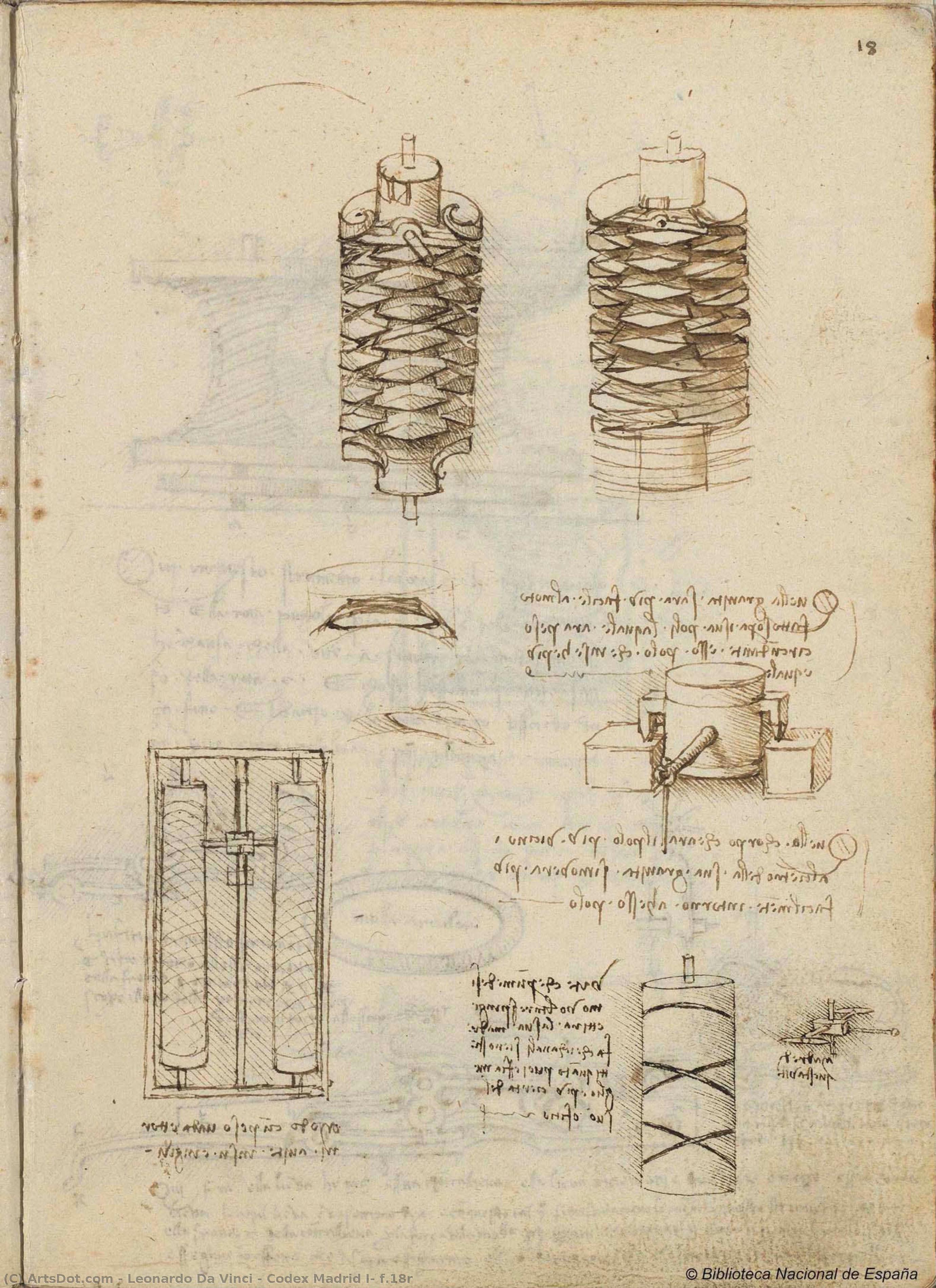
Examine Leonardo da Vinci’s Codex Madrid I, f.18r – intricate mechanical sketches showcasing his engineering genius & meticulous technique. A rare glimpse into the mind of a Renaissance master.
レオナルド・ダ・ヴィンチ (1452-1519): モナ・リザや最後の晩餐で知られるルネサンスの天才。スフマート技法、人体解剖学の研究、そして革新的な発明を紐解きます。
マドリードの芸術的遺産をAcción Cultural Española (AC/E)で探索しましょう!ゴヤやセンプルンの展示、現代アートのレジデンス、そしてスペインの文化的遺産を育む国際的なコラボレーションをご紹介します。
A Window into Da Vinci’s Mind: Decoding Codex Madrid I, f.18r
This remarkable page from Leonardo da Vinci’s *Codex Madrid I* offers a fascinating glimpse into the workshop of a true Renaissance polymath. Measuring just 22 x 15 cm, this isn't a finished artwork intended for display, but rather a vital component of Da Vinci’s relentless pursuit of knowledge – a visual brainstorming session captured on paper. The sheet is densely populated with sketches detailing various helical and spiral mechanisms, demonstrating his profound interest in mechanical principles.
Deconstructing the Design
The composition isn't focused on a single grand design; instead, it presents a fragmented yet interconnected series of ideas. We see meticulously rendered drawings of gears, screws, and spiraling forms – all executed with an unwavering technical precision. The style is distinctly that of an engineer’s draft rather than an artist’s rendering. Geometric shapes dominate: cylinders, cones, spirals, and rectangular components are precisely delineated using dark brown or black ink. The visible texture of the aged paper adds a layer of authenticity, grounding these futuristic concepts in their historical context. The use of one-point perspective within each sketch enhances the illusion of depth, while layering creates a sense of complex functionality.
Technique and Materials
Da Vinci’s mastery is evident in his linear pen and ink technique. Each line is deliberate, conveying not just shape but also an understanding of how these mechanisms would operate. The simplicity of the materials – paper and ink – belies the complexity of thought behind them. This wasn't about creating a beautiful image; it was about documenting, analyzing, and innovating. The even, diffused lighting in surviving photographs allows us to appreciate the subtle shading that gives form to the drawings.
Historical Context & Da Vinci’s Ingenuity
Created during an unknown period within Leonardo da Vinci's prolific career (1452-1519), this page exemplifies his role not just as a painter, but also as an engineer and inventor. His early apprenticeship with Andrea del Verrocchio instilled in him a deep understanding of both artistic principles *and* mechanical arts. The designs within the Codex likely relate to concepts of winding, spinning, or potentially even early ideas for textile production or other industrial processes – centuries ahead of their time. Da Vinci’s service to Ludovico Sforza in Milan demanded he design everything from military fortifications to elaborate stage sets, fostering a constant need for innovative mechanical solutions.
Symbolism and Emotional Resonance
While lacking overt symbolic elements, *Codex Madrid I, f.18r* is profoundly symbolic of the Renaissance spirit – a period defined by intellectual curiosity, scientific exploration, and a relentless pursuit of knowledge. The drawings themselves represent Da Vinci’s unwavering dedication to understanding the world around him and harnessing its principles for practical application. The emotional impact isn't one of immediate aesthetic pleasure, but rather of intellectual stimulation. It evokes a sense of wonder at the boundless capacity of human ingenuity and invites us to contemplate the origins of modern technology.
For Collectors & Interior Designers
A high-quality reproduction of *Codex Madrid I, f.18r* offers a unique statement piece for any collection or interior space. Its intricate details and historical significance make it ideal for studies, libraries, or living areas where intellectual curiosity is celebrated. The neutral color palette complements a variety of décor styles, while the technical aesthetic adds a touch of sophisticated minimalism. It’s more than just an image; it's a portal into the mind of one of history’s greatest thinkers.