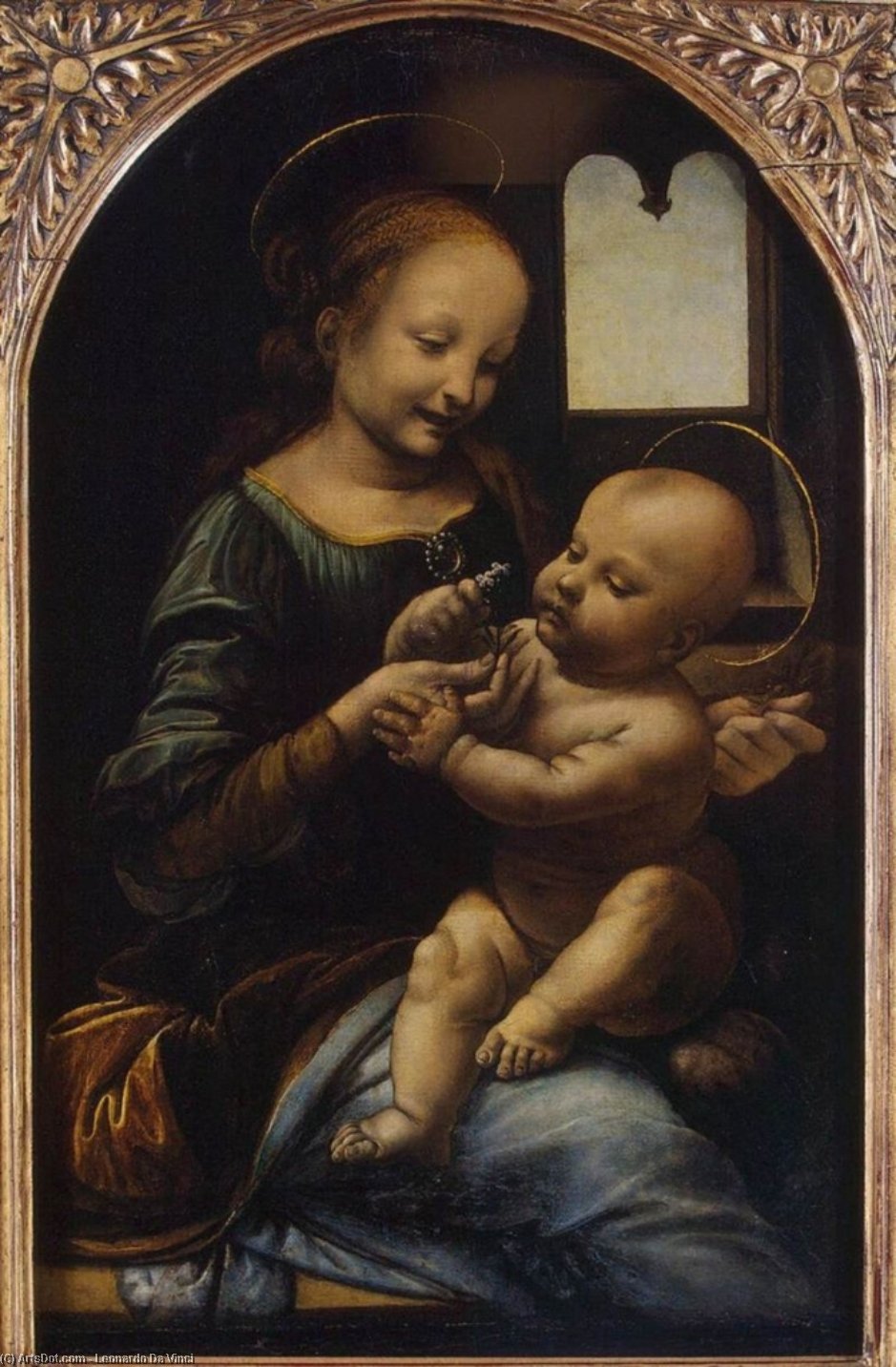
Madonna with a Flower (Madonna Benois): A Renaissance Masterpiece
- Title: Madonna with a Flower (Madonna Benois)
- Artist: Leonardo da Vinci
- Date: 1478
- Medium: Oil on Canvas
- Dimensions: 50 x 32 cm
- Location: The Hermitage Museum, St. Petersburg, Russia
Subject and Style
Leonardo da Vinci's "Madonna with a Flower," also known as the "Madonna Benois," is an early work showcasing his burgeoning genius within the High Renaissance period. This intimate portrait depicts the Virgin Mary tenderly holding the infant Jesus, who playfully reaches for a flower. The painting exemplifies Leonardo’s characteristic style – characterized by soft transitions (sfumato), subtle modeling of forms, and a focus on capturing human emotion with remarkable realism. Unlike some earlier depictions of the Madonna, this piece presents a more naturalistic portrayal, moving away from rigid formality towards a sense of gentle domesticity.
Technique and Composition
The painting's composition is carefully balanced, drawing the viewer’s eye to the central figures of Mary and Jesus. Leonardo masterfully employs sfumato – a technique involving subtle gradations of light and shadow – to soften outlines and create an ethereal quality. This contributes significantly to the overall sense of serenity and grace. The use of oil paint allowed for rich color blending and delicate details, evident in the folds of Mary’s garments and the soft texture of Jesus' skin. Preliminary sketches found in the British Museum offer a glimpse into Leonardo’s meticulous process, revealing his exploration of different poses and expressions before committing to the final composition.
Historical Context and Symbolism
Created around 1478, "Madonna with a Flower" represents an early stage in Leonardo's artistic development, shortly after leaving Verrocchio’s workshop. It reflects the evolving artistic trends of the time, moving towards greater naturalism and human emotion. The flower held by Jesus is laden with symbolism; it can be interpreted as representing innocence, purity, and even a prefiguration of Christ's future sacrifice – a subtle reminder of his impending Passion. The distant landscape in the background adds depth to the scene while maintaining focus on the intimate connection between mother and child.
Emotional Impact and Legacy
“Madonna with a Flower” evokes a profound sense of tenderness, peace, and maternal love. The gentle expressions on Mary’s face and Jesus' playful gesture create an emotionally resonant image that transcends religious boundaries. This painting has had a lasting impact on art history, influencing countless artists who sought to capture the beauty and intimacy of human relationships. Its enduring appeal lies in its ability to convey universal themes of motherhood, innocence, and divine grace – making it a timeless masterpiece cherished by art lovers worldwide.