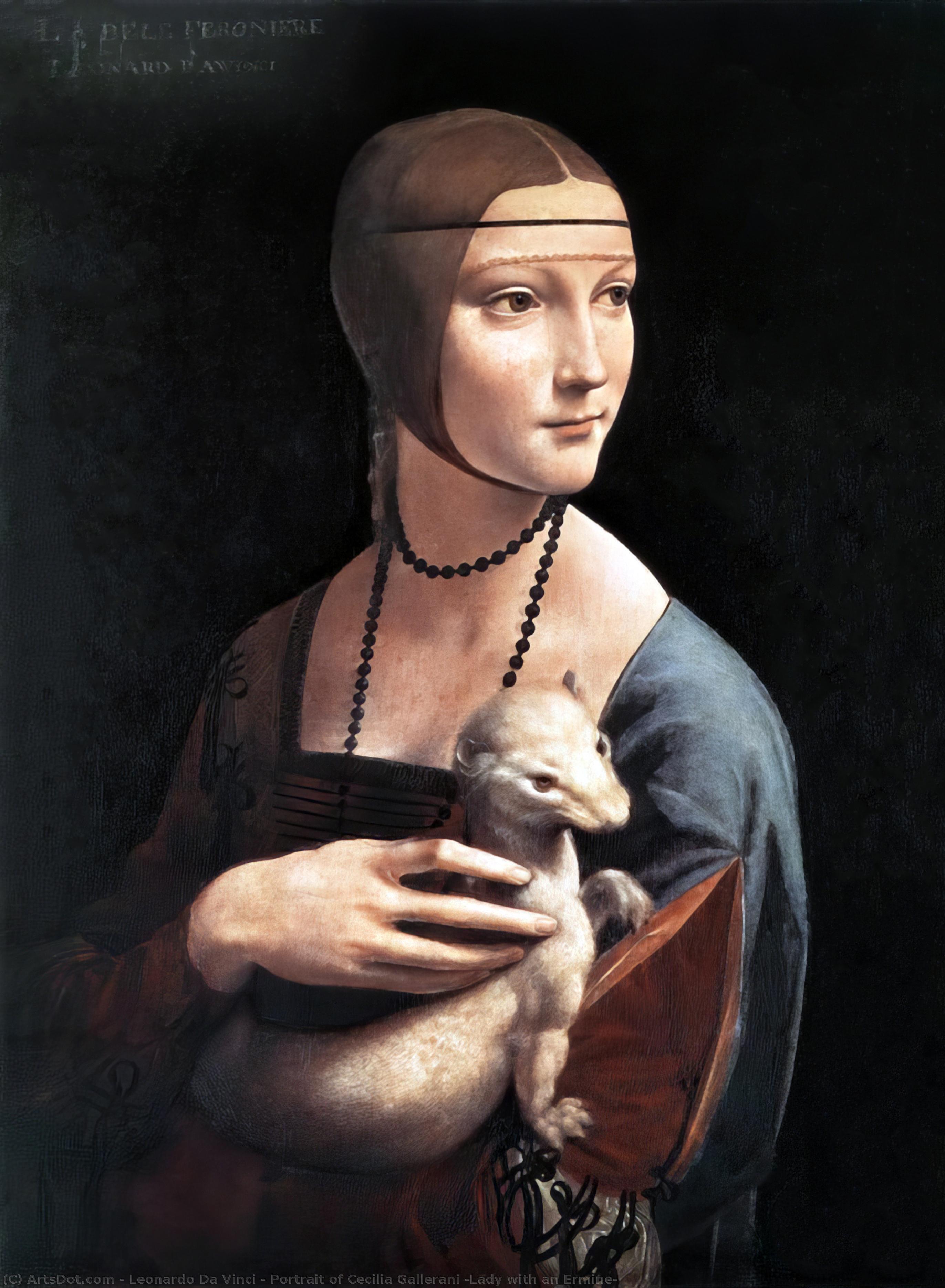
Capturing the ethereal beauty of Cecilia Gallerani through masterful sfumato, Leonardo da Vinci's Renaissance masterpiece Lady with an Ermine offers a profound sense of mystery and grace for your private collection.
レオナルド・ダ・ヴィンチ (1452-1519): モナ・リザや最後の晩餐で知られるルネサンスの天才。スフマート技法、人体解剖学の研究、そして革新的な発明を紐解きます。
The Breath of Life in Milanese Shadow
To gaze upon Leonardo da Vinci’s Portrait of Cecilia Gallerani is to enter a silent dialogue with the Renaissance itself. Created during the height of his tenure at the court of Ludovico Sforza in Milan, this masterpiece transcends the boundaries of traditional portraiture. It does not merely present a likeness of the beautiful Cecilia Gallerani; it captures a fleeting moment of consciousness. As she turns her head in a delicate three-quarter pose, her eyes seem to follow an unseen presence, inviting the viewer into a world of quiet contemplation and courtly intrigue. For the discerning collector, this painting offers more than visual beauty; it provides a window into the very soul of an era defined by humanism and intellectual rebirth.
A Symphony of Light and Texture
The technical brilliance of Leonardo is nowhere more evident than in his pioneering use of sfumato. By masterfully blurring edges and softening contours, he eliminates the harsh outlines of reality, enveloping Cecilia in a luminous, hazy atmosphere that feels almost ethereal. This technique allows for a seamless transition between light and shadow, lending a three-dimensional vitality to her features. One cannot help but be mesmerized by the tactile precision with which Leonardo renders the world; the velvety softness of the ermine’s fur contrasts breathtakingly with the delicate, pearlescent sheen of Cecilia’s skin. For interior designers, such a piece serves as a profound focal point, bringing a sense of depth, texture, and atmospheric mystery to any curated space.
Symbolism and the Eternal Legacy
Beyond its aesthetic splendor, the painting is a complex tapestry of hidden meanings. The ermine, held with grace in Cecilia’s arms, is far more than a mere companion; it is a potent symbol of purity, nobility, and virtue. Through this creature, Leonardo subtly weaves classical mythology into the portrait, perhaps alluding to the myth of Galanthis, thereby elevating the subject's status through divine association. This layer of intellectual depth makes the artwork an essential acquisition for those who value art that speaks in whispers. Whether displayed as a grand centerpiece or a subtle accent, a high-quality reproduction of this work brings an unparalleled sense of history, sophistication, and timeless elegance to the modern home, echoing the enduring genius of Da Vinci’s incomparable vision.