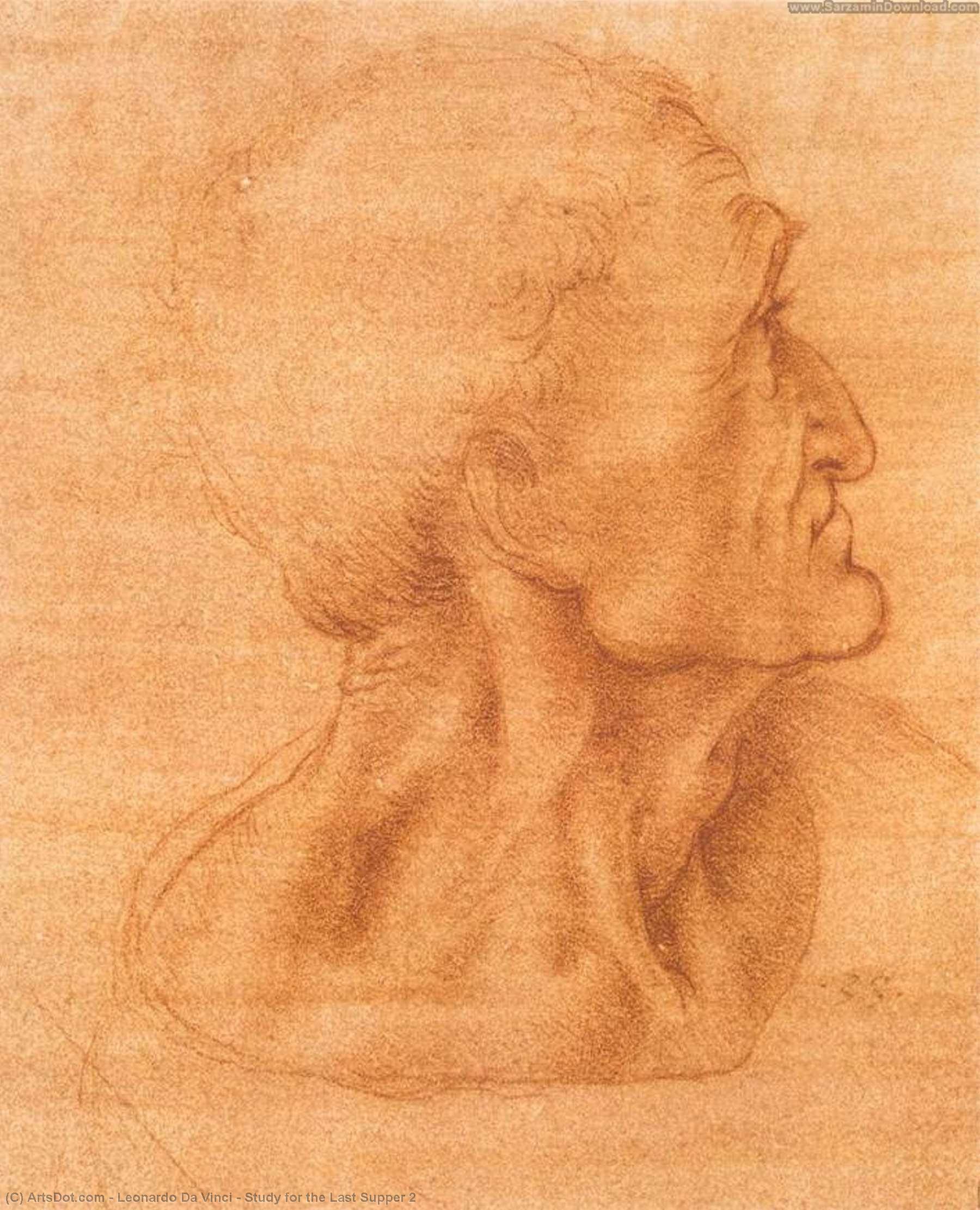
Study for the Last Supper 2: A Glimpse into Leonardo's Genius
- Title: Study for the Last Supper 2
- Artist: Leonardo da Vinci
- Date: c. 1495
- Medium: Chalk on paper
- Dimensions: Unknown
This remarkable chalk drawing, "Study for the Last Supper 2," offers a rare and intimate look into the creative process of Leonardo da Vinci, one of history's most celebrated artists. Created around 1495, it serves as a preparatory sketch for his monumental fresco, *The Last Supper*, housed in Santa Maria delle Grazie in Milan. Rather than depicting the entire scene, this study focuses intently on the facial expressions and body language of the apostles, revealing Da Vinci’s profound understanding of human emotion and anatomy.
Historical Context & The Last Supper
To fully appreciate this study, it's essential to understand its connection to *The Last Supper*. Commissioned by Ludovico Sforza, Duke of Milan, the fresco portrays the dramatic moment when Jesus announces that one of his apostles will betray him. Da Vinci’s innovative use of perspective and composition in *The Last Supper* revolutionized Renaissance art, and this study provides invaluable insight into how he meticulously planned and refined each element of the final masterpiece.
Artistic Technique & Sfumato
Da Vinci's mastery of technique is evident in every stroke of this chalk drawing. He employed a delicate layering approach to create subtle gradations of tone, foreshadowing his later use of *sfumato*—a technique characterized by soft, hazy transitions between light and shadow. This meticulous attention to detail allowed him to capture the nuances of human expression with remarkable realism. The study showcases Da Vinci's ability to convey depth and emotion through simple lines and shading.
Symbolism & Emotional Impact
While seemingly a preparatory sketch, "Study for the Last Supper 2" is rich in symbolic meaning. Each apostle’s face reveals a distinct reaction—shock, disbelief, anger, or confusion—reflecting the profound emotional turmoil of the moment. Da Vinci's genius lies not only in his technical skill but also in his ability to capture the psychological complexity of human interaction. The study evokes a sense of intimacy and immediacy, drawing viewers into the heart of this pivotal biblical scene. It’s a testament to Da Vinci’s belief that art should not merely depict reality but also explore the depths of human emotion.