A Symphony of Light and Color: The Magic of Rainbow at Beelitzhof
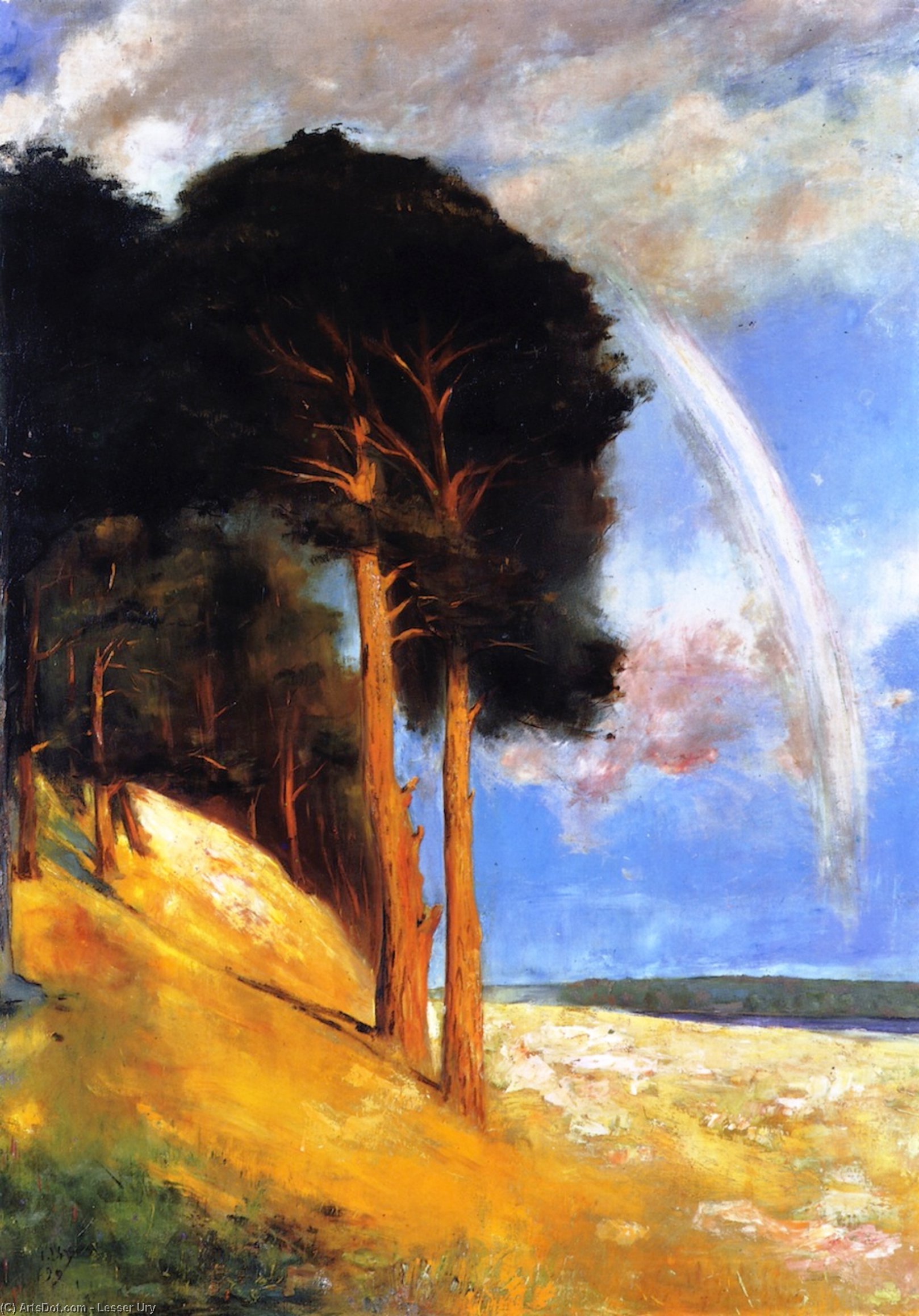
In the quiet corners of art history, few works capture the fleeting intersection of meteorology and emotion as gracefully as Lesser Ury’s Rainbow at Beelymhof. Painted in 1899, this masterpiece serves as a breathtaking window into the German Impressionist movement, where the boundaries between reality and perception begin to blur. The scene unfolds across a sprawling landscape, dominated by a dramatic sky that seems to pulse with the energy of a passing storm. A vibrant rainbow arches across the heavens, acting as a celestial bridge that connects the heavy, moisture-laden clouds to the earth below. This is not merely a depiction of a weather event; it is an invitation to witness a moment of profound atmospheric transformation, where the light shifts from the somber tones of rain to the radiant promise of clarity.
The composition is masterfully balanced, utilizing a vertical orientation that emphasizes the soaring height of the pine trees and the vastness of the sky. On the left, a sturdy tree stands as a silent sentinel, its dark, textured silhouette providing a grounded contrast to the ethereal arc of the rainbow. The artist employs a diagonal movement through the hillside, guiding the viewer’s eye deep into the heart of the Brandenburg landscape. This structural harmony ensures that while the colors are vibrant and the brushstrokes are energetic, the painting retains a sense of profound peace and equilibrium, making it an ideal centerpiece for any collection seeking to evoke tranquility.
Technique and the Impressionist Spirit
To gaze upon this canvas is to experience the tactile beauty of oil on canvas. Lesser Ury was a master of the "painterly" style, where the hand of the artist is visible in every expressive stroke. Rather than seeking photographic precision, Ury utilized thick, impasto-like applications of paint to build texture upon the foliage and the rugged ground. This technique lends a physical depth to the work, allowing the light to catch on the ridges of the paint, mimicking the way sunlight filters through damp leaves. The color palette is a sophisticated study in contrasts; warm yellows, oranges, and earthy browns define the sun-drenched portions of the hill, while cool blues and soft greys inhabit the retreating storm clouds.
The brushwork itself carries a rhythmic vitality. There is a certain looseness to the execution that suggests the urgency of capturing a transient moment—a hallmark of the Impressionist philosophy. By prioritizing the "impression" of light over rigid outlines, Ury achieves an atmospheric depth that feels alive. For the discerning collector or interior designer, this technique offers a dynamic visual interest that changes depending on the lighting of a room, providing a sense of movement and life to a sophisticated living space.
Symbolism and Emotional Resonance
Beyond its technical brilliance, Rainbow at Beelitzhof resonates on a deeply symbolic level. In the lexicon of art, the rainbow has long served as a symbol of hope, renewal, and the reconciliation of opposites—the sun and the rain, the light and the dark. Within the context of Ury’s life and the era of German Romanticism, this painting can be viewed as an ode to resilience. The towering trees, standing firm against the elements, mirror the strength found in nature's cycles of upheaval and calm.
For those looking to integrate fine art into their homes, this piece offers more than mere decoration; it offers a mood. It possesses the unique ability to transform a room into a sanctuary of reflection. Whether one is drawn to its historical significance as a pinnacle of late 19th-century landscape painting or simply moved by its serene beauty, a high-quality reproduction of this work brings a timeless elegance and an enduring sense of wonder into any environment. It is a testament to the idea that even after the heaviest storm, beauty remains, waiting to be rediscovered in the light.