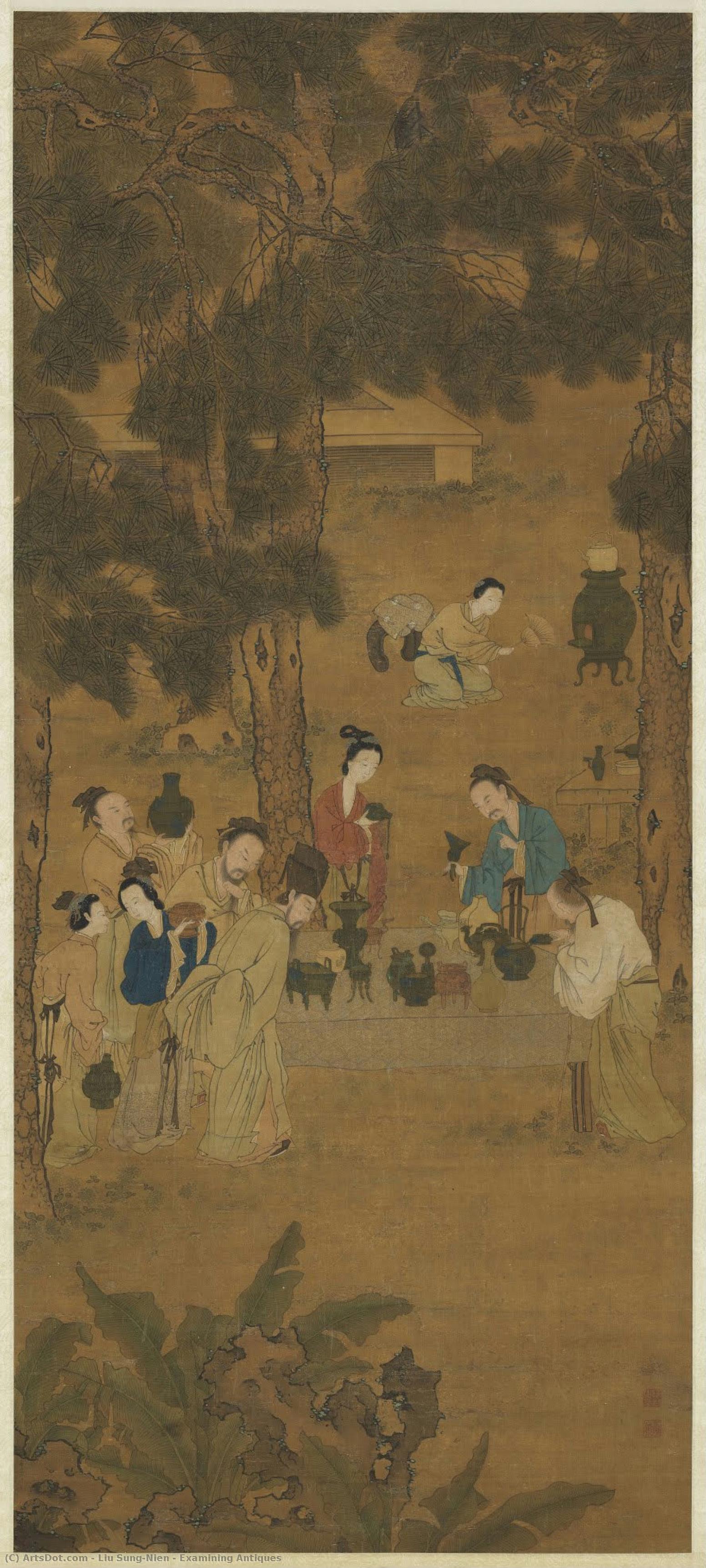
Examining Antiques – A Window into Song Dynasty Aesthetics
Liu Songnian’s “Examining Antiques,” created around 1211, transcends mere depiction; it embodies the spirit of the early Southern Song Dynasty (1127–1279), a period characterized by artistic innovation and intellectual curiosity. This silk artwork isn't simply a visual record of a gathering—it’s a carefully constructed meditation on value, authenticity, and the enduring fascination with the past – themes deeply rooted in Confucian ideals prevalent during the era. The painting captures a moment of contemplative exchange amongst scholars, surrounded by objects imbued with history and cultural significance.
- Subject Matter: The scene portrays individuals meticulously scrutinizing antiques—primarily bowls, cups, vases, and a wine glass—suggesting discussions about their provenance and artistic merit.
- Style & Technique: “Examining Antiques” firmly establishes Liu Songnian as a pivotal figure in Nanga painting – a stylistic movement that sought to emulate Japanese landscape art while grounding itself in Chinese traditions. The artwork exemplifies the meticulous brushwork characteristic of Nanga, prioritizing atmospheric perspective and capturing subtle nuances of light and shadow.
- Historical Context: Produced during Emperor Ningzong’s reign, “Examining Antiques” reflects the broader cultural climate of the time—a renewed interest in classical scholarship and a desire to preserve cultural heritage amidst political instability. The Song court actively fostered artistic endeavors aimed at promoting Confucian values and upholding moral standards.
Symbolism: The inclusion of potted plants – specifically one on the left and another on the right – carries symbolic weight, representing longevity and harmony—concepts central to Confucian philosophy. These plants serve as visual anchors within the composition, grounding the scene in natural beauty and reinforcing its contemplative mood. Furthermore, the arrangement of objects on the table symbolizes intellectual pursuits and the careful consideration required for discerning genuine artistry from mere imitation.
Emotional Impact: “Examining Antiques” evokes a profound sense of serenity and contemplation. The subdued palette—primarily monochrome ink wash—contributes to this atmosphere, inviting viewers to immerse themselves in the scene’s quiet beauty. Liu Songnian skillfully conveys not only visual accuracy but also an emotional resonance that speaks to the enduring human desire for understanding and appreciation – qualities valued highly during the Song Dynasty and continuing to inspire artistic expression today.