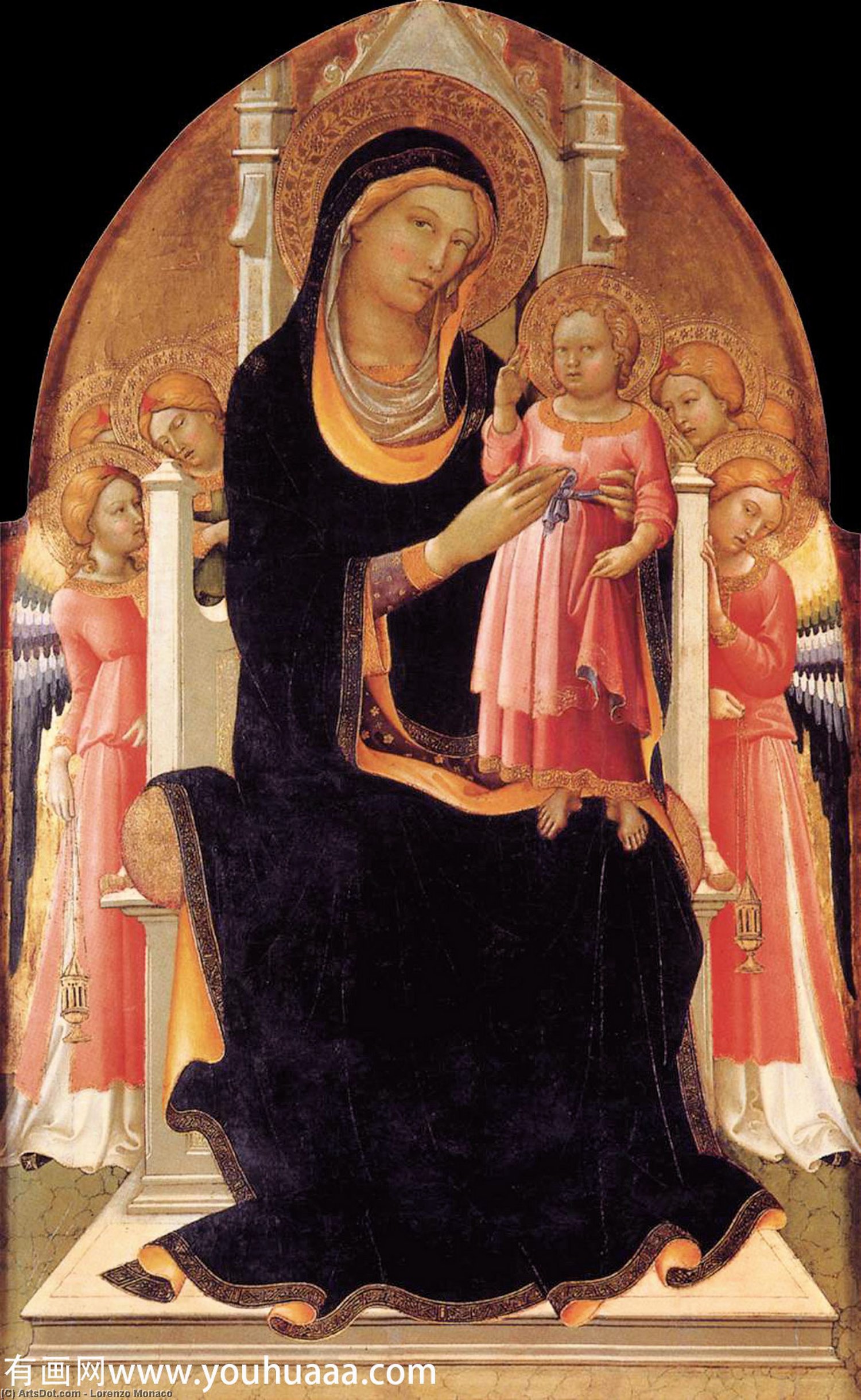
Explore Lorenzo Monaco’s ‘Virgin & Child Enthroned.’ A Renaissance masterpiece featuring Mary, Christ, & angels. Tempera on panel, dramatic lighting, & symbolic details. Discover this iconic artwork!
A Vision of Faith: Lorenzo Monaco’s ‘Virgin and Child Enthroned with Six Angels’
Lorenzo Monaco's 1415 masterpiece, “Virgin and Child Enthroned with Six Angels,” is more than a religious depiction; it’s a profound meditation on faith, motherhood, and the nascent spirit of the Renaissance. Executed during a pivotal moment in Florentine art history – bridging the Gothic sensibilities of the Trecento with the burgeoning ideals of the Quattrocento – this altarpiece panel offers a glimpse into the soul of a monk transformed into one of Florence’s most influential artists. Monaco's journey began in Siena, absorbing the lessons of masters like Giotto, yet his subsequent embrace of monastic life at Santa Maria degli Angeli fundamentally reshaped his artistic vision, imbuing his work with an unparalleled sense of introspection and spiritual depth.
- A Composition of Reverence: The painting’s central focus is the Virgin Mary, seated upon a throne-like structure, presenting the infant Jesus with a small, ornate box – a potent symbol representing the Eucharist, the cornerstone of Christian belief. Her serene expression and dignified posture command attention, while the Christ Child, rendered with remarkable tenderness, embodies innocence and divine grace.
- The Angels as Witnesses: Surrounding Mary are six angelic figures, not merely decorative elements but active participants in this sacred scene. Their presence amplifies the sense of reverence and underscores the importance of divine intervention within the narrative.
Technique and Materials – A Window into Renaissance Craftsmanship
Monaco’s masterful technique reveals a deep understanding of both Gothic and emerging Renaissance approaches to painting. The artwork is executed in tempera on panel, a medium favored for its durability and ability to achieve rich colors. The slightly matte surface and subdued color saturation speak to the careful layering and glazing characteristic of this technique – a deliberate choice that contributes to the painting’s solemn mood and enhances the illusion of depth. Linear perspective, though relatively shallow, is skillfully employed to organize the figures and architectural elements, creating a sense of spatial coherence. Note the strong use of chiaroscuro, with dramatic highlights emphasizing Mary's robes and the Christ Child, drawing the viewer's eye directly to these central figures.
Symbolism and Iconography – Layers of Meaning
Beyond its immediate religious subject matter, “Virgin and Child Enthroned” is rich in symbolic meaning. The box presented by Mary transcends a simple offering; it represents the sacrifice of Christ and the promise of salvation. The throne itself symbolizes Mary’s role as Queen of Heaven, while the angels embody divine grace and protection. Monaco's meticulous attention to detail – from the intricate folds of the drapery to the serene expressions of the figures – elevates this painting beyond a mere representation of biblical events; it becomes a powerful testament to faith and devotion.
Historical Context and Artistic Significance
Created in 1415, this work stands at the cusp of the Renaissance. Monaco’s artistic trajectory reflects this transition, blending the emotional intensity of Gothic art with the burgeoning interest in classical ideals and naturalism that would define the Quattrocento. His influence extended beyond Florence, shaping the artistic landscape of Italy for decades to come. This painting is a testament to his skill and vision, offering a rare glimpse into the heart of a pivotal moment in Western art history.