A Portrait of Quiet Strength: Kate Loder, Lady Thompson
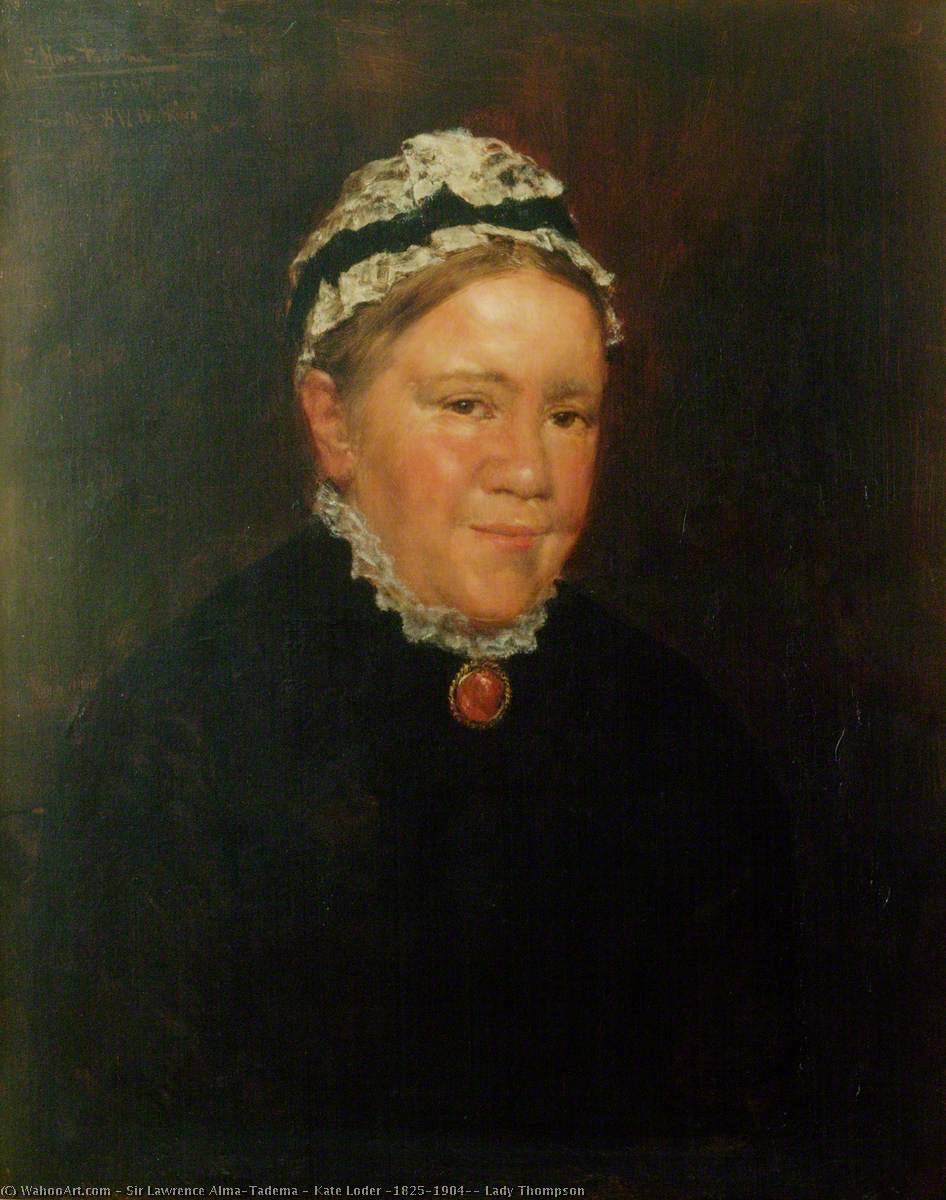
Lawrence Alma-Tadema’s “Kate Loder (1825–1904), Lady Thompson” is more than just a meticulously rendered likeness; it's a poignant study in restrained dignity and the subtle complexities of Victorian womanhood. Painted around 1873, this oil on canvas offers a glimpse into the life of a remarkable composer and pianist, a figure largely obscured by the shadow of her renowned husband, the surgeon Henry Thompson. The painting’s power lies not in dramatic gesture or flamboyant display, but in the quiet observation of its subject – a woman radiating an understated elegance that speaks volumes about her character.
The composition is remarkably controlled, typical of Tadema's signature style. Kate Loder sits poised within a dimly lit interior, likely a study or drawing room, rendered with painstaking detail. Her posture is impeccable, suggesting both self-possession and a gentle reserve. The lace collar, a fashionable accessory of the era, frames her face delicately, while the bonnet—a symbol of Victorian propriety—hints at a life lived within the constraints of societal expectations. Tadema’s masterful use of light and shadow creates a sense of depth and atmosphere, drawing the viewer's eye to Loder’s face – a landscape of subtle expressions that reveal intelligence, melancholy, and perhaps even a hint of suppressed passion.
The Composer’s World: Context and Influences
To fully appreciate “Kate Loder,” it’s crucial to understand the artistic and social context in which it was created. Tadema, though primarily known for his opulent depictions of Roman life, frequently portrayed women from a variety of backgrounds – musicians, artists, and members of the upper classes. He possessed an acute eye for detail and a remarkable ability to capture the nuances of human expression, often drawing inspiration from classical art and literature. Loder’s position as a composer and pianist during this period was unusual for a woman; despite facing considerable obstacles in pursuing a career in music, she persevered, establishing herself as a respected figure within the London musical community.
The painting reflects the Victorian era's fascination with domesticity and the role of women. However, Tadema subtly subverts these expectations by presenting Loder not as a passive object of admiration, but as an individual with inner life and intellectual pursuits. Her focus is inward, suggesting a contemplative nature—a stark contrast to the often-idealized portrayals of Victorian women found in popular art.
Symbolism and Artistic Technique
Tadema’s technique is characterized by its meticulous realism and attention to texture. He employed a layering method, building up the image through numerous thin glazes of paint, creating a luminous surface that captures the play of light on fabric and skin. The rich browns and muted greens of the interior contribute to the painting's somber mood, while the delicate lace and the subtle highlights on Loder’s face draw attention to her features. The use of chiaroscuro—the dramatic contrast between light and dark—further emphasizes the subject’s presence and creates a sense of intimacy.
Beyond the technical mastery, the painting is laden with symbolic meaning. The muted colors suggest introspection and perhaps a touch of sadness, while the carefully arranged interior reflects Loder's refined taste and intellectual pursuits. The bonnet, though representing societal constraints, also serves as a protective shield, suggesting a woman who values her privacy and independence.
A Legacy of Quiet Genius
“Kate Loder (1825–1904), Lady Thompson” is a testament to Tadema’s artistic skill and his ability to capture the essence of human character. It's a poignant portrait of a woman who defied societal expectations and pursued her passions with quiet determination. The painting invites us to contemplate the lives of women often overlooked in art history, offering a glimpse into the world of a talented composer and pianist whose legacy deserves recognition. Reproductions of this captivating work offer an opportunity to bring this subtle yet powerful image into any space, serving as a reminder of the enduring strength and quiet brilliance of Kate Loder.