Pottery Painting: A Glimpse into Ancient Artistic Life
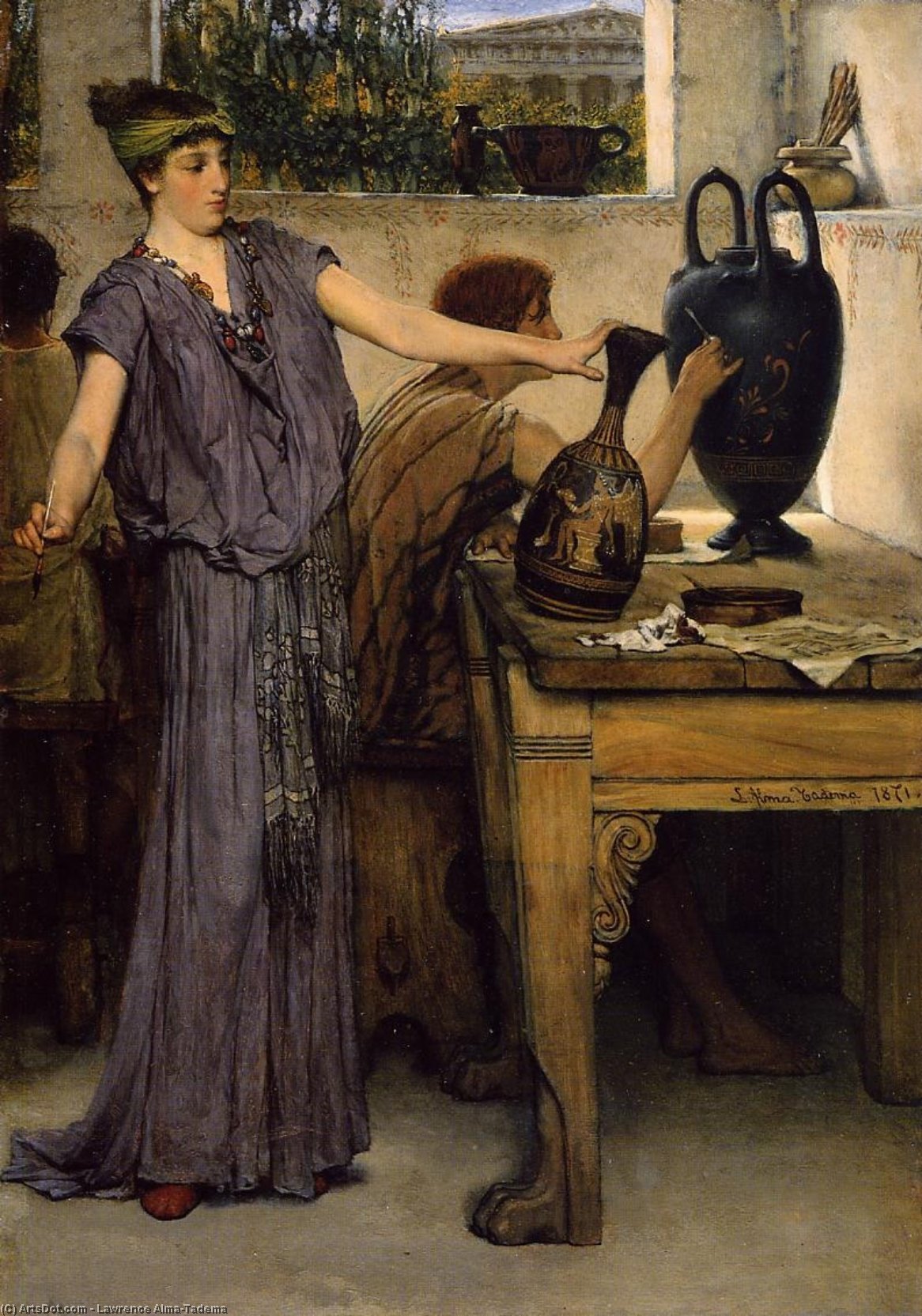
Sir Lawrence Alma-Tadema's "Pottery Painting," completed in 1871, is an oil on panel artwork residing within the esteemed Manchester Art Gallery. This piece transports viewers to a serene scene of ancient Greece, depicting individuals engaged in the meticulous craft of pottery creation and appreciation. The painting’s enduring appeal lies in its ability to evoke a sense of tranquility and offer a window into the artistic practices of a bygone era.
Composition and Artistic Style
The composition is carefully balanced, drawing the eye towards the central figures and objects. A woman, elegantly dressed in a flowing purple gown, stands as a focal point, gesturing thoughtfully toward a large amphora. Two male figures are intently examining the pottery, suggesting an exchange of knowledge or critique. Alma-Tadema’s masterful use of oil on panel lends depth and richness to the colors, creating a visually captivating experience. The artist's meticulous attention to detail is evident in the intricate designs adorning the pottery and the realistic rendering of textures within the clothing and surrounding environment.
Historical Context and Inspiration
Alma-Tadema was deeply fascinated by classical civilizations, particularly ancient Greece and Rome. "Pottery Painting" exemplifies this fascination, offering a glimpse into the daily life and artistic pursuits of these cultures. The painting reflects the Victorian era’s widespread interest in archaeology and classical art, which fueled Alma-Tadema's desire to recreate scenes from antiquity with remarkable accuracy and detail. His works often aimed to portray the beauty and refinement of ancient societies, contrasting them with the perceived industrialization and social changes of his own time.
Symbolism and Emotional Impact
The artwork is rich in symbolic elements. The amphora itself represents Greek pottery and artistic skill, while the woman’s gesture suggests guidance or instruction, highlighting the importance of mentorship within the creative process. The soft, diffused lighting creates a sense of calm and contemplation, inviting viewers to immerse themselves in the scene. The muted color palette—dominated by purples, browns, and creams—contributes to the painting's overall atmosphere of dignity and quiet beauty. "Pottery Painting" evokes feelings of nostalgia for a lost world, celebrating the enduring power of art and human creativity.
Technique and Legacy
Alma-Tadema’s technique was characterized by his meticulous attention to detail and his ability to render textures with remarkable realism. He employed glazing techniques to achieve subtle gradations of color and create a sense of depth within the painting. "Pottery Painting" stands as a testament to Alma-Tadema's skill as an artist and his profound appreciation for classical art. His legacy continues to inspire artists and art enthusiasts alike, solidifying his place as one of the leading exponents of Victorian academic realism.