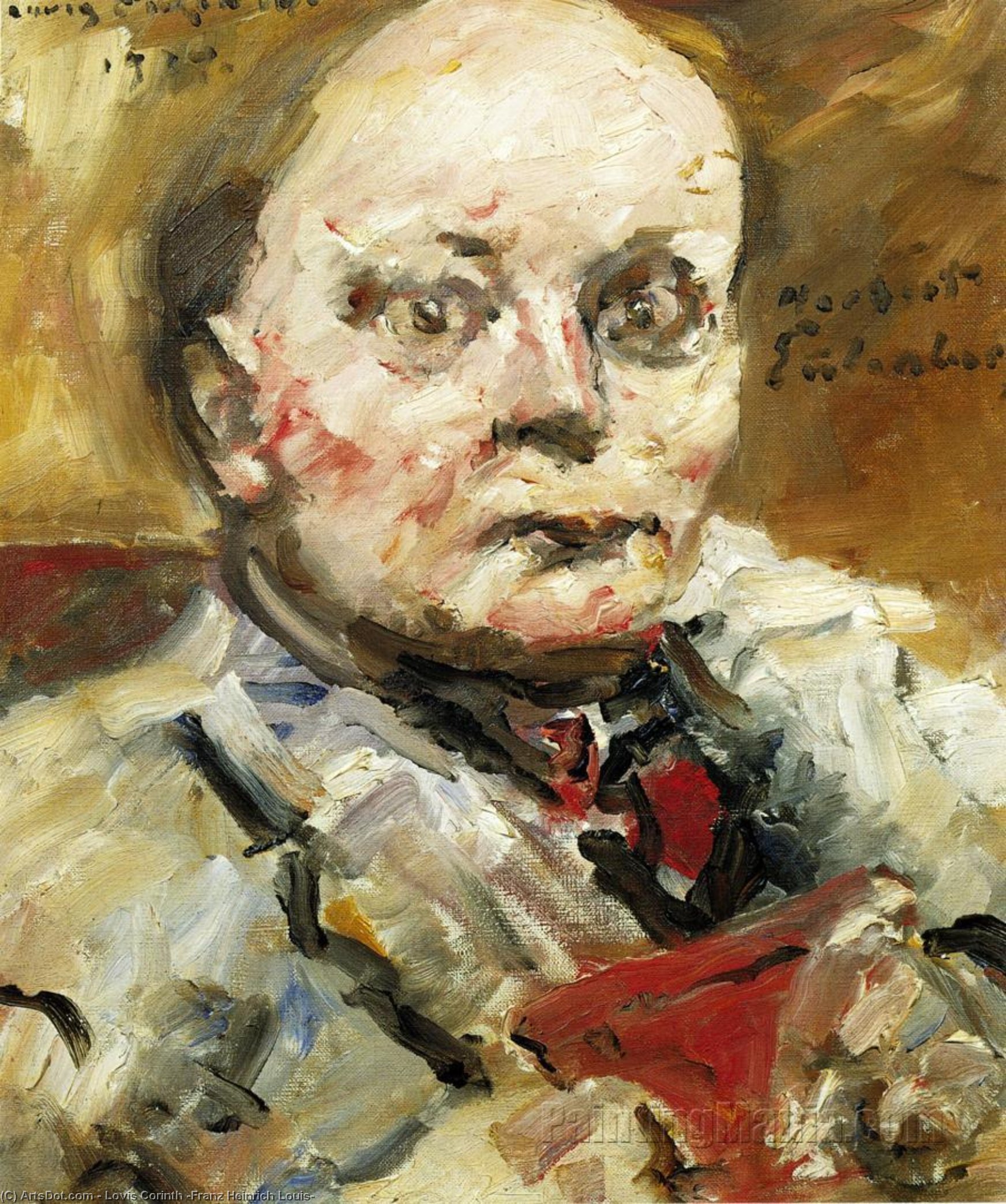
Portrait of the Poet Herbert Eulenberg, 1924 by Lovis Corinth is a striking oil on canvas painting from the Expressionism movement. Executed in 1924, it portrays poet Herbert Eulenberg seated thoughtfully, illuminated by warm hues and detailed textures—a testament to Corinth’s ability to convey profound emotion through visual artistry.
Portrait of the Poet Herbert Eulenberg – A Study in Expressionist Reflection
Lovis Corinth’s “Portrait of the Poet Herbert Eulenberg,” completed in 1924, stands as a cornerstone of German Expressionism and exemplifies Corinth's masterful ability to distill profound emotion into visual form. More than just a likeness of the celebrated poet, Eulenberg, this painting delves into themes of intellectuality, contemplation, and the artist’s unwavering gaze – inviting viewers to engage in an unspoken dialogue about the human condition.
Artist's Vision & Style: Corinth, deeply influenced by Nietzsche and Symbolist aesthetics, sought to convey inner turmoil alongside serene beauty. He rejected academic conventions, prioritizing raw emotion and subjective experience over meticulous realism. The resulting style is characterized by bold brushstrokes, vibrant color palettes—particularly the dominant crimson of Eulenberg’s tie—and a deliberate flattening of perspective, creating an immediacy that transcends mere representation.
Subject Matter & Composition: Eulenberg himself occupies center stage, seated in a chair draped with a luxurious couch and flanked by a bench laden with books. Corinth meticulously captures the poet's posture – slumped slightly forward, eyes fixed intently on some unseen point—suggesting an absorption in thought that borders on melancholy. The inclusion of these objects serves as potent symbols: the couch represents comfort and repose, yet it’s juxtaposed against the contemplative gaze, hinting at a yearning for deeper understanding.
Technique & Material Considerations: Corinth employed oil paint on canvas—a technique favored by Expressionists—to achieve remarkable textural richness. Thick impasto strokes build up layers of pigment, conveying palpable energy and capturing the nuances of light and shadow with exceptional precision. The artist’s meticulous attention to detail extends beyond Eulenberg's facial features; he painstakingly renders the folds of his clothing and the subtle variations in color within the background—demonstrating a commitment to portraying not just what is seen but also what is felt.
Historical Context & Symbolism: Created during the Weimar Republic, “Portrait of the Poet Herbert Eulenberg” reflects the anxieties and uncertainties of its time. Corinth’s Expressionist movement responded to the disillusionment following World War I, rejecting bourgeois optimism in favor of confronting darker aspects of human psychology. The crimson tie—a bold choice against the muted tones of the room—can be interpreted as representing passion, vitality, and perhaps even defiance – qualities Corinth wished to imbue his subjects with.
Emotional Impact & Legacy: Ultimately, Corinth’s masterpiece transcends its formal elements to evoke a powerful emotional response. The painting compels viewers to contemplate questions of identity, purpose, and the elusive nature of consciousness. “Portrait of the Poet Herbert Eulenberg” remains a testament to Corinth's artistic genius—a hauntingly beautiful depiction that continues to resonate with audiences today.