A Symphony in Stone: The Vitality of Luca della Robbia’s Cantoria
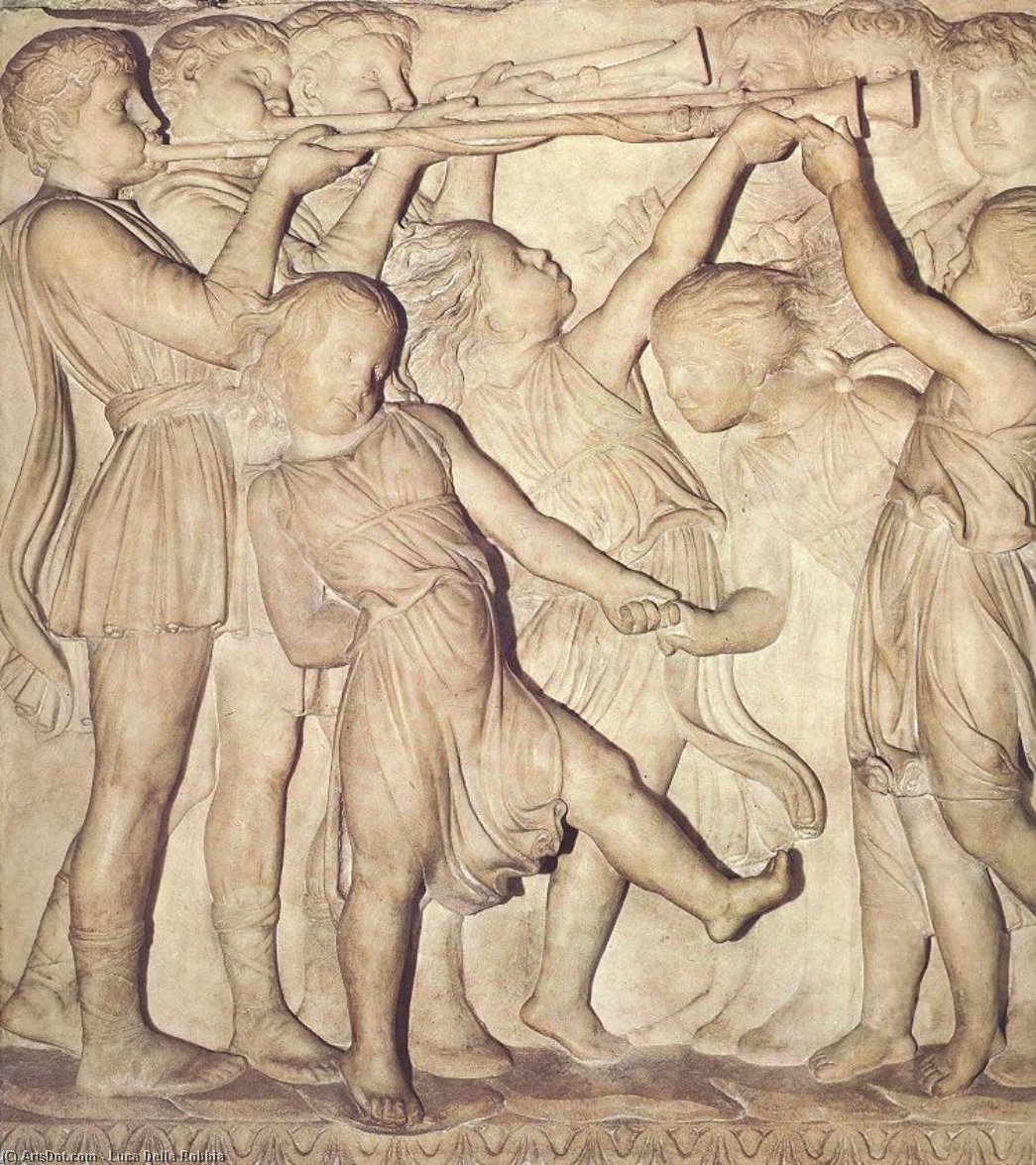
In the heart of the Florentine Renaissance, where the rebirth of classical ideals met a newfound passion for human emotion, Luca della Robbia carved a moment of eternal celebration into marble. His Cantoria: first top relief, completed in 1431, is not merely a sculpture but a rhythmic explosion of life captured in stone. To gaze upon this masterpiece is to be transported to a period of profound artistic awakening, where the rigid structures of the Middle Ages gave way to the fluid, muscular grace of antiquity. The relief presents a tightly packed composition of youthful figures, their bodies intertwined in a dance of musical exuberance and civic pride. As light dances across the high-relief surfaces, the figures seem to breathe, emerging from the stone with an energy that defies their mineral origin.
The technical mastery displayed in this work reflects the pinnacle of Quattrocento skill. Della Robbia utilizes a shallow perspective, a hallmark of classical relief, yet he achieves a breathtaking sense of depth through the meticulous overlapping of forms and the varying degrees of carving intensity. Each figure is rendered with an anatomical precision that speaks to the humanist obsession with the beauty of the human form. The texture of the marble is manipulated to suggest the softness of skin, the heavy folds of classical drapery, and the hard, triumphant lines of the trumpets held aloft. For the discerning collector or interior designer, this piece offers a profound tactile quality; even in reproduction, the interplay of light and shadow across these sculpted planes provides a sophisticated focal point that commands attention within any curated space.
Classical Echoes and Symbolic Resonance
Beyond its physical beauty, the Cantoria serves as a bridge between the Hellenistic past and the Florentine present. The subject matter—a group of young men engaged in musical celebration—evokes the spirit of ancient Greek processions, blending military vigor with artistic devotion. The trumpets carried by the youths are not merely instruments but symbols of triumph and the herald of a new era. There is an inherent sense of civic duty and communal joy embedded in the composition; these figures do not exist in isolation but are part of a larger, harmonious movement that mirrors the social aspirations of Florence itself. The geometric clarity of their forms, balanced by the organic curves of their limbs, creates a visual equilibrium that is both soothing and stimulating.
For those seeking to integrate art into a modern environment, this relief offers more than mere decoration; it provides an emotional anchor. It evokes feelings of vitality, strength, and an enduring optimism. Whether placed in a grand hall or a quiet study, the Cantoria brings with it a legacy of excellence and a timeless aesthetic that transcends centuries. Owning a high-quality reproduction of this work allows one to inhabit the same atmosphere of intellectual and artistic splendor that defined the age of Luca della Robbia, making it an incomparable choice for those who value art that tells a story of human triumph and classical elegance.