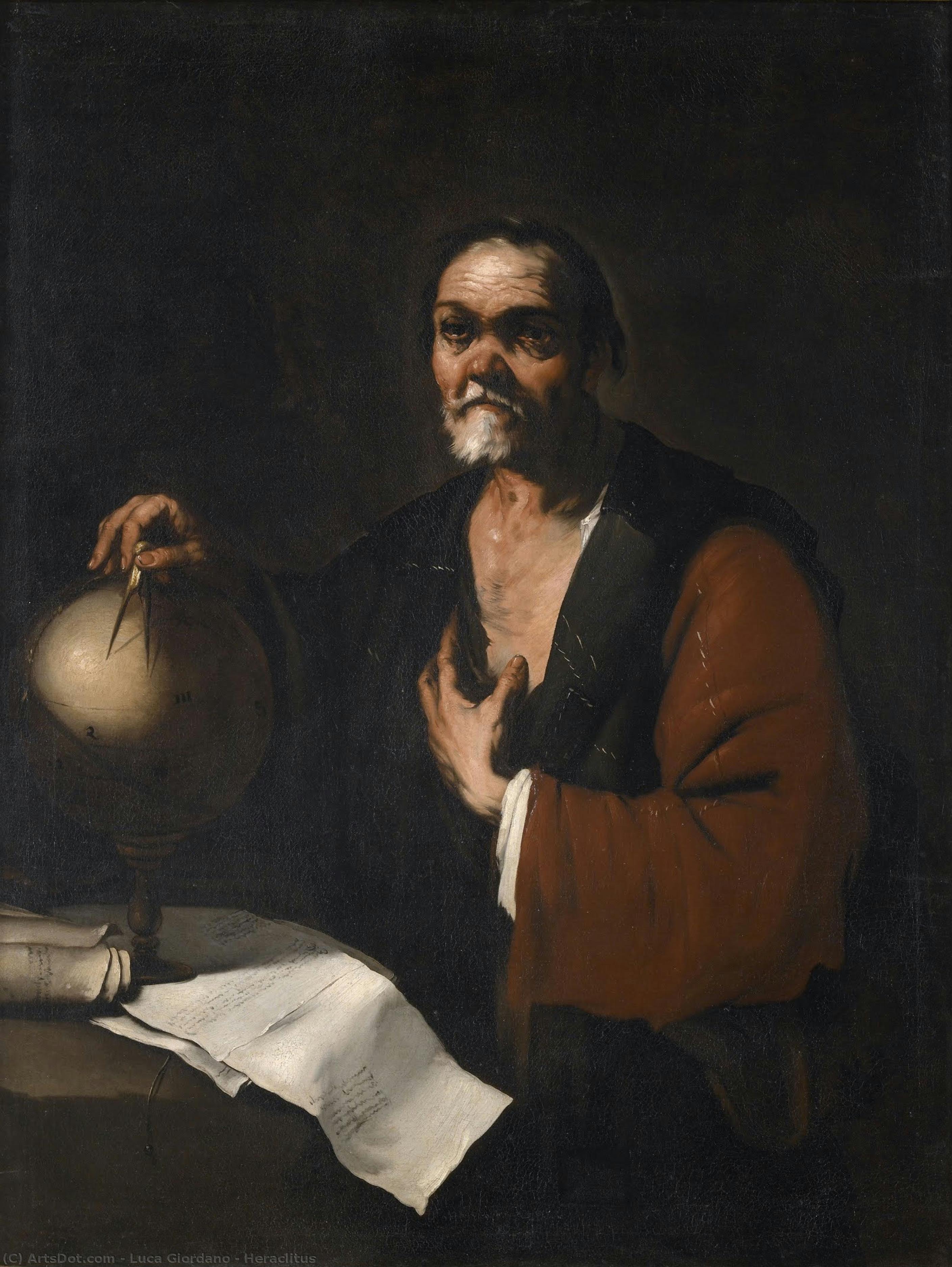
Luca Giordano’s Heraclitus: A Symphony of Light and Paradox
Luca Giordano (1634 – 1705) stands as one of the titans of Neapolitan Baroque, an artist who redefined visual expression with a singular blend of dynamism and luminous color. His monumental frescoes adorning churches across Italy—particularly those in Naples—remain breathtaking testaments to his genius, but it is “Heraclitus,” painted circa 1650 for the Chiesa Nuova in Naples’s historic centre, that encapsulates the essence of Giordano's artistic vision and continues to fascinate scholars and connoisseurs alike. This portrait isn’t merely a depiction of a philosopher; it’s an embodiment of Giordano’s philosophical preoccupation with change and contradiction—themes mirrored throughout his oeuvre.
- Subject Matter: Giordano chose Heraclitus, the enigmatic Ionian philosopher known for his paradoxical pronouncements about flux and unity, as his subject. Unlike many portraits of his time that aimed for idealized beauty or solemn piety, Giordano’s depiction prioritizes intellectual contemplation over aesthetic perfection. The figure is presented in profile, conveying a sense of dignified stillness amidst an energetic composition.
- Style: Giordano's style decisively departed from the sombre austerity championed by Caravaggio and Ribera—his predecessors—embracing instead the radiant luminosity characteristic of Venetian painting. He skillfully employed chiaroscuro – dramatic contrasts between light and shadow – to sculpt the form of Heraclitus’s face and torso, creating a palpable sense of volume and depth. This technique wasn't simply decorative; it served as a conduit for Giordano’s philosophical ideas about constant transformation.
- Technique: Executed in oil paint on canvas, “Heraclitus” demonstrates Giordano’s mastery of layering pigments to achieve remarkable textural richness. Minute brushstrokes meticulously render the wrinkles of Heraclitus's face and the folds of his cloak—details that convey both physical realism and psychological complexity. The artist’s meticulous attention to surface texture underscores his belief in the materiality of existence, mirroring Heraclitus’s assertion that “everything flows.”
- Historical Context: Giordano’s work emerged during a period of intense artistic experimentation in Naples—a city grappling with religious fervor and political upheaval. The Chiesa Nuova itself was undergoing significant renovations, reflecting the broader cultural ambitions of the Bourbon monarchy. Giordano's embrace of Venetian influences signaled a rejection of prevailing stylistic conventions and positioned him at the forefront of Baroque innovation.
- Symbolism: Beyond its formal brilliance, “Heraclitus” is laden with symbolic significance. The inclusion of a compass rose—a symbol of navigation and exploration—suggests Giordano’s fascination with intellectual inquiry and his desire to represent Heraclitus as a seeker of knowledge. Furthermore, the dark background serves to heighten the luminosity of Heraclitus's figure, emphasizing his role as a beacon of reason amidst chaos.
Further Exploration:
Consider examining Giordano’s other portraits—particularly those depicting philosophers—to appreciate the consistency of his artistic vision. Comparing “Heraclitus” to works by Ribera and Caravaggio reveals the distinctive character of Giordano's style and its contribution to the broader Baroque aesthetic. Visiting San Luca Museum in Genoa offers a chance to see masterpieces from the Neapolitan Baroque alongside other significant artworks from the era.
Resources:
Additional Information:
- Explore Giordano's influence on subsequent artists through his masterful use of light and color—a technique that continues to inspire painters today.
- Delve into the philosophical underpinnings of Giordano’s work by examining Heraclitus’s writings on change, paradox, and the unity of opposites.