Luca Giordano’s *Triumph of Judith*: A Celestial Dance
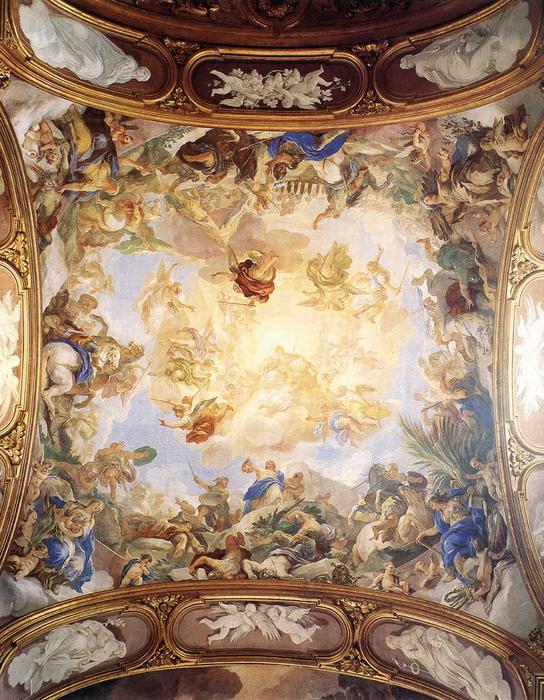
Luca Giordano's Triumph of Judith, painted in 1703, is more than just a decorative ceiling painting; it’s a vibrant embodiment of the late Baroque’s fascination with divine intervention and earthly triumph. This remarkable work, depicting an angelic host celebrating Judith’s victory over Holofernes, reveals Giordano's mastery of movement, light, and theatrical composition – hallmarks of his prolific career as a painter, architect, and scenographer. The painting’s immediate impact lies in its sheer exuberance; the figures are not static representations but actively engaged in a swirling, dynamic scene, reflecting the artist’s Neapolitan training under Jusepe de Ribera tempered by his own innate inclination for luminosity and grace.
- Subject Matter: The painting directly references the biblical story of Judith, a Jewish widow who saved her people from destruction by seducing and then killing Holofernes, the Assyrian general. This narrative was frequently employed in Baroque art to symbolize courage, faith, and divine assistance.
- Style & Technique: Giordano’s style is characterized by its dynamism and theatricality. He employs a loose, painterly technique, utilizing broad brushstrokes to create a sense of movement and energy. The use of color is particularly noteworthy – rich reds, golds, and blues dominate the composition, creating a visually sumptuous effect that was highly prized in aristocratic interiors.
A Symphony of Light and Movement
Giordano’s skill lies not just in depicting figures but in animating them. The angels are not merely observers; they actively participate in the celebration, their gestures conveying joy, triumph, and reverence. Notice how each figure is rendered with a distinct pose and expression, contributing to the overall sense of movement and drama. The artist's use of light is particularly effective, illuminating key figures and creating dramatic contrasts that draw the viewer’s eye across the composition. This masterful manipulation of light and shadow was a crucial element in Baroque art, designed to evoke emotion and heighten the theatrical impact of the scene.
- Composition: The ceiling is organized around a central axis, with the angels arranged in concentric circles, creating a sense of depth and perspective. This carefully constructed composition guides the viewer’s eye through the painting, ensuring that all elements are equally visible and impactful.
- Architectural Integration: As a prolific scenographer, Giordano frequently designed his paintings to integrate seamlessly with the architectural space they adorned. The chandelier, depicted in exquisite detail, would have been a focal point of the room, further enhancing the overall effect.
Symbolism and Emotional Impact
Beyond its narrative content, *Triumph of Judith* is rich in symbolic meaning. The angels represent divine approval and support, while the figures celebrating Judith embody human courage and faith. The painting’s emotional impact is profound – it evokes a sense of awe, wonder, and triumph. Giordano skillfully uses color, light, and movement to create a visually arresting experience that transports the viewer to this celestial realm. The sheer scale of the work, combined with its dramatic composition and opulent decoration, would have been intended to inspire reverence and admiration in those who beheld it.
- Historical Context: Painted during Giordano’s time as court painter for various European monarchs, including Charles III of Spain, this piece reflects the prevailing artistic trends of the late Baroque period – a period marked by grandeur, drama, and religious fervor.
- Material & Craftsmanship: The painting was likely executed on canvas using oil paints, a medium that allowed Giordano to achieve the desired level of luminosity and detail. The gold leaf used in the frame and decorative elements would have added further to the painting’s visual impact.
A Timeless Masterpiece – Recreated for Today
ArtsDot offers meticulously crafted hand-painted reproductions of Luca Giordano's *Triumph of Judith*, capturing the essence of this remarkable artwork with unparalleled fidelity. Each reproduction is created by skilled artisans, ensuring that you receive a piece of art that is both beautiful and authentic. Whether you are an art collector, interior designer, or simply someone who appreciates fine art, our reproductions offer a unique opportunity to own a stunning representation of this iconic Baroque masterpiece.