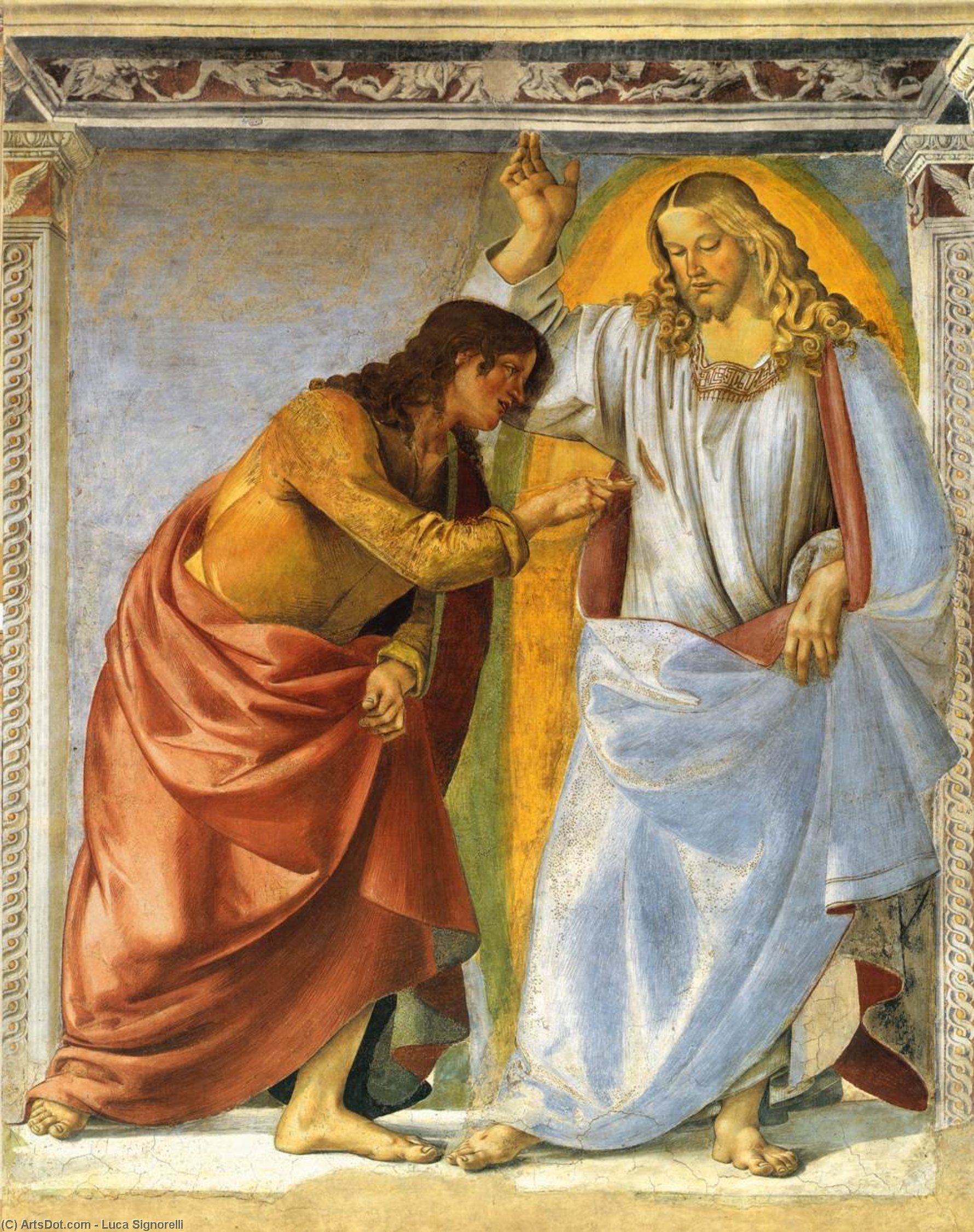
Luca Signorelli’s ‘Christ and the Doubting Thomas,’ painted in 1482, is a captivating depiction of Jesus' encounter with Thomas after his crucifixion. Located in Orvieto Cathedral, this fresco exemplifies Signorelli’s exceptional skill as a draftsman and innovative use of perspective, capturing a pivotal moment in Christian iconography.
Christ and the Doubting Thomas: A Masterpiece of Renaissance Drama
Luca Signorelli’s “Christ and the Doubting Thomas,” completed in 1482, stands as an enduring testament to the artistic fervor of the Early Renaissance. Executed in fresco—a technique utilizing pigments mixed with plaster—the painting resides within the Basilica di San Francesco in Assisi, Umbria, Italy, a location steeped in Christian pilgrimage and devotion.
The scene depicts Jesus Christ presenting his wounded hands to Thomas Aquinas, one of his apostles who had doubted his divinity following the crucifixion. This iconic moment captures the essence of faith and skepticism—a cornerstone of theological debate during the period—rendered with breathtaking realism and masterful compositional skill. Signorelli’s meticulous attention to detail is immediately apparent; observe the subtle musculature of Christ's hands, conveying both vulnerability and divine strength.
- Style: Early Renaissance – Characterized by a revival of classical ideals alongside humanist concerns for human anatomy and perspective.
- Technique: Fresco—a durable method involving applying pigment directly onto wet plaster, resulting in vibrant colors that resist fading over time. Signorelli skillfully employed linear perspective to create depth and spatial illusion within the basilica’s interior walls.
- Historical Context: Painted during Lorenzo de' Medici’s reign in Florence, “Christ and the Doubting Thomas” reflects the humanist spirit of the era—a fascination with human form and intellect alongside religious piety. It aligns perfectly with the broader artistic movement prioritizing naturalism and emotional expression.
Beyond its technical brilliance, the painting resonates deeply with symbolic significance. The wounds on Christ’s hands serve as a tangible reminder of his suffering and sacrifice—a central element in Christian theology. Thomas's touch symbolizes faith overcoming doubt, representing the triumph of belief over skepticism. Signorelli’s masterful use of chiaroscuro—the interplay between light and shadow—intensifies the dramatic impact of the scene, drawing viewers into Christ’s gaze and conveying a palpable sense of solemn reverence.
“Christ and the Doubting Thomas” continues to inspire awe and contemplation centuries after its creation. Its enduring beauty lies not only in Signorelli's artistic prowess but also in its ability to encapsulate fundamental questions about faith, doubt, and human experience—themes that remain relevant today. Reproductions of this monumental fresco offer a captivating glimpse into the artistic achievements of the Renaissance and invite viewers to engage with one of art history’s most profound narratives.