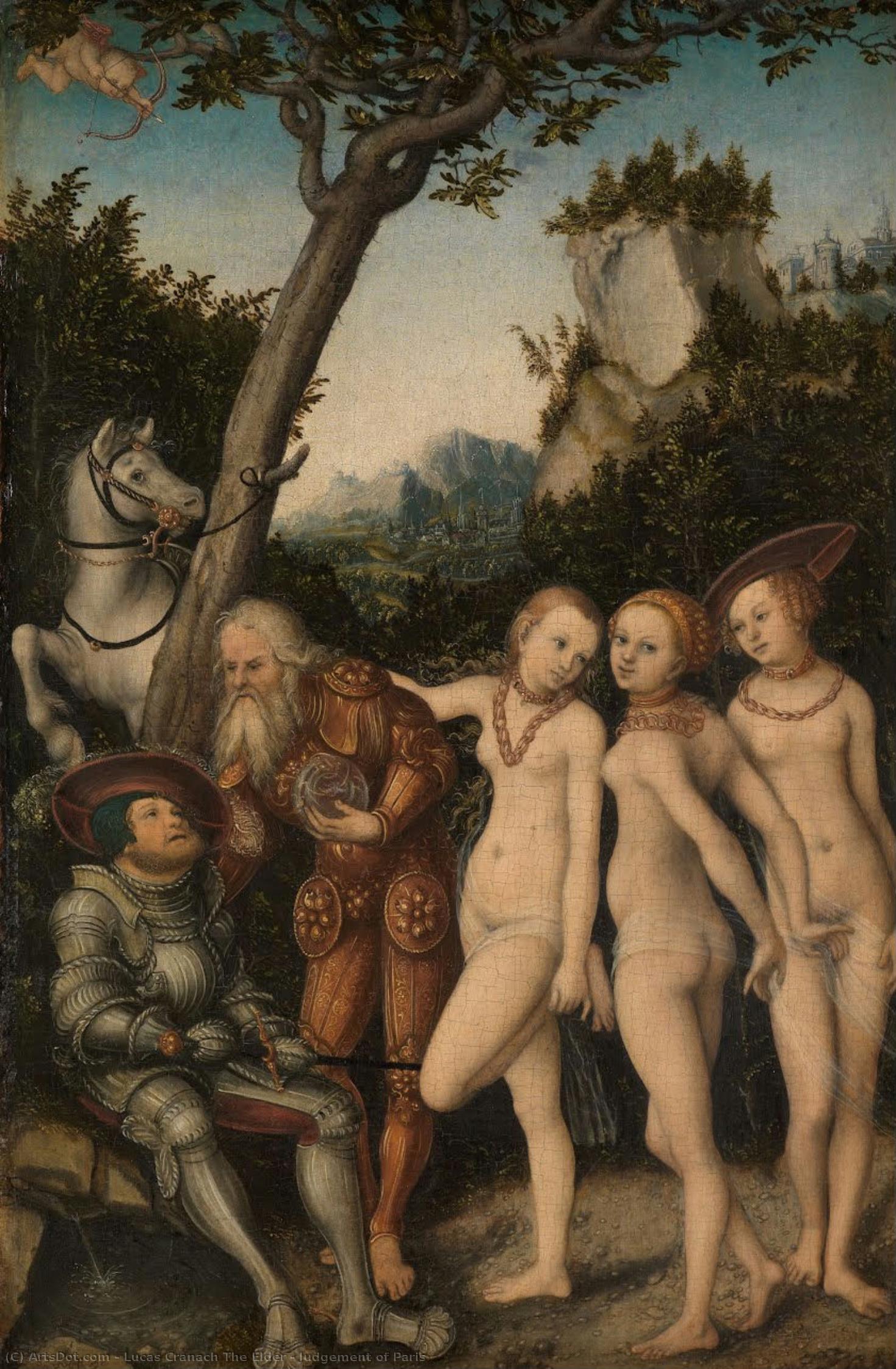
Admire Lucas Cranach the Elder’s masterful depiction of The Judgement of Paris – a dramatic scene from Greek mythology featuring Paris, Aphrodite, Hera and Juno. Explore his iconic style!
ルカス・クラナハ (父) は、ドイツのルネサンスを代表する画家。マルティン・ルターの肖像画や宗教的テーマ、神話的作品で知られ、プロテスタント改革に大きな影響を与えました。洗練された技巧と鮮やかな色彩が魅力です。
シュタットリッヘ・クンストハレ・カールスルーエで7世紀にわたる欧州美術を探索!ドイツ最古の保存された美術館で、デューラー、グリューネヴァルト、レンブラントの傑作に出会えます。現在改修中のため、見どころはZKMをチェックしてください。
Lucas Cranach the Elder’s Judgement of Paris: A Renaissance Reflection on Fate
The painting “Judgement of Paris” by Lucas Cranach the Elder, completed around 1530, stands as a masterful distillation of humanist ideals intertwined with profound religious anxieties characteristic of the High Renaissance and early Reformation era. More than just a depiction of a pivotal mythological narrative—the contest between Hera, Juno, and Venus over the golden apple awarded to Paris for choosing Helen of Troy—it’s an exquisitely crafted visual meditation on themes of divine judgment, human ambition, and the inescapable influence of destiny. Cranach's skill lies not merely in capturing the likenesses of his subjects with remarkable accuracy but in conveying a complex psychological landscape that speaks volumes about the anxieties of his time.
A Portrait of Mythological Drama
Cranach’s composition is deliberately theatrical, mirroring the dramatic unfolding of the myth itself. Paris, portrayed as a youthful nobleman, dominates the center of the canvas, clutching the golden apple—a symbol laden with religious significance representing divine grace and temptation—as he gazes upon the three goddesses vying for his attention. Hera, Juno, and Venus are rendered with meticulous detail, each embodying distinct virtues and anxieties: Hera represents royal authority and righteous indignation; Juno embodies legal precedence and maternal concern; Venus embodies beauty and sensual desire. The positioning of these figures is carefully calibrated to heighten tension and underscore the gravity of the decision before Paris. Cranach’s masterful use of chiaroscuro—the dramatic interplay of light and shadow—amplifies this theatrical effect, emphasizing the faces of the goddesses and creating a palpable sense of drama within the enclosed space.
Technique and Artistic Innovation
Executed in oil on wood panel, Cranach employed techniques honed from his training under his father, Hans Maler, yet infused them with an individual style that pushed beyond conventional artistic boundaries. The smooth surface achieved through meticulous layering of glazes lends a luminous quality to the painting, capturing subtle nuances of color and texture. Cranach’s attention to anatomical detail—particularly evident in Paris's musculature—demonstrates his commitment to humanist ideals championed by artists like Leonardo da Vinci, reflecting the burgeoning interest in classical scholarship and observation during the Renaissance. Furthermore, Cranach skillfully blended elements of Northern European realism with Italian Mannerist influences, resulting in a distinctive aesthetic that distinguishes him from many of his contemporaries.
Symbolism Beyond Narrative
The painting transcends its narrative framework to explore deeper symbolic meanings. The golden apple itself represents divine favor—a gift bestowed upon Paris by Aphrodite—but also symbolizes the corrupting influence of desire and the perilous pursuit of worldly glory. Each goddess embodies a particular moral stance, prompting contemplation on questions of righteousness versus indulgence, duty versus pleasure. The horse beneath Paris’s gaze serves as a visual reminder of strength and nobility, yet it is juxtaposed with the vulnerability of human emotion—a subtle acknowledgment of the inescapable realities of mortality. Cranach's deliberate use of symbolism elevates “Judgement of Paris” beyond mere storytelling, transforming it into an enduring emblem of human experience.
Emotional Resonance: A Reflection on Human Responsibility
Ultimately, "Judgement of Paris" resonates with viewers through its exploration of fundamental human concerns—the burden of choice and the inescapable consequences of our actions. Cranach’s portrayal captures not only the visual splendor of the mythological scene but also the psychological complexities inherent in confronting moral dilemmas. The painting invites contemplation on the role of fate versus free will, prompting us to consider how individuals navigate the pressures of societal expectations and strive for virtue amidst temptation. Its enduring appeal lies in its ability to communicate timeless truths about human nature—a testament to Cranach’s artistic genius and his profound understanding of the anxieties that shaped the Renaissance mind.