A Vision of Serenity: Exploring Cranach's Virgin and Child
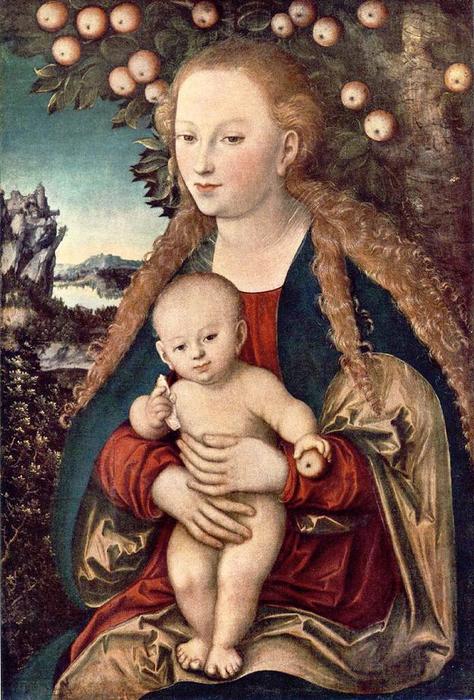
To gaze upon Lucas Cranach The Elder’s "Virgin and Child" is to step directly into the luminous heart of the Northern Renaissance. This exquisite oil on canvas, dating from 1525, transcends a mere depiction; it is a profound meditation on motherhood, divinity, and enduring grace. The composition immediately draws the eye to the tender intimacy shared between Mary and the Christ Child. Cranach captures not just their physical likenesses, but the very essence of devotion etched upon their faces. The Virgin, adorned with regal bearing yet radiating maternal warmth, cradles her son in an embrace that feels both timeless and deeply personal. It is a masterpiece where technical brilliance serves to illuminate profound spiritual connection.
Symbolism Woven into the Canvas
What elevates this work beyond simple portraiture are the subtle, yet potent, symbolic details scattered throughout the scene. Most notably, the presence of apples adds an intriguing layer of intellectual and theological depth. These fruits invite contemplation—are they emblems of burgeoning knowledge, symbols of divine wisdom, or do they whisper echoes of the forbidden fruit from Eden? Cranach masterfully integrates these elements so that they feel organic to the narrative, encouraging the viewer to look closer, to decipher the layers of meaning embedded within the vibrant colors and delicate brushstrokes. The symbolism here transforms the painting into a rich tapestry for scholarly and devotional contemplation alike.
Mastery of Northern Renaissance Technique
Lucas Cranach The Elder was a pivotal figure in German art, and his technique is evident in every visible texture. His handling of oil paint allows for an almost palpable sense of life—the soft folds of Mary’s drapery, the smooth skin of the child, and the subtle sheen on the apples are rendered with breathtaking precision. This attention to detail, characteristic of the Northern Renaissance, contrasts beautifully with the emotional sweep of the subject matter. His ability to marry meticulous craftsmanship with deep feeling is what makes this piece so enduringly captivating.
A Touch for the Modern Collector
For those seeking an artwork that speaks to history, spirituality, and unparalleled artistic skill, a reproduction of "Virgin and Child" offers an extraordinary focal point. Imagine this vision gracing your walls, bringing with it the quiet dignity of 16th-century German artistry. It is not merely decoration; it is a conversation piece, inviting guests to pause, reflect, and admire the enduring power of human connection filtered through the lens of genius. Owning or displaying this work connects you tangibly to the cultural currents and artistic heights of the Renaissance masters.