A Moment of Trembling Faith: The Drama of Ludovico Carracci
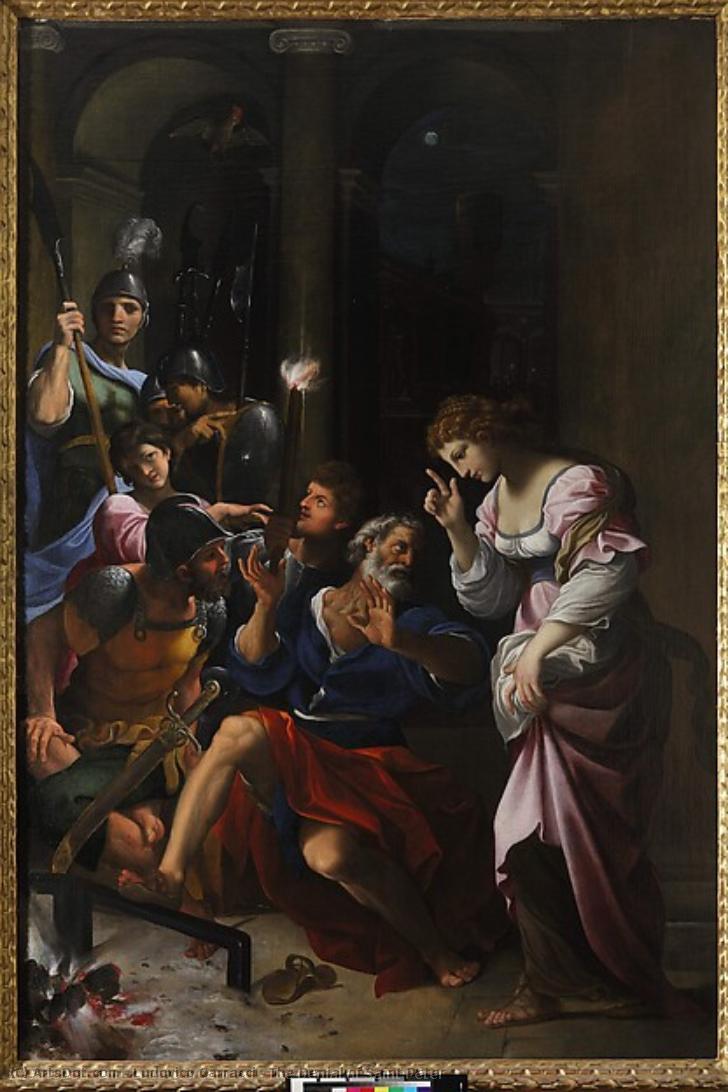
In the quiet intensity of 1616, Ludovico Carracci captured a moment of profound human frailty that would resonate through the centuries. The Denial of Saint Peter is not merely a religious illustration; it is a visceral exploration of the thin line between devotion and betrayal. As the Bolognese Baroque movement began to reshape the European consciousness, Carracci utilized this pivotal biblical scene to stage a psychological drama. The viewer is thrust into the heat of the courtyard, where the flickering light of glowing coals mirrors the internal agitation of Saint Peter. In this masterpiece, we witness the exact heartbeat where certainty dissolves into doubt, making it an essential piece for any collection focused on the transformative power of emotional realism.
The composition itself is a masterclass in Baroque innovation, designed to pull the observer directly into the unfolding tension. Carracci employs a sophisticated and somewhat unsettling use of perspective; notice how the embers and coals seem to ascend into our physical space, while the figures in the background lean back, creating a rhythmic depth that breathes life into the canvas. Through his masterful application of chiaroscuro, the artist orchestrates a dance of light and shadow. The dramatic contrasts do more than just define form; they guide the eye toward the central conflict, illuminating the weathered faces of the accusers and the agonizing expression of Peter, while plunging the periphery into a mysterious, atmospheric gloom.
Symbolism and the Soul of the Baroque
Beyond the immediate narrative of the Gospels, every element within the frame serves a symbolic purpose, enriching the painting with layers of meaning. The presence of swords—one positioned near the top left and another toward the bottom right—introduces an underlying current of violence and impending judgment, height,ening the sense of peril. Even the seemingly mundane details, such as the chair situated to the side, ground the divine tragedy in a tangible, earthly reality. This blend of the monumental and the domestic is a hallmark of the Carracci legacy, bridging the gap between classical idealism and the raw, unvarnished truth of human experience.
For the discerning collector or interior designer, this artwork offers more than just visual splendor; it provides a focal point of profound intellectual and emotional gravity. The painting embodies the transition from the artificial elegance of Mannerism to a new era of naturalism and spiritual fervor. To hang a reproduction of this work is to invite a conversation about resilience, vulnerability, and the enduring complexity of the human spirit into a space. It remains a timeless testament to the period when art moved away from rigid perfection toward a more profound, breathing connection with the viewer's own soul.