A Brushstroke of Rococo Grandeur – Exploring Jean-Marc Nattier’s Madame Henriette
Jean-Marc Nattier’s *Madame Henriette*, completed in 1754, stands as a quintessential exemplar of the Rococo style—a movement that prioritized ornamentation, pastel hues, and an idealized depiction of aristocratic life. More than just a likeness of Princess Henriette Adelaide of Savoy, it embodies the spirit of its era, reflecting the opulent tastes and refined sensibilities of Louis XV’s court.
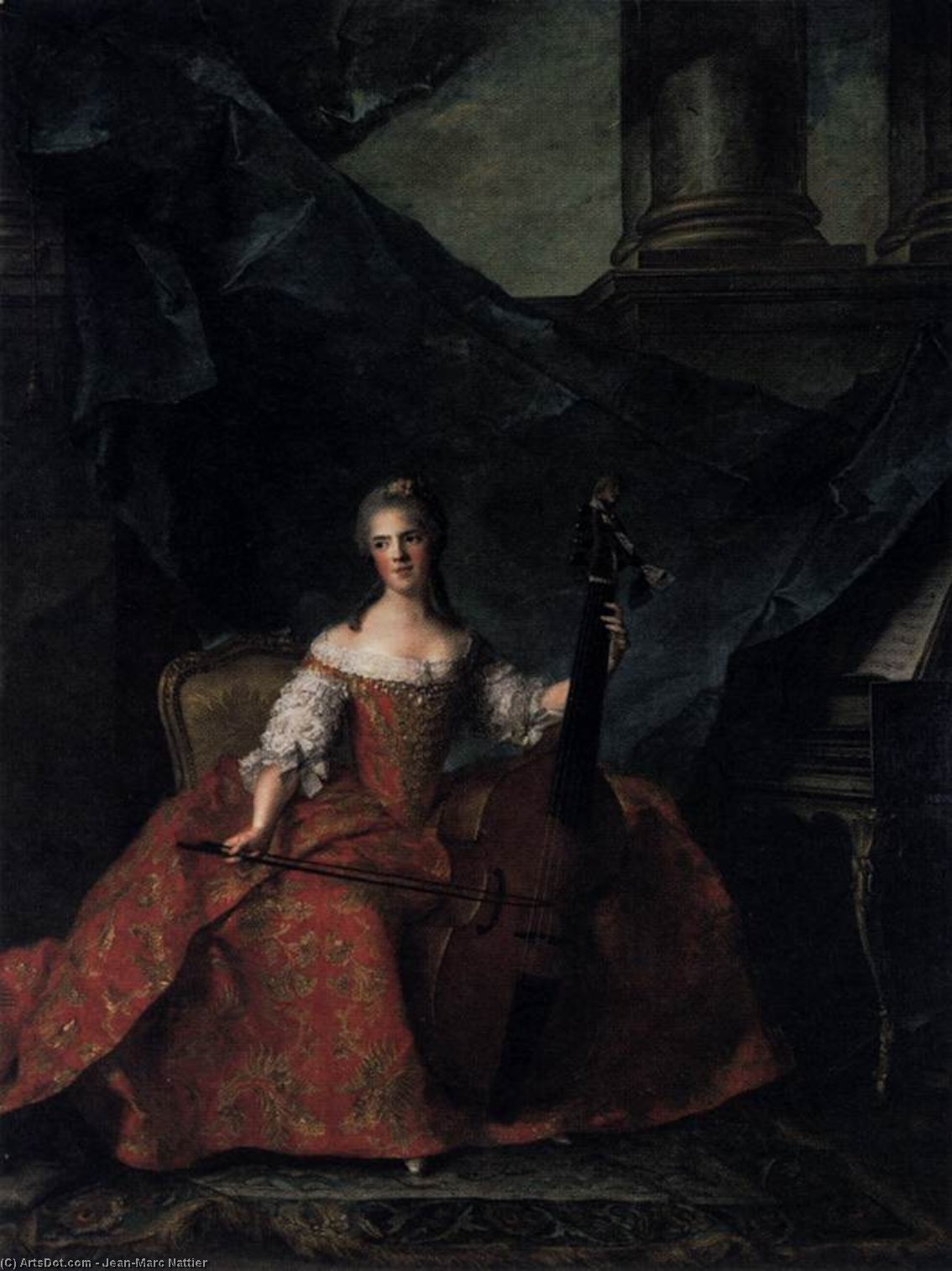
- Subject Matter: The portrait captures Madame Henriette seated gracefully in a chair, her gaze directed towards the viewer with an understated composure. Her posture exudes confidence and refinement, mirroring the social standing she represented.
- Composition & Style: Nattier employed the Rigaud style—a technique characterized by expansive drapery and architectural framing—creating a theatrical backdrop that elevates the figure’s importance. The artist skillfully utilized chiaroscuro, subtly modulating light and shadow to sculpt Madame Henriette's form and imbue the scene with depth.
Technical Mastery: Color Palette & Texture
Nattier’s masterful use of color is immediately striking. Dominating the canvas are shades of crimson—a bold choice that underscores Madame Henriette’s wealth and status. Delicate pastel tones adorn her gown and collar, contributing to an overall atmosphere of ethereal beauty. The artist meticulously rendered fabrics with painstaking detail, capturing the shimmer of silk and lace through delicate brushstrokes. This textural richness enhances the visual impact of the portrait.
Historical Context: Patronage & Artistic Conventions
Commissioned by Louis XV himself, *Madame Henriette* exemplifies the pervasive influence of aristocratic patronage on artistic production during the Rococo period. Nattier’s work adhered to established conventions—the depiction of noblewomen engaged in activities deemed appropriate for their social position—emphasizing grace, modesty, and idealized femininity. The cello or bass violin held by Madame Henriette serves as a symbol of musical culture and aristocratic refinement.
Symbolism & Emotional Resonance
Beyond its formal elements, *Madame Henriette* communicates profound emotional resonance. The princess’s serene expression conveys inner tranquility and dignity—a reflection of the idealized virtues prized by Rococo artists. The careful positioning of Madame Henriette within the architectural setting reinforces her elevated status and underscores the grandeur of the royal court. Ultimately, Nattier's portrait transcends mere representation, capturing a moment of aristocratic elegance that continues to captivate viewers centuries later.
A Legacy of Elegance: Reproduction Considerations
Reproductions of *Madame Henriette* offer an opportunity to experience the beauty and sophistication of Rococo art firsthand. ArtsDot’s hand-painted reproductions meticulously recreate Nattier's original technique, ensuring that collectors can appreciate the nuances of color, texture, and composition—a testament to the enduring legacy of this iconic masterpiece.