A Window Into the Brazilian Rainforest: Marianne North’s “A Brazilian Orchid”
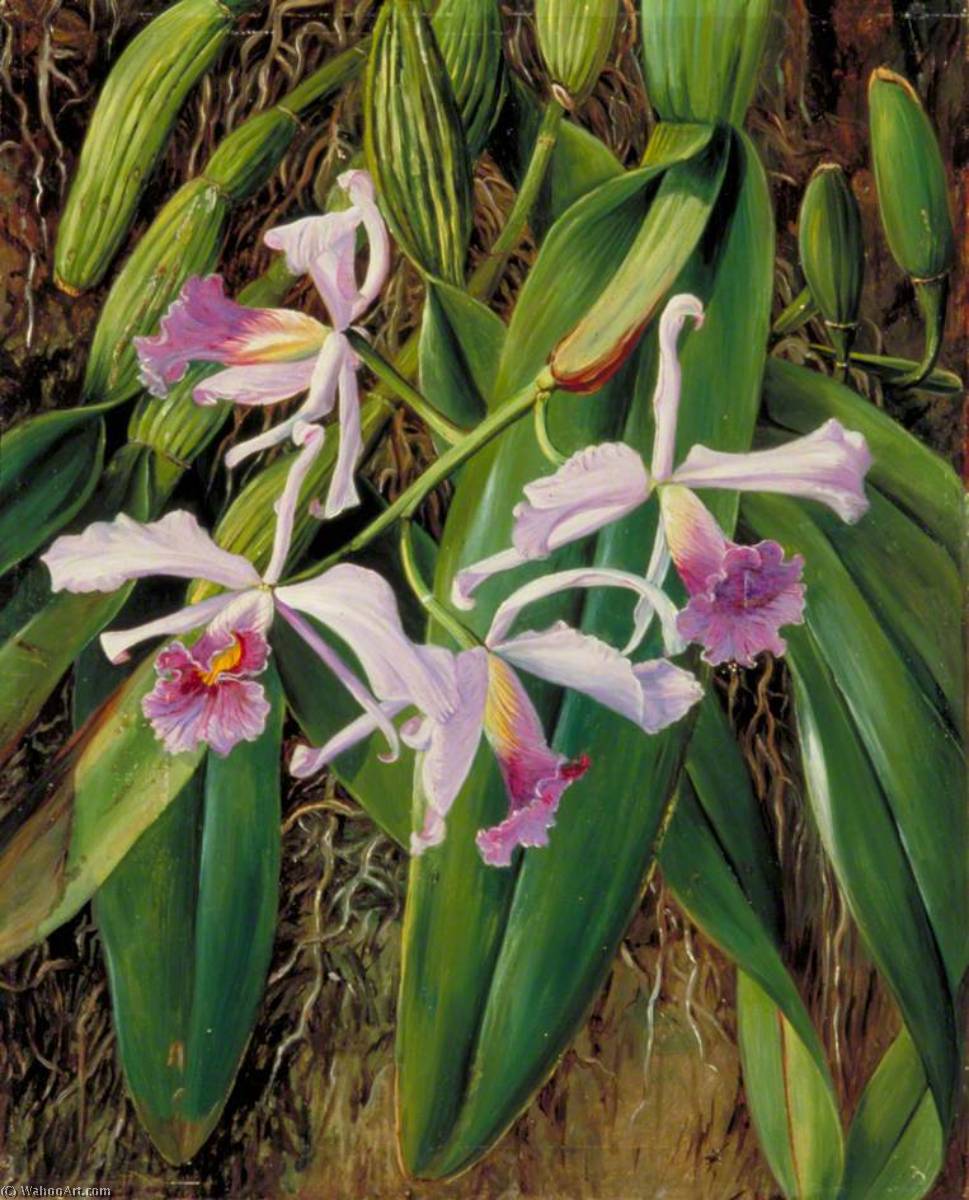
Marianne North's "A Brazilian Orchid," painted in 1873, isn’t merely a botanical illustration; it’s a vibrant portal into the heart of South America. This exquisite work, housed within the Royal Botanic Gardens, Kew, offers a glimpse into the Victorian era’s fascination with exploration and the burgeoning field of botany, all rendered through North's remarkably sensitive artistic eye. The painting captures a cluster of orchids – likely from the genus Oncidium – thriving amidst lush foliage, their delicate forms bathed in dappled sunlight that suggests a hidden corner within the dense Brazilian rainforest.
North’s approach to botanical art was revolutionary for her time. Rejecting the prevailing academic style focused on meticulous detail and scientific accuracy above all else, she prioritized capturing the *essence* of the plant – its color, texture, and overall mood. This is evident in “A Brazilian Orchid,” where the artist employs a loose, impressionistic technique. The petals aren’t rendered with photographic precision; instead, they are suggested through broad brushstrokes and a masterful manipulation of light and shadow. Notice how she uses varying shades of purple and white to create depth and volume, mimicking the way sunlight filters through leaves and illuminates the orchids' intricate structures. The background foliage isn’t simply sketched in; it’s built up with layers of color and texture, contributing significantly to the painting’s overall sense of atmosphere.
A Victorian Adventurer’s World
Marianne North (1830-1890) was a truly remarkable figure – an intrepid explorer, self-taught botanist, and prolific artist. Born into privilege in Hastings, England, she defied societal expectations by embarking on a lifetime of independent travel and artistic pursuit. Her journey to Brazil, undertaken between 1875 and 1878, represents the apex of her botanical explorations. During this time, North meticulously documented hundreds of plant species, often working from makeshift studios deep within the rainforest, relying on local guides and her own resourcefulness. This wasn’t a leisurely expedition; it was a dedicated scientific endeavor fueled by an insatiable curiosity and a profound respect for the natural world.
Her travels were largely funded by her own resources and supported by patrons like Frederic Edwin Church, a prominent American landscape painter who recognized North's talent and encouraged her expeditions. Church’s influence played a crucial role in shaping North’s artistic vision, emphasizing the importance of capturing not just the appearance of plants but also their inherent beauty and vitality. The painting reflects this ethos – it’s a celebration of botanical diversity and a testament to the transformative power of experiencing nature firsthand.
Symbolism and Emotional Resonance
Orchids, particularly those found in tropical environments like Brazil, carry rich symbolic weight. They are frequently associated with beauty, rarity, luxury, and – crucially – femininity. In Victorian culture, orchids were often given as tokens of affection and admiration, representing delicate grace and refined taste. North’s choice to focus on these exquisite blooms speaks to the prevailing aesthetic sensibilities of her era, while simultaneously highlighting their inherent allure.
Beyond their symbolic significance, “A Brazilian Orchid” evokes a powerful sense of tranquility and wonder. The dappled light, the vibrant colors, and the intricate details of the orchids create an immersive experience for the viewer—a feeling of being transported to a remote corner of the rainforest. The painting’s emotional impact is subtle yet profound, inviting us to contemplate the beauty and fragility of the natural world and the enduring legacy of exploration and artistic observation.
A Legacy Preserved
Today, “A Brazilian Orchid” stands as a remarkable example of Victorian botanical art and a testament to Marianne North’s extraordinary life. Her gallery at Kew Gardens houses over 800 of her paintings, offering visitors an unparalleled opportunity to witness the breadth of her travels and artistic achievements. Reproductions of this painting, like those offered by ArtsDot.com, allow us to appreciate North's skill and vision while simultaneously celebrating the enduring beauty of the Brazilian rainforest.