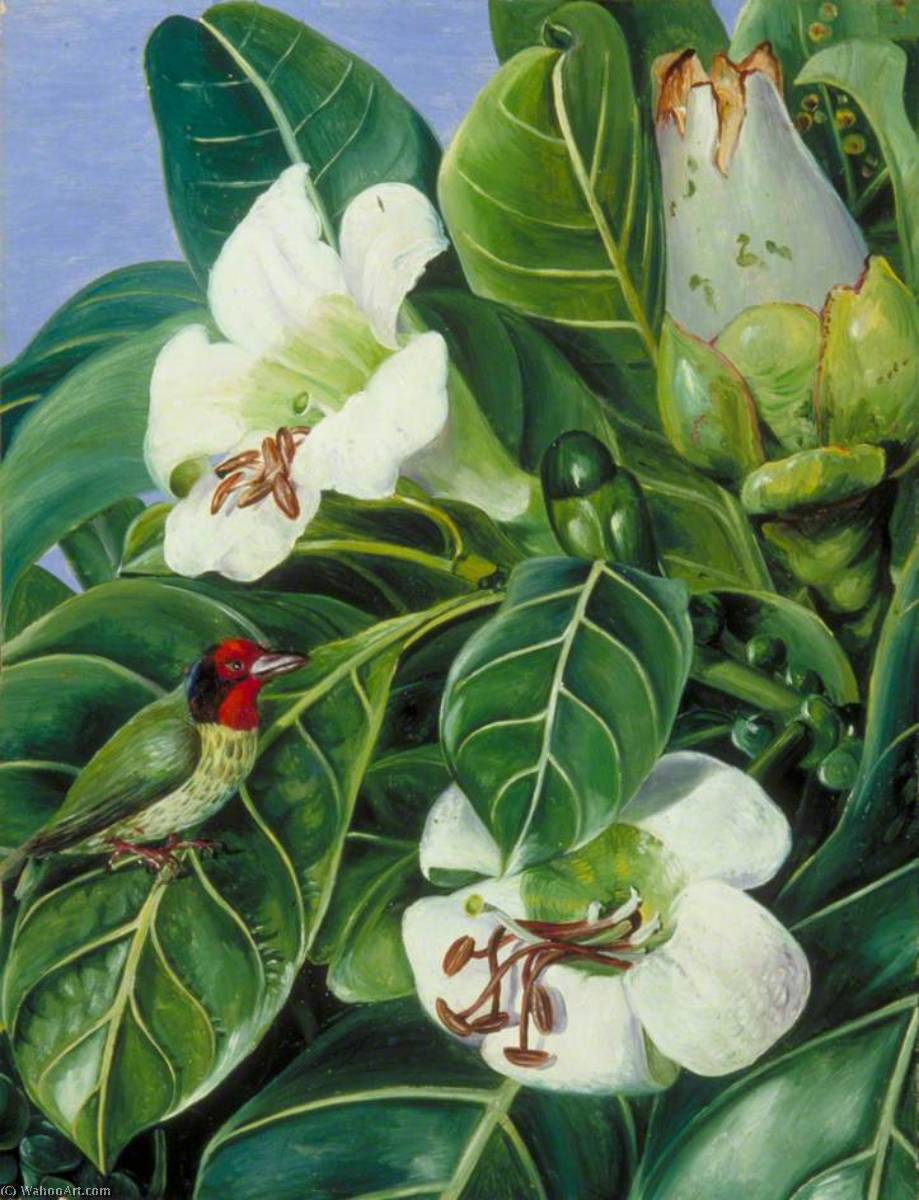
A Window into the Heart of Java: Marianne North’s ‘Foliage and Flowers of a Forest Tree of Java’
Marianne North's “Foliage and Flowers of a Forest Tree of Java” isn’t merely a botanical illustration; it’s a vibrant portal to a world teeming with life, color, and the intrepid spirit of a Victorian explorer. Painted in 1876, this exquisite work captures a moment within the dense, humid heart of Java, transporting the viewer to a realm of dappled sunlight filtering through emerald leaves and punctuated by the delicate blush of exotic blossoms. More than just a depiction of flora, it’s an embodiment of North's relentless curiosity and her profound connection with the natural world – a testament to a woman who defied societal expectations to forge her own path as both artist and scientist.
North, a remarkable figure in Victorian art history, embarked on a decades-long journey across continents, meticulously documenting plant life. Unlike many of her contemporaries who confined themselves to domestic pursuits, she actively sought out remote locales, often traveling alone with minimal support. This dedication resulted in over 800 paintings, each a testament to her unwavering commitment and artistic skill. “Foliage and Flowers of a Forest Tree of Java” exemplifies this approach – it’s not simply a painting; it's the product of extensive observation, careful study, and an intimate understanding of the subject matter.
The Art of Observation: Technique and Detail
The painting’s immediate impact lies in its astonishing level of detail. North employed a meticulous watercolor technique, layering translucent washes to build up the image with remarkable precision. The artist skillfully captured the intricate textures of the leaves – their velvety sheen, the subtle variations in color, and the delicate veins that crisscross each surface. The white flowers are rendered with an almost ethereal quality, their petals delicately defined and illuminated by a soft light. Notice how she doesn’t shy away from depicting imperfections; tiny droplets of water cling to the leaves, adding a sense of realism and immediacy.
Furthermore, North's use of color is masterful. She avoids overly bright or artificial hues, opting instead for a palette that accurately reflects the natural tones of the forest – deep greens, earthy browns, and delicate shades of pink and white. The interplay of light and shadow creates a sense of depth and atmosphere, drawing the viewer into the heart of the scene. The inclusion of a small bird perched on a branch adds an element of life and movement, further enhancing the painting’s vibrancy.
Symbolism and Victorian Context
“Foliage and Flowers of a Forest Tree of Java” is deeply rooted in the context of the Victorian era. During this period, there was a growing fascination with botany, natural history, and exotic landscapes – fueled by advancements in travel and communication. North’s work reflects this trend, aligning her with the broader movement to document and celebrate the wonders of the natural world. The inclusion of the bird can be interpreted as a symbol of observation and connection—a reminder that even within the vastness of nature, there is always something new to discover.
Beyond its scientific value, the painting also speaks to Victorian ideals of exploration and adventure. North’s journey through Java represents a bold assertion of female independence and a rejection of traditional gender roles. Her dedication to her art and her willingness to venture into uncharted territories make her a compelling figure in both artistic and historical narratives.
A Timeless Masterpiece: Reproduction and Legacy
Today, “Foliage and Flowers of a Forest Tree of Java” stands as a testament to Marianne North’s extraordinary talent and unwavering spirit. Reproductions capture the essence of her original work, offering a beautiful way to bring this captivating scene into your home or office. The painting's rich colors and intricate details continue to inspire awe and admiration, reminding us of the beauty and diversity of the natural world.
Consider commissioning a hand-painted reproduction from ArtsDot.com – a faithful recreation that honors North’s legacy while adding your own personal touch to your space. It's more than just a decoration; it's an investment in art, history, and the enduring spirit of exploration.