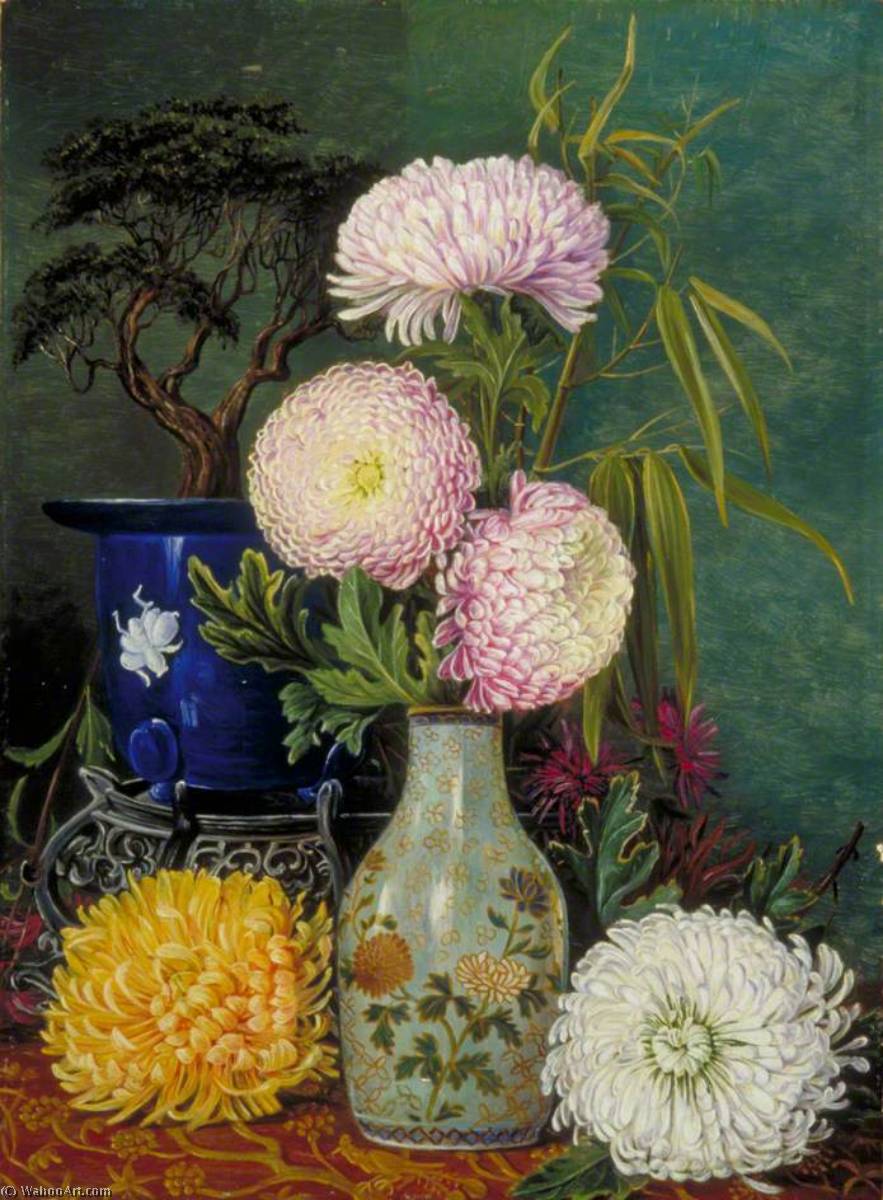
A Study in Eastern Harmony: Marianne North’s Chrysanthemums and Dwarfed Pine
This exquisite study, “Study of Japanese Chrysanthemums and Dwarfed Pine,” offers a captivating glimpse into the world of Victorian explorer and artist, Marianne North. Painted in 1876, this work transcends a simple still life; it's a profound meditation on nature’s beauty, resilience, and the symbolic language embedded within East Asian art traditions. Measuring 47 x 35 cm, the canvas holds a meticulously rendered arrangement of chrysanthemums – symbols of nobility and enduring beauty – nestled amongst delicate vases and a diminutive bonsai tree, a miniature representation of strength and harmony. The dark, muted green background isn’t merely a backdrop; it dramatically elevates the vibrant colors of the flowers, drawing the viewer's eye into the heart of this carefully constructed composition.
- A Victorian Pioneer: Marianne North (1830-1890) was an extraordinary figure – a woman who defied societal expectations to pursue her artistic passions with unwavering determination. Her life, marked by intrepid exploration and botanical study, reads like a thrilling adventure story.
- Botanical Exploration: Driven by a deep fascination for the natural world, North embarked on a remarkable journey that took her across Asia and Africa, documenting flora from diverse environments. This artwork reflects her meticulous observation skills and her commitment to capturing the essence of each plant she encountered.
Technique and Style – Layers of Impression
The painting’s execution is masterful, showcasing North's skill in oil on canvas. The artist employed a technique of layering glazes—a hallmark of Chinese floral painting—to build up color and luminosity with remarkable depth. Visible brushstrokes contribute to a sense of materiality, particularly evident in the leaves and blossoms, creating an almost tactile quality. The composition itself is rooted in traditional Chinese aesthetics, characterized by flattened perspective and an emphasis on spatial relationships achieved through overlapping elements and subtle tonal variations. This approach avoids the stark realism favored in Western art, instead prioritizing a stylized representation that captures the spirit of the subject.
Symbolism and Cultural Resonance
More than just a beautiful arrangement, “Study of Japanese Chrysanthemums and Dwarfed Pine” is laden with symbolic meaning. The chrysanthemums, revered in East Asian cultures, represent longevity, prosperity, and nobility – virtues highly valued during the late Victorian era. The bonsai tree, meticulously shaped to resemble full-sized pines, embodies resilience, harmony, and a connection to nature’s enduring power. The choice of Japanese motifs speaks to North's extensive travels and her deep appreciation for East Asian artistic traditions, reflecting a growing interest in Eastern philosophies and aesthetics within the Western world.
Emotional Impact and Artistic Legacy
This artwork evokes a sense of tranquility and contemplation, inviting the viewer to appreciate the delicate beauty of nature. The diffused lighting and soft curves contribute to an organic feel, while the carefully constructed composition suggests a profound respect for artistry and the natural world. Marianne North’s legacy extends beyond her artistic achievements; she represents a spirit of adventure, independence, and unwavering dedication—qualities that continue to inspire admiration today. A hand-painted reproduction offers a unique opportunity to own a piece of this remarkable artist's vision.