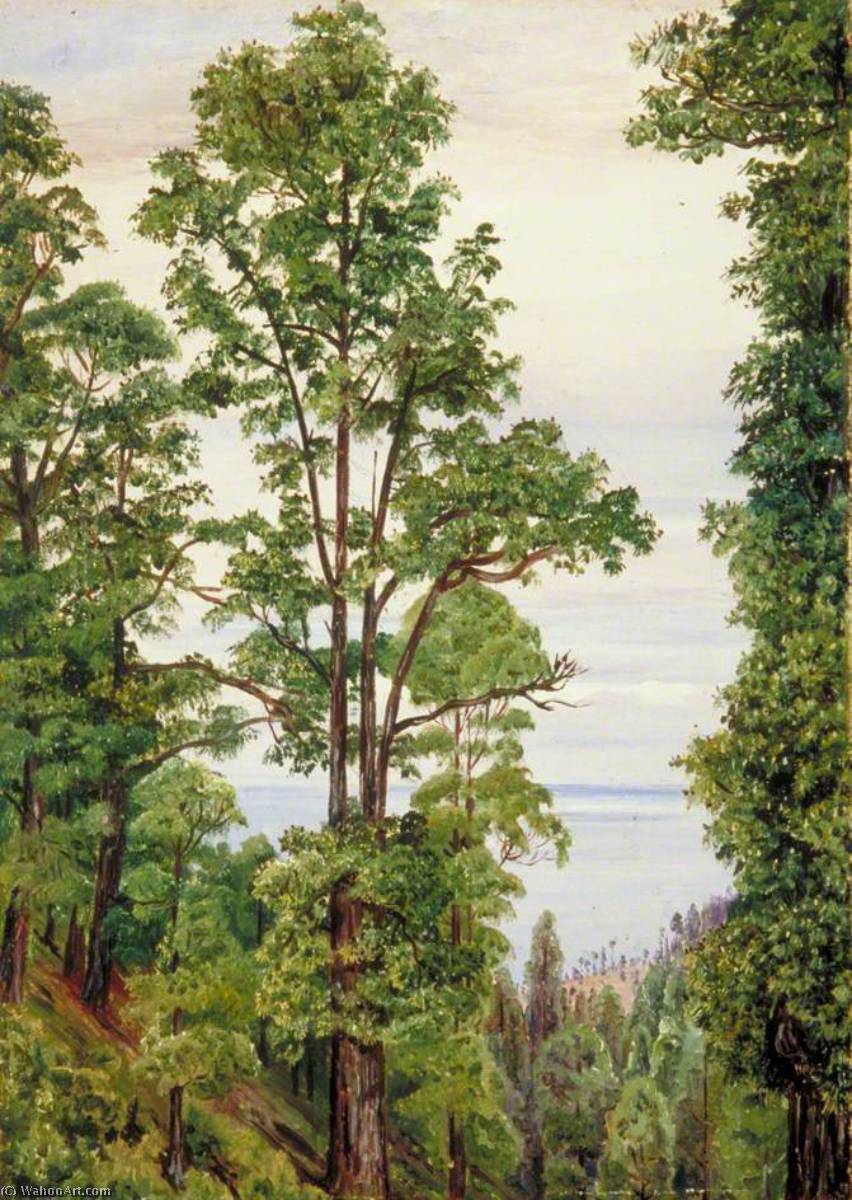
Marianne North’s “The Canary Islands Pine at Icod, Teneriffe”: A Symphony of Light and Observation
Marianne North (1830–1890) wasn't merely painting trees; she was conducting an experiment in visual perception. Born into a wealthy Victorian family in Hastings, England, her early life seemed destined for musical pursuits—a path swiftly redirected by illness towards the meticulous art of botanical illustration. This decision wasn’t born out of mere comfort but from a profound conviction: to truly understand nature, one must capture its essence with unwavering detail and luminous color. “The Canary Islands Pine at Icod, Teneriffe,” completed in 1875, embodies this ethos perfectly—a testament to North's pioneering approach to scientific art.
- Subject Matter: The painting depicts a towering pine tree situated in the picturesque town of Icod de los Vinos, Tenerife, Canary Islands. This location was chosen deliberately by North – it’s renowned for its ancient pines, some estimated to be over 800 years old, and considered among the oldest trees on Earth.
- Style: North's style leans heavily into Impressionism, albeit infused with a distinctly scientific gaze. Unlike many Impressionists who prioritized capturing fleeting atmospheric effects, she meticulously rendered textures and hues, striving for accuracy while simultaneously conveying the grandeur of the landscape.
- Technique: Employing oil paints on canvas, North utilized layering techniques—thin glazes over thicker underpaintings—to achieve remarkable luminosity and depth. Her brushstrokes are visible yet blended seamlessly, creating an illusion of movement and capturing the dappled sunlight filtering through the pine needles. The artist’s careful observation is palpable in every detail.
Historical Context: North undertook this expedition to Tenerife at a time when botanical illustration was gaining prominence as a tool for scientific advancement. Linnaeus's system of taxonomy was reshaping our understanding of the natural world, and artists like North recognized the importance of visual representation in disseminating knowledge about plant species and their habitats. Her work challenged conventional artistic conventions by prioritizing scientific accuracy alongside aesthetic beauty—a bold stance for her era.
Symbolism & Emotional Impact: Beyond its technical brilliance, “The Canary Islands Pine at Icod” resonates with deeper symbolic meanings. The pine tree itself represents resilience, longevity, and steadfastness – qualities mirroring North’s own unwavering dedication to her craft and her passion for exploring the natural world. The painting evokes a sense of serenity and awe, inviting viewers to contemplate the sublime beauty of nature and the transformative power of observation. It's more than just a depiction of a tree; it’s an embodiment of Victorian scientific idealism—a celebration of both meticulous detail and profound wonder.
- Size: 36 x 25 cm
- Date: 1875
The painting's enduring appeal lies in its ability to transport us back to a bygone era—a time when scientific curiosity and artistic creativity converged to illuminate the wonders of the natural world. Marianne North’s “The Canary Islands Pine at Icod, Teneriffe” remains an inspiring example of how art can serve as both a record of observation and a conduit for emotional experience.