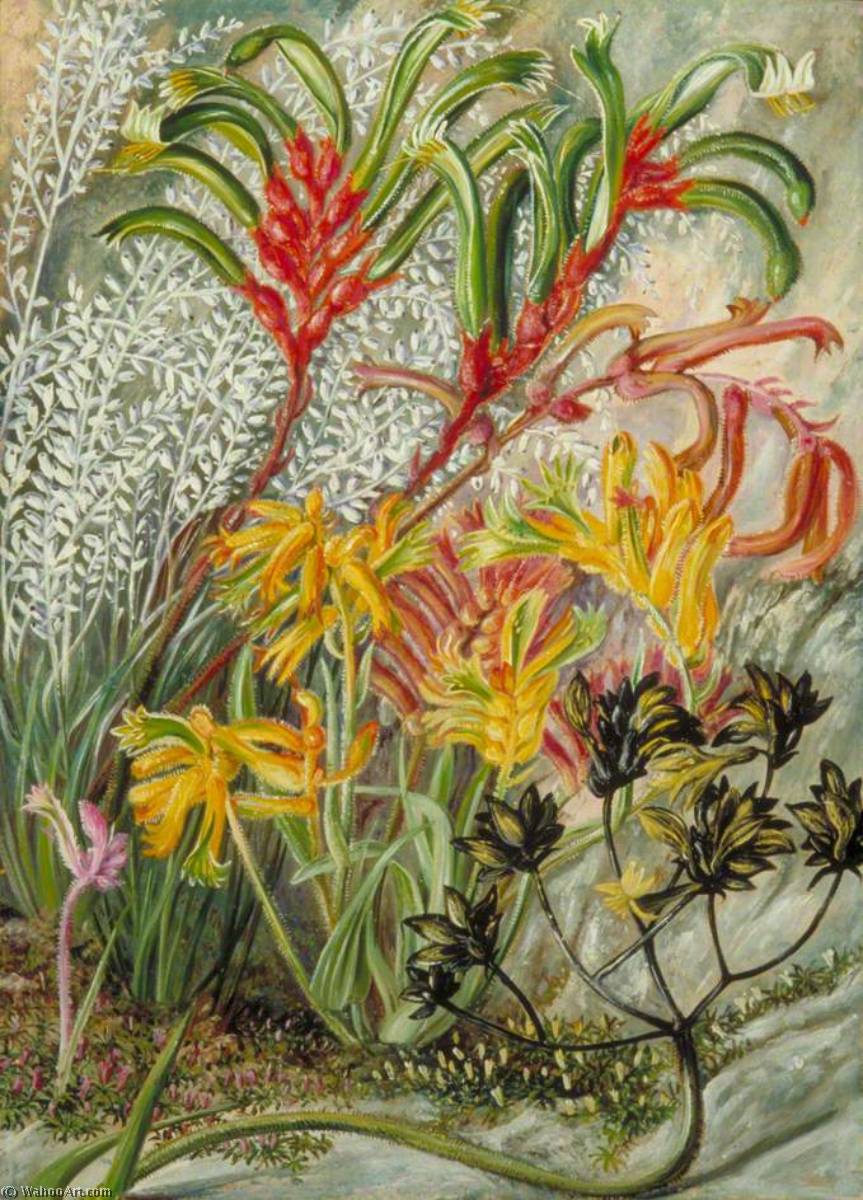
Discover Marianne North’s ‘West Australian Vegetation,’ a vibrant 1880 oil painting of a pink cockatoo & lush flora. Explore naturalism, romantic detail & botanical beauty.
19世紀の冒険家であり植物画家、マリアンヌ・ノース。世界各地を旅し、熱帯地域の植物を鮮やかに描き出しました。ロンドン Kew Gardens にある彼女自身のギャラリーは、800点以上の作品が展示され、その芸術性と科学的な貢献は今も高く評価されています。
キューガーデンズで、ヴィクトリア朝の植物画家マリアン・ノースの魅惑的な世界を体験しましょう!彼女の世界旅行から生まれた800点以上の鮮やかな絵画は、エキゾチックな植物を紹介し、当時の芸術的慣習に挑戦しています。
Marianne North’s Floral Tapestry: A Victorian Explorer's Ode to Australian Flora
Marianne North (1830 – 1890), born into a comfortable English family, defied societal expectations of her time—abandoning the conventional pursuits of marriage and motherhood for an extraordinary life dedicated to scientific observation and artistic expression. Her journey began with musical aspirations but swiftly pivoted toward botany when illness curtailed her musical ambitions, marking the genesis of a career that would propel her across continents and solidify her legacy as one of Victorian Britain’s most celebrated botanical artists. This fascination with the natural world wasn't merely academic; it was infused with Romantic idealism—a belief in the sublime beauty of nature and its capacity to inspire awe and wonder.
A Pioneer of Naturalism: Style and Technique
North’s artistic style is undeniably rooted in Naturalism, a movement that championed meticulous detail and truthful representation of the natural environment. Unlike Impressionists who sought to capture fleeting moments of light and color, North painstakingly documented plant specimens with unwavering accuracy. Her technique involved layering thin glazes of oil paint—a painstaking process requiring immense patience and precision—to achieve luminous colors and subtle tonal variations. She meticulously studied her subjects under magnification, capturing the intricate textures and patterns of petals, stems, and leaves with remarkable fidelity. This dedication to realism distinguishes her work from other Victorian botanical paintings, elevating it beyond mere decorative embellishment into a profound statement about scientific discovery.
Journey to Western Australia: Context and Inspiration
North’s expeditions to Western Australia in 1880 represent a pivotal moment in her artistic development and underscore the broader intellectual currents of the Victorian era. Driven by an unwavering curiosity and fueled by advancements in microscopy, she embarked on a solo voyage determined to record the flora of the region with unprecedented detail. Her travels coincided with burgeoning interest in Darwinian evolution—the groundbreaking theory proposing that species adapt over time through natural selection—which profoundly influenced scientific thought and artistic sensibilities. The Australian landscape itself served as an inspiration, embodying both rugged wilderness and breathtaking beauty—themes frequently explored by Romantic artists seeking to capture the grandeur of God’s creation.
Symbolism Within Detail: Flowers as Vessels of Emotion
Beyond its technical brilliance, ‘Flowers of a West Australian Shrub and Kangaroo Feet’ resonates with symbolic significance. Each flower meticulously rendered speaks volumes about North's artistic vision—a desire to convey not just visual information but also emotional resonance. The vibrant hues capture the exuberance of life itself, mirroring the optimism characteristic of Victorian Romanticism. Furthermore, the careful depiction of individual plant specimens reflects a broader humanist concern for understanding and appreciating the complexities of the natural world. Like many artists of her time, North sought to elevate art beyond mere aesthetic pleasure, aiming instead to communicate profound truths about humanity’s relationship with nature—a legacy that continues to inspire admiration and contemplation today.
A Timeless Masterpiece: Emotional Impact and Enduring Beauty
The painting's enduring appeal lies in its ability to transport viewers back to Victorian Britain—capturing the spirit of scientific exploration alongside artistic idealism. The luminous colors and meticulous detail evoke a sense of wonder and reverence for the natural world, mirroring North’s own passionate devotion to botanical observation. More than just a beautiful image, ‘Flowers of a West Australian Shrub and Kangaroo Feet’ embodies a larger philosophical inquiry—a celebration of beauty, truth, and the transformative power of encountering nature's majesty. It stands as a testament to Marianne North’s extraordinary life and artistic achievement—a floral tapestry woven with threads of scientific rigor and Romantic emotion that continues to captivate audiences worldwide.