A Venetian Echo of Grecian Elegance
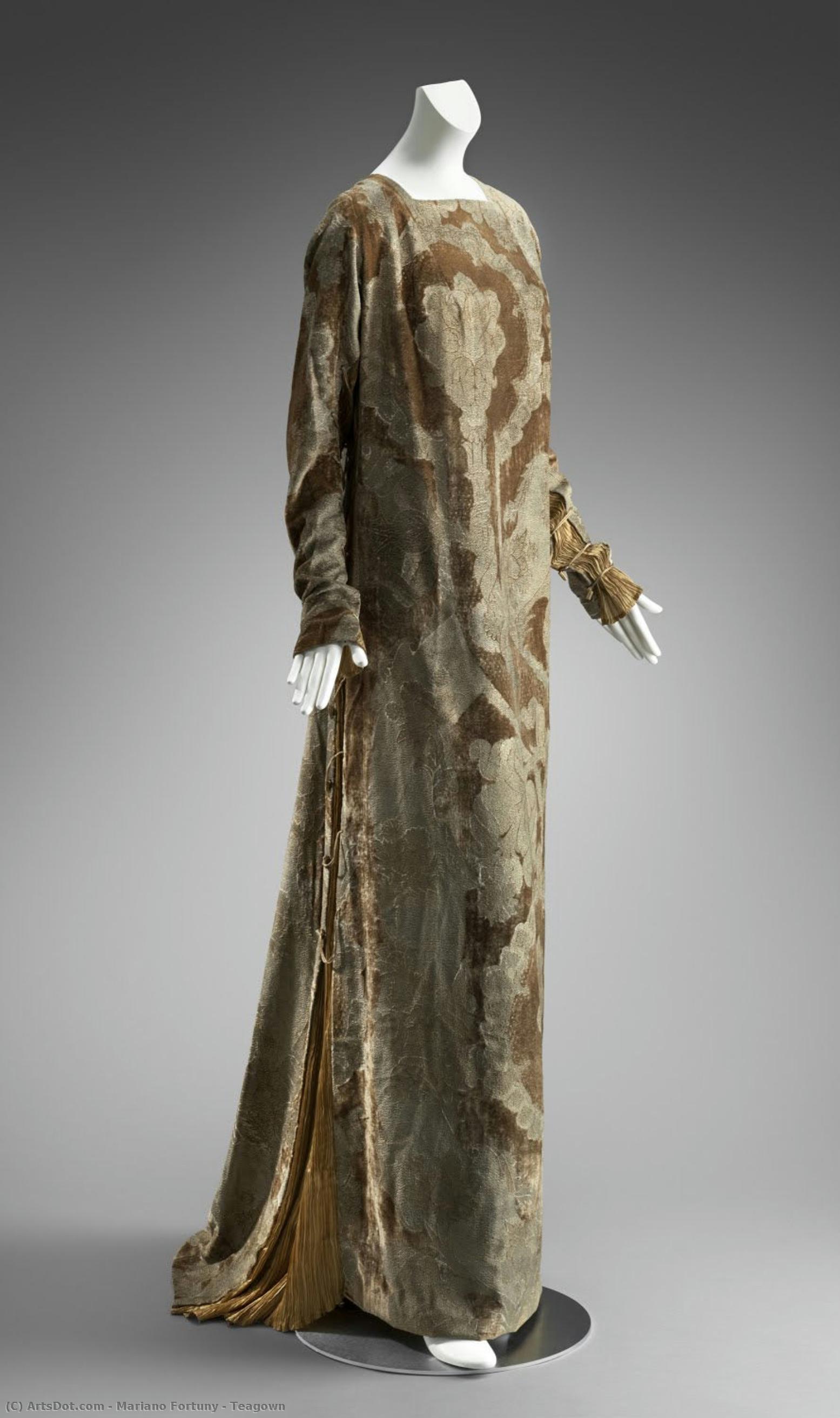
In the pantheon of textile masterpieces, few works possess the ethereal magnetism of Mariano Fortuny’s “Teagown,” completed in 1920. This is not merely a garment; it is a profound dialogue between the opulent textures of the Venetian Belle Époque and the austere, idealized beauty of classical antiquity. As one gazes upon this stunning silk velvet creation, the fabric seems to breathe with the weight of history, acting as a meticulously crafted homage to the ancient Greek chiton. Fortuny, a true polymath of the decorative arts, managed to weave the spirit of a bygone era into every thread, transforming a functional piece of couture into a sculptural relic of grace and sophistication.
The visual impact of the Teagown is rooted in its masterful interplay of light and shadow. Utilizing his unparalleled expertise in textile manipulation, Fortuny employed stenciled gold detailing that catches the light with a subtle, rhythmic shimmer, reminiscent of the sun-drenched surfaces of Delphic bronze sculptures. The velvet itself serves as a lush canvas for an organic narrative; undulating stems and large, sweeping leaves—hallmarks of the celebrated Venetian style—emerge from the deep, mottled tones of the fabric. This technique creates a rich, tactile depth that invites the eye to wander through a landscape of forest greens, earthy browns, and gilded accents, making the dress feel less like a static object and more like a living, breathing piece of art.
Symbolism and the Spirit of an Era
Beyond its physical splendor, the Teagown is steeped in profound symbolism. By drawing direct inspiration from the Greek tunic, Fortuny invoked the classical virtues of innocence, purity, and idealized femininity. This deliberate nod to antiquity was a hallmark of the early 20th-century artistic revival, a period when intellectuals and aesthetes sought refuge in the timeless ideals of the past to escape the rapid industrialization of the modern world. The gold accents do more than provide luster; they serve as emblems of prestige and the lavish tastes of the aristocracy, bridging the gap between the humble simplicity of ancient Greece and the decadent luxury of 1920s high society.
For the discerning collector or interior designer, a reproduction of this masterpiece offers much more than mere decoration. It brings an atmosphere of quiet sophistication and romantic nostalgia into a space. The muted, complex color palette provides a neutral yet deeply textured anchor for sophisticated interiors, evoking feelings of serenity and mystery. Whether showcased as a focal point in a curated gallery or used to inspire the mood of a luxurious living space, the Teagown remains an enduring symbol of aesthetic perfection—a timeless fragment of a dream where art, fashion, and history are inextricably entwined.