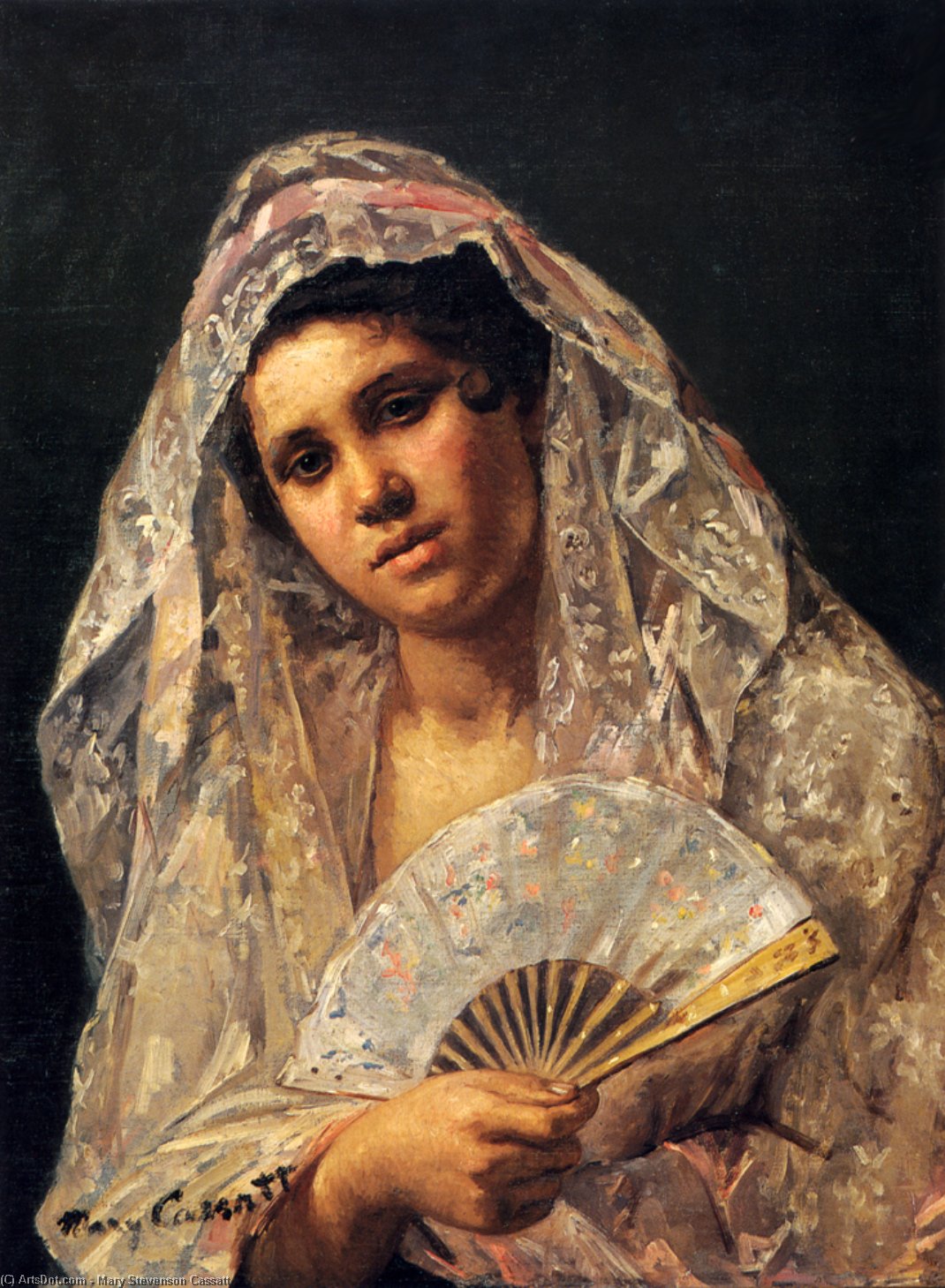
A Portrait of Grace Amidst Impressionistic Light
Mary Stevenson Cassatt’s “Spanish Dancer Wearing a Lace Mantilla,” completed in 1873, stands as a quintessential emblem of Impressionism—a movement that revolutionized painting with its focus on capturing fleeting moments and subjective experience. Currently residing within the Smithsonian American Art Museum's collection, this canvas offers more than just visual beauty; it encapsulates the spirit of its era and speaks volumes about Cassatt’s artistic vision.
Subject Matter and Composition
The painting depicts a woman elegantly dressed in a lace mantilla—a traditional Spanish veil—holding a fan poised delicately in her hand. Her gaze is directed squarely at the viewer, establishing an intimate connection between artist and subject that was characteristic of Cassatt’s oeuvre. Two figures occupy the background, subtly reinforcing the central narrative without overshadowing the dancer's presence. This careful arrangement contributes to the painting’s overall sense of composure and refinement.
Impressionistic Technique: Light and Color
Cassatt skillfully employed Impressionistic techniques—primarily loose brushstrokes and vibrant color palettes—to convey a palpable atmosphere. The artist eschewed meticulous detail, prioritizing instead the transmission of light and its transformative effect on color. Notice how Cassatt utilizes dappled sunlight to illuminate the dancer’s attire and skin tone, creating an illusion of depth and dimensionality that transcends mere representation.
Historical Context: Parisian Salon Society
"Spanish Dancer Wearing a Lace Mantilla" emerged during Cassatt's formative years in Paris—a period marked by significant artistic experimentation and social upheaval. The painting reflects the burgeoning interest in portraying domestic life and female subjects within the context of Impressionism, which challenged academic conventions that favored grand historical narratives.
Symbolism: Lace and Femininity
The lace mantilla itself carries considerable symbolic weight. Traditionally associated with modesty and femininity, it represents a deliberate choice by Cassatt to explore themes of womanhood and domesticity—subjects often marginalized in artistic discourse at the time. The fan serves as both an accessory and a gesture of composure, reinforcing the painting’s overarching message of grace and elegance.
Emotional Impact: Capturing Inner Beauty
Ultimately, Cassatt's masterpiece succeeds in conveying a profound sense of inner beauty—a quiet dignity that transcends mere visual splendor. The painting invites contemplation on themes of observation, intimacy, and the subtle nuances of human emotion—qualities that continue to resonate with viewers today.