A Glimpse into the Soul of Kentucky: The Captivating Presence of John Grimes
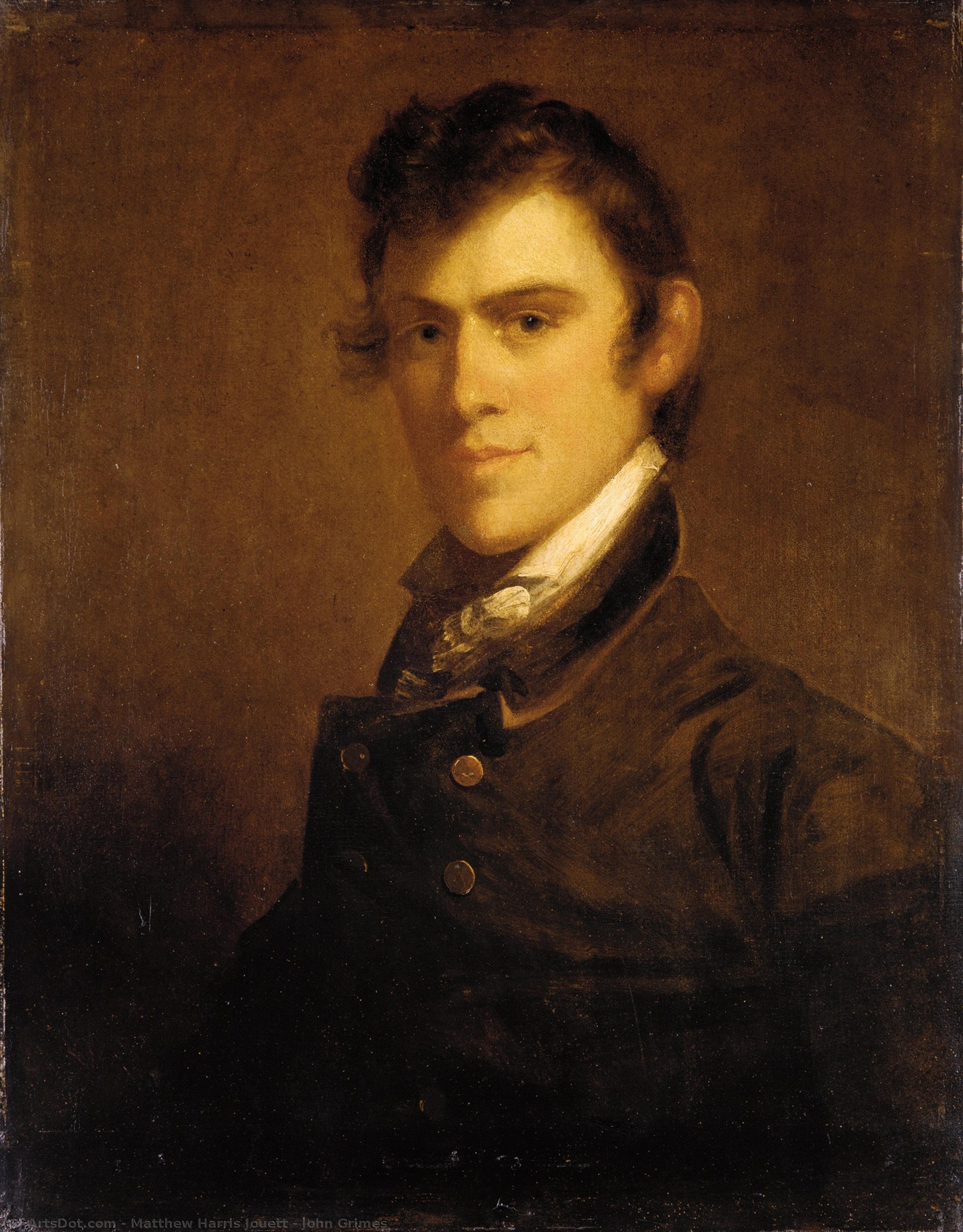
In the quiet, evocative depths of Matthew Harris Jouett’s 1824 masterpiece, "John Grimes," we encounter more than a mere likeness; we meet a moment frozen in the amber of American history. This portrait serves as a profound window into the burgeoning Romantic sensibility that began to stir within the young United States during the early nineteenth century. The subject, John Grimes—a figure of significance in the Kentucky landscape—is presented not just as a man of status, but as a vessel for psychological depth. As your eyes meet his serious, steady gaze, there is an immediate sense of an unfolding narrative, a silent dialogue between the sitter and the observer that transcends the centuries separating us from his era.
The painting is a masterclass in the delicate balance between Neoclassical structure and Romantic expression. While the formal, dignified pose of Grimes echoes the idealized, heroic figures popularized by masters like Jacques-Louis David, Jouett breathes a restless, human energy into the composition. Through the masterful application of chiaroscuro, the artist sculpts the subject out of the shadows, using dramatic contrasts of light and dark to define the contours of his face and the heavy texture of his attire. This technique, reminiscent of the great Caravaggio, does more than create three-dimensional realism; it imbues the portrait with a sense of inner turmoil and contemplative weight, making the sitter feel vibrantly alive.
Technique and Texture: The Artistry of Light and Shadow
For the discerning collector or interior designer, the technical brilliance of Jouett’s work offers endless inspiration. The artist’s meticulous attention to detail is nothing short of extraordinary. One can almost feel the tactile quality of the heavy fabric in Grimes' waistcoat and the subtle, soft shading that defines the weary yet resolute expression around his eyes. Jouett employs a muted, earthy palette—rich with tones of umber, ochre, and deep shadows—which creates an atmosphere of timelessness and stability. This subdued color scheme ensures that the portrait does not merely decorate a space but anchors it, providing a sophisticated focal point that commands respect and invites prolonged study.
The composition is further enriched by a subtle play of light that directs the viewer's attention to the subject's character. The way the light catches the forehead and cheekbones suggests an intellectual vitality, while the receding shadows suggest the mysteries of the private self. This interplay of light and shadow makes "John Grimes" an ideal piece for curated collections or high-end residential settings where art is intended to evoke a sense of heritage, permanence, and profound emotional resonance.
A Legacy of Tradition and Transformation
To understand this portrait is to understand the spirit of Kentucky in 1824. During this period, the region was transitioning from a rugged frontier into a settled, sophisticated statehood. The portrait reflects the dual aspirations of this era: a deep reverence for lineage and tradition, coupled with the burgeoning individual identity that would define the American character. By capturing Grimes with such dignity, Jouett was participating in a larger cultural movement—a revival of portraiture that sought to document the faces of a new nation's leaders and landowners.
Owning a high-quality reproduction of this work allows one to bring this piece of American history into a contemporary setting. Whether placed in a library, a study, or a grand hallway, "John Grimes" acts as a bridge between the past and the present. It offers an aesthetic of quiet strength and intellectual depth, making it a perfect choice for those who seek to surround themselves with art that possesses both historical gravity and an enduring, soulful beauty.