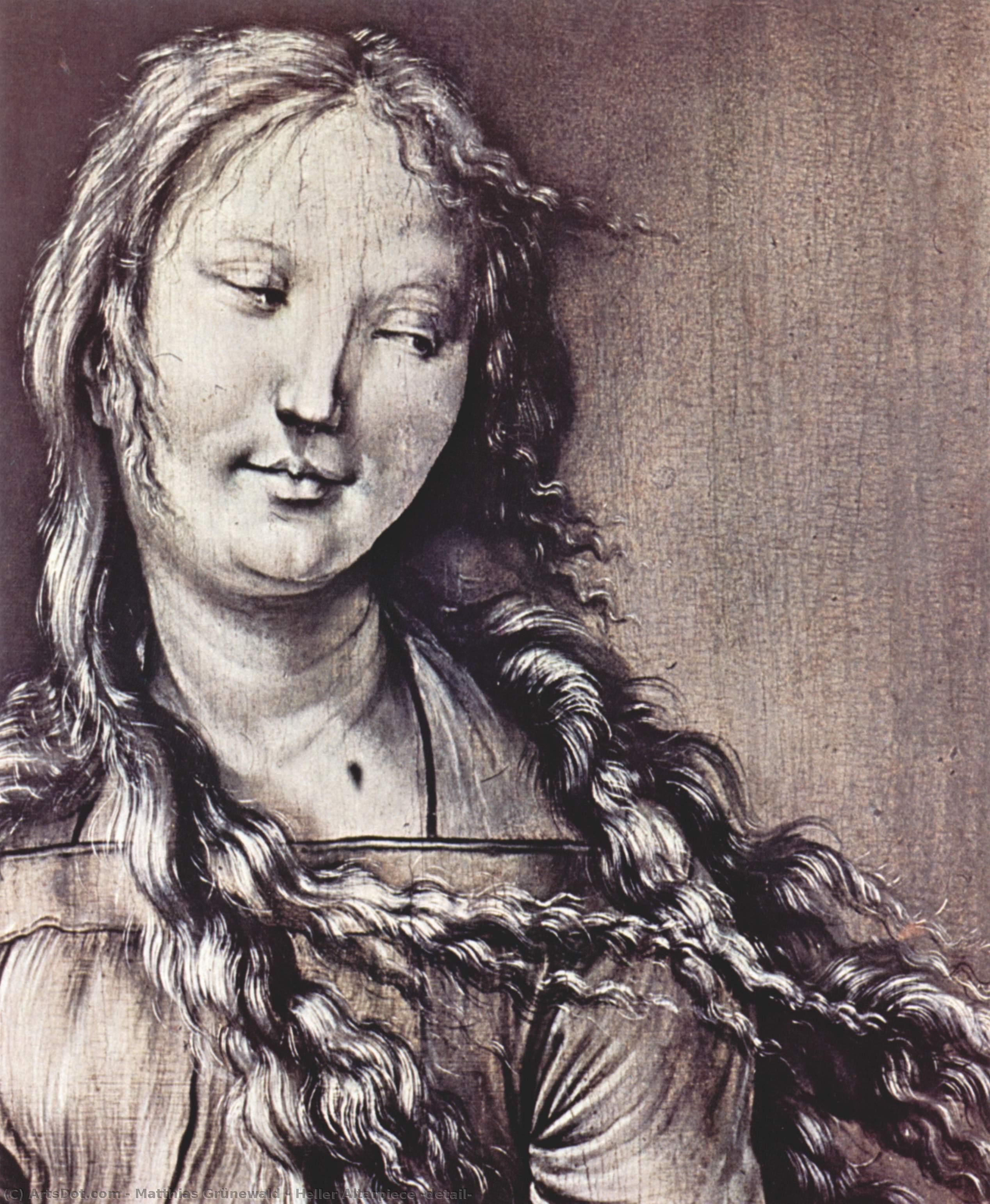
The Heller Altarpiece: A Portrait of Sorrow Amidst Renaissance Splendor
Matthias Grünewald’s “Heller Altarpiece,” completed around 1509-1511, stands as a testament to the enduring power of Northern Renaissance art—a captivating blend of meticulous realism and profound emotional expression that continues to resonate with audiences centuries later. More than just a depiction of a noblewoman, it’s an artwork steeped in symbolism and imbued with a palpable sense of melancholy, reflecting the anxieties of its time and cementing Grünewald's place as one of the era’s most influential painters.
Style & Technique: Grünewald eschewed the idealized beauty favored by Italian Renaissance artists, opting instead for a style rooted in Germanic traditions. He employed oil paint on panel—a relatively new medium at the time—allowing for unprecedented detail and tonal subtlety. The artist’s masterful brushwork captures every nuance of texture and light, creating an image that feels remarkably lifelike despite its monochrome palette. This deliberate choice wasn't merely stylistic; it served to heighten the emotional impact of the scene.
Historical Context: Painted during a period marked by religious fervor and intellectual upheaval—the High Renaissance was blossoming in Italy while theological debates raged across Europe—the Altarpiece speaks directly to the anxieties surrounding mortality and faith. Grünewald’s work aligns with the emerging trend of “Devotional Art,” where artists sought to convey spiritual truths through visual representations, often utilizing symbolism to communicate complex ideas.
Symbolism & Narrative: The portrait itself is dominated by a woman whose gaze directs outwards, conveying a sense of profound sadness and contemplation. Her face—rendered with remarkable accuracy—is framed by flowing hair, symbolizing purity and grace. Surrounding her is a stylized floral wreath—a common motif in Northern Renaissance art—representing life and resurrection. However, the overall mood is undeniably somber; Grünewald’s masterful use of chiaroscuro—the dramatic interplay between light and shadow—emphasizes the woman's sorrowful expression and underscores the pervasive influence of death.
Emotional Impact: “Heller Altarpiece” transcends mere visual representation, inviting viewers to contemplate themes of grief, beauty, and spiritual contemplation. Grünewald’s ability to convey emotion through subtle gestures and facial expressions is unparalleled—a skill that anticipates the expressive techniques championed by later Romantic artists. It remains a powerful reminder of the human condition—a poignant portrayal of vulnerability amidst grandeur.
Further Research: For more detailed information on Grünewald’s life, artistic influences, and the Altarpiece's significance within the broader context of Renaissance art, consult resources such as WikiArt and Esthete.org.