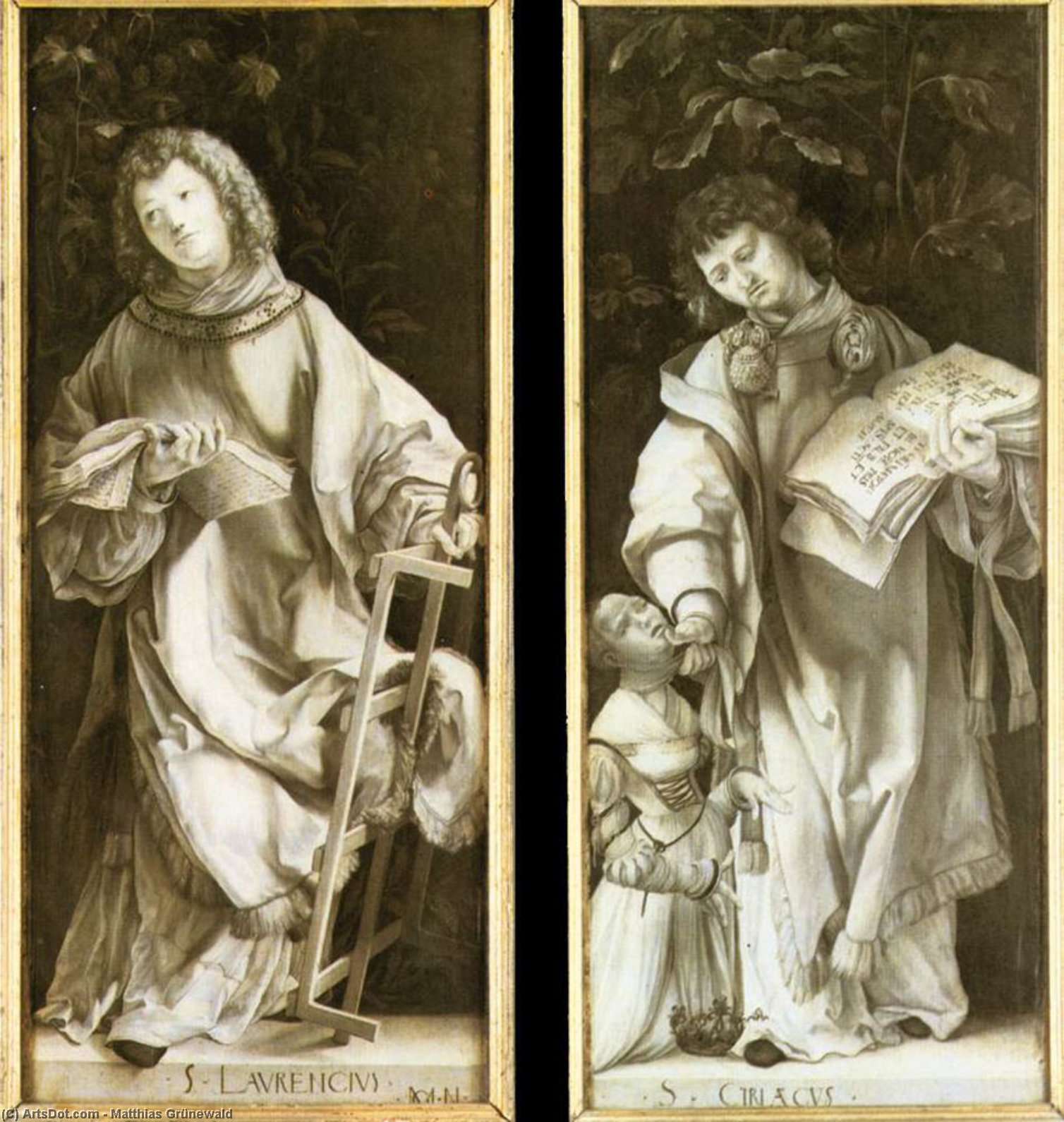
The Silent Dialogue: Matthias Grünewald’s St Lawrence and St Cyricus
Matthias Grünewald's "St Lawrence and St Cyricus," painted in 1509, isn’t merely a depiction of two early Christian martyrs; it’s a profound meditation on sacrifice, faith, and the enduring struggle between earthly suffering and divine grace. Emerging from the turbulent artistic landscape of late medieval Germany, Grünewald forged his own path, rejecting the prevailing Italian Renaissance emphasis on classical idealism in favor of a deeply emotive, intensely realistic style rooted in Northern European traditions. This painting, housed within the confines of a small chapel, immediately draws the viewer into a world saturated with shadow and light, where the figures seem to emanate an almost palpable sense of sorrow and contemplation.
The composition is strikingly intimate. St Lawrence, identifiable by his tongue cut out – a potent symbol of martyrdom and selfless devotion – kneels before a book, seemingly absorbed in prayer or perhaps recalling the agonizing act that defined his life. Beside him stands St Cyricus, his posture mirroring Lawrence’s solemnity, yet imbued with a subtle air of stoic acceptance. The setting is deliberately spare: a simple wooden table serves as their altar, and a few scattered books suggest a scholarly pursuit – a testament to the importance of knowledge and scripture within the early Christian community. The muted palette—dominated by deep browns, ochres, and hints of crimson—contributes to the painting’s somber mood, while Grünewald's masterful use of chiaroscuro – the dramatic interplay of light and dark – sculpts the figures with remarkable sensitivity, highlighting their physical forms and conveying a sense of profound psychological depth.
A Masterclass in Northern European Realism
Grünewald’s technique is characterized by an unparalleled attention to detail. He meticulously rendered the textures of clothing—the rough wool of Lawrence's robe, the folds of Cyricus’s garment—and the subtle nuances of skin and bone. This commitment to realism was not merely stylistic; it served a deeper purpose – to imbue the figures with a sense of humanity and vulnerability. Unlike the idealized forms often found in Renaissance art, Grünewald’s saints are undeniably mortal, bearing the marks of suffering and hardship. His brushwork is loose and expressive, conveying movement and emotion through subtle variations in tone and texture. The artist's use of oil paint allowed for a richness of color and depth that was uncommon at the time, further enhancing the painting’s dramatic effect.
Furthermore, Grünewald’s approach to depicting religious subjects departed significantly from prevailing conventions. He eschewed elaborate ornamentation and grand gestures in favor of a quiet, introspective portrayal of faith. This understated style reflects the spiritual intensity of the late medieval period, when piety and devotion were paramount. The painting's power lies not in its spectacle but in its ability to evoke a sense of shared sorrow and profound contemplation – inviting viewers to consider their own relationship with suffering and sacrifice.
Symbolism and Spiritual Resonance
Beyond the immediate depiction of St Lawrence and St Cyricus, the painting is rich in symbolic meaning. The book held by Lawrence represents the Gospels, the very source of his martyrdom and a testament to the enduring power of scripture. The act of cutting out his tongue symbolizes his willingness to renounce worldly pleasures and embrace spiritual truth—a sacrifice that resonated deeply with early Christians who faced persecution for their beliefs. St Cyricus’s posture suggests acceptance and resignation, perhaps reflecting the broader Christian understanding of suffering as a path to salvation.
The overall atmosphere of the painting is one of quiet dignity and profound spirituality. Grünewald's masterful use of light and shadow creates a sense of mystery and invites viewers to contemplate the deeper meaning of faith, sacrifice, and the enduring legacy of these two early Christian martyrs. It’s a work that transcends its historical context, speaking powerfully to audiences today through its timeless depiction of human suffering and spiritual longing.
A Reproduction for Reflection
Reproductions of "St Lawrence and St Cyricus" offer a remarkable opportunity to bring this powerful artwork into your home or office. The meticulous detail and emotive intensity of Grünewald’s original are faithfully captured in high-quality reproductions, allowing you to experience the painting's profound beauty and spiritual resonance on a daily basis. Whether adorning a study, a chapel, or a contemplative space, this image serves as a constant reminder of the enduring values of faith, sacrifice, and compassion – a testament to the artistic genius of Matthias Grünewald.