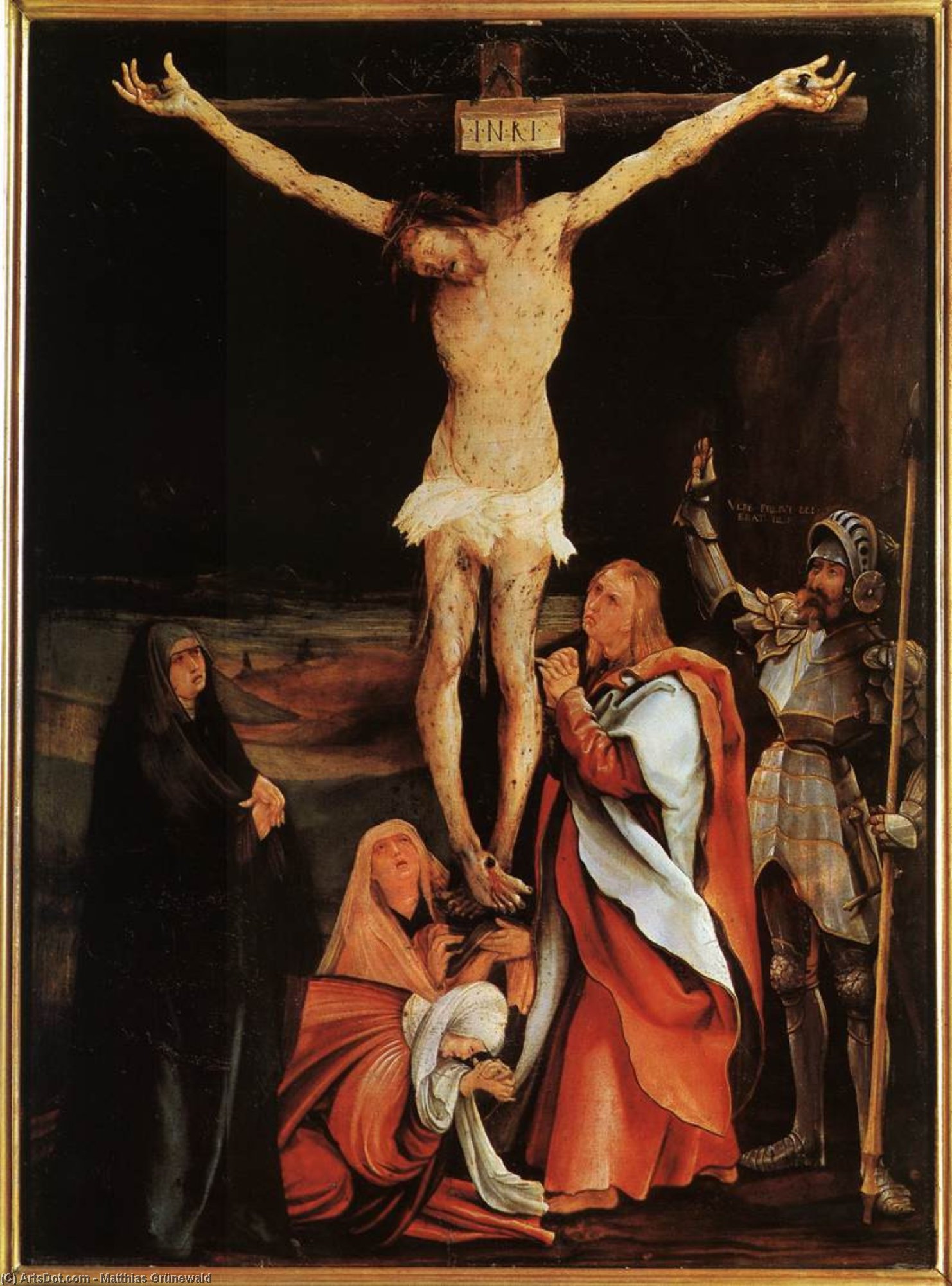
The Crucifixion

Experience the raw emotion of Matthias Grünewald's 'Isenheim Altarpiece,' a masterpiece depicting Christ’s crucifixion & offering solace to plague sufferers through its powerful symbolism and haunting beauty.


マティアス・グリューネヴァルト (1480 - 1528)

マティアス・グリューネヴァルトの劇的なドイツ・ルネサンス美術を探索しましょう!『イーゼンハイム祭壇画』や感情豊かな宗教画で知られる彼の独自のスタイルを、ArtsDotで発見してください。

バーゼルの公立美術館 (Basel Kunstmuseum) (バーゼル, スイス)

スイス屈指の美術館、バーゼルのKunstmuseum Baselへ!ホльбеインからゴッホ、現代アーティストまで、3つの美しい建物で7世紀にわたる傑作を鑑賞できます。歴史と革新が息づく旅へ。

The Crucifixion by Matthias Grünewald

  • Subject Matter The painting depicts the crucifixion of Jesus Christ—a cornerstone event in Christian faith—capturing a moment of profound sorrow and spiritual contemplation. Grünewald’s masterful portrayal transcends mere depiction; it aims to convey the emotional weight of this sacred narrative.
  • Style Grünewald's work exemplifies Proto-Renaissance style, marking a crucial transition from medieval artistic conventions toward the burgeoning humanist ideals of the Italian Renaissance. While acknowledging influences from Northern European masters like Albrecht Dürer and Martin Schongauer, Grünewald distinguishes himself through an unparalleled level of expressive realism.
  • Technique Executed in tempera on oak panel, Grünewald employed a revolutionary technique known as Grisaille—a monochrome underpainting—to establish tonal values with remarkable precision. This method allowed him to build up layers of color gradually, achieving astonishing depth and luminosity that would become characteristic of Renaissance painting. The meticulous detail visible throughout the artwork speaks volumes about Grünewald’s dedication to capturing every nuance of human emotion and anatomical accuracy.
  • Historical Context Created in 1501 during the reign of Emperor Maximilian I, “The Crucifixion” reflects the anxieties and aspirations of a period grappling with religious reform and artistic innovation. It emerged from the fervent piety of Würzburg Cathedral, commissioned to commemorate Saint Elizabeth of Hungary—a testament to Grünewald’s ability to fuse theological devotion with artistic brilliance.
  • Symbolism The painting is laden with symbolic significance. The depiction of Jesus's outstretched arms symbolizes humility and acceptance of divine judgment. The sorrowful expressions on the faces of Mary Magdalene and Saint Nicodemus convey empathy for Christ’s suffering, embodying universal themes of compassion and grief. Furthermore, the knight holding a shield represents fortitude and protection—a visual reminder of spiritual strength amidst adversity.
  • Emotional Impact Grünewald's “The Crucifixion” continues to resonate powerfully with viewers centuries later. Its visceral depiction of pain and sorrow evokes an intense emotional response, prompting reflection on themes of faith, mortality, and redemption. The artwork’s luminous colors and masterful composition contribute to its enduring beauty—inspiring awe and reverence in all who encounter it.