A Window into the Eighteenth Century
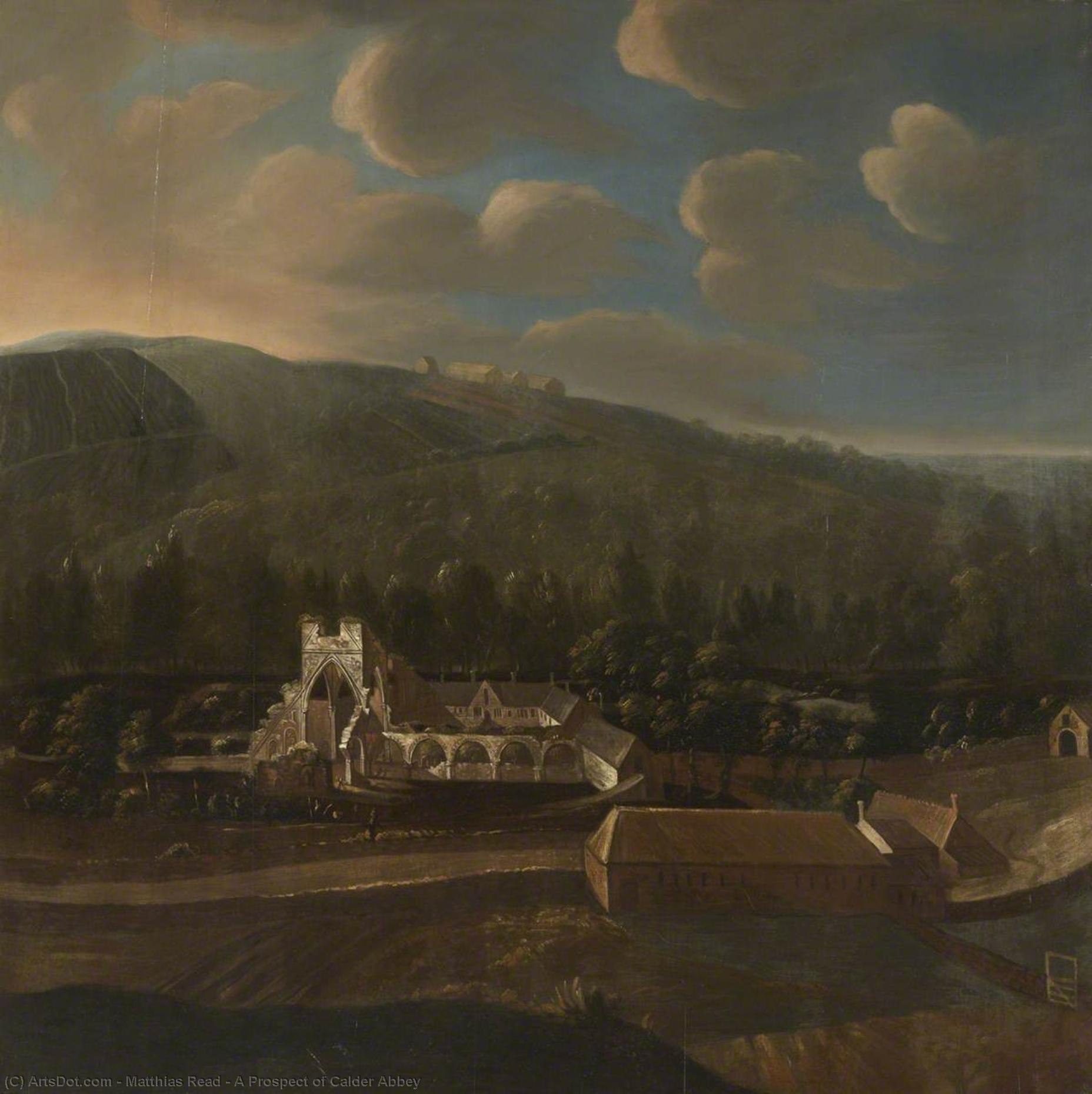
In the quiet, sweeping vistas of 1720, Matthias Read captured more than just a landscape; he preserved a moment of profound stillness in the English countryside. A Prospect of Calder Abbey invites the viewer to step back into an era of pastoral serenity, where the rhythm of life was dictated by the sun and the seasons. The painting presents a breathtaking view of a town nestled within a verdant valley, anchored by the commanding presence of a church steeple that pierces the horizon. Through Read’s masterful eye, we are not merely looking at a topographical record, but rather experiencing the atmospheric soul of a landscape that feels both intimate and eternal.
The composition is a masterclass in classical balance, guiding the eye from the immediate foreground through the bustling yet peaceful life of the town toward the dramatic, cloud-swept heavens. The sky, heavy with textured clouds, serves as a theatrical backdrop, casting shifting shadows across the valley and imbuing the scene with a sense of movement and drama. This interplay of light and shadow is where Read’s true genius lies, creating a depth that pulls the observer into the very heart of the Cumbrian landscape.
The Artistry of Detail and Narrative
As one lingers over the canvas, the subtle human elements begin to emerge, breathing life into the architectural stillness. Scattered throughout the scene are figures engaged in the quiet rhythms of daily existence, their small scale emphasizing the grandeur of the natural world around them. The inclusion of horses—one positioned near the center and another toward the periphery—adds a layer of pastoral authenticity, grounding the painting in the reality of 18th-century rural life. These details are not mere ornaments; they are narrative threads that weave together a story of community, labor, and coexistence with nature.
Technically, the work exemplifies the meticulous precision characteristic of Read’s style. His ability to render the varied textures of stone, foliage, and sky allows the painting to vibrate with life. For the discerning collector or interior designer, this piece offers a sophisticated layer of historical depth. The soft, muted palette, punctuated by the dramatic light of the heavens, makes it an ideal centerpiece for a room that seeks to evoke contemplation and elegance. It is a work that does not shout for attention but rather commands it through its quiet, enduring beauty.
A Timeless Legacy for Modern Spaces
Owning a reproduction of such a significant historical work is an opportunity to bring the heritage of British landscape painting into a contemporary setting. A Prospect of Calder Abbey transcends its age, offering a sense of peace and stability that is increasingly rare in our fast-paced modern world. Whether placed in a grand library, a formal dining room, or a curated gallery wall, this painting serves as an emotional anchor, providing a window into a lost era of tranquility.
For those looking to inspire guests or create a sanctuary within their own homes, Read’s work provides the perfect blend of historical prestige and aesthetic grace. It is more than a decoration; it is an invitation to pause, to breathe, and to reconnect with the timeless beauty of the English landscape.