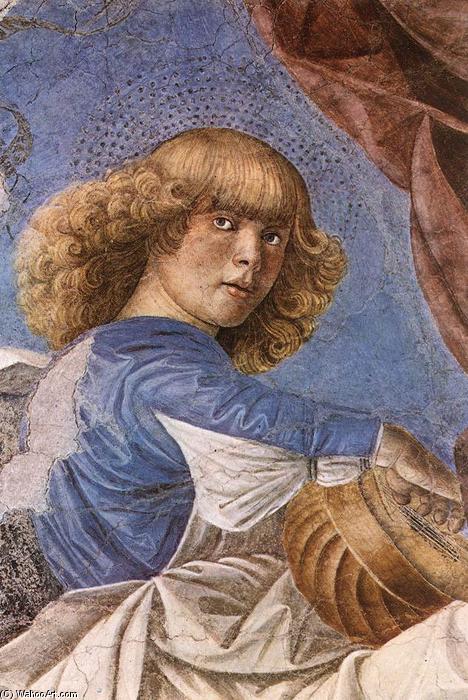
Melozzo da Forlì: An Angel Playing the Lute – A Renaissance Vision of Divine Inspiration
The fresco painting “Music-making Angel,” attributed to Melozzo da Forlì, stands as a testament to the burgeoning artistic fervor of Florence during the High Renaissance. Executed around 1480, it resides within the Santi Apostoli basilica in Rome—a commission bestowed upon Giuliano della Rovere, later Pope Julius II—and embodies the revolutionary advancements in perspective and fresco technique championed by masters like Andrea Mantegna and Raphael. This remarkable artwork offers a glimpse into the intellectual and spiritual landscape of its time, revealing profound insights into humanist ideals and artistic innovation.
- Subject Matter & Composition: At first glance, the painting depicts an angelic figure serenely engaged in playing a lute—a meticulously rendered instrument reflecting Renaissance musical sophistication. The angel’s central position within the fresco’s oval frame immediately establishes dominance, drawing the viewer's gaze to its serene countenance and graceful posture. Surrounding it is a rich tapestry of color—deep blues and reds—creating an immersive experience that echoes the grandeur of papal patronage.
- Style & Technique: Melozzo da Forlì’s masterful application of fresco technique—directly onto wet plaster—demonstrates unparalleled control over pigment dispersion and tonal gradation. The artist skillfully employs sfumato, a subtle blending of colors to soften contours and create an ethereal luminescence characteristic of Renaissance painting. This technique lends itself beautifully to capturing the delicate beauty of human features and conveying a sense of spiritual tranquility.
- Historical Context: Commissioned during Julius II’s ambitious program to revitalize Rome’s artistic heritage, “Music-making Angel” reflects the humanist preoccupation with classical ideals—particularly those expressed in Greek sculpture—and underscores the transformative influence of linear perspective. The fresco's placement within the basilica signifies its role as a devotional artwork intended to inspire contemplation and reverence.
- Symbolism & Iconography: The lute itself symbolizes musical harmony and divine inspiration, aligning with Christian theology’s emphasis on music as a conduit for spiritual communion. The angel’s serene expression embodies purity and grace—qualities revered throughout the Renaissance period—further enriching the painting's symbolic significance.
- Emotional Impact: Viewing “Music-making Angel” evokes feelings of serenity, contemplation, and wonder—mirroring the profound emotional resonance achieved by Renaissance artists. The luminous colors and masterful execution convey a sense of ethereal beauty that transcends time, captivating audiences with its timeless appeal.
Detailed Examination of Artistic Execution
The fresco’s meticulous detail extends beyond mere representation; it embodies an unwavering commitment to capturing the essence of human form and natural light. Melozzo da Forlì's painstaking layering of pigments—often achieved through multiple glazes—creates a palpable depth and dimensionality that distinguishes it from earlier artistic traditions. Furthermore, the artist’s masterful manipulation of tonal gradation—moving seamlessly between highlights and shadows—enhances the painting’s dramatic impact and imbues it with an aura of spiritual solemnity.
A Legacy of Renaissance Vision
“Music-making Angel” stands as a cornerstone of Renaissance artistic achievement, influencing subsequent generations of painters and cementing Melozzo da Forlì's reputation as a visionary innovator. Its enduring beauty continues to inspire artists and collectors alike—serving as a poignant reminder of the transformative power of art to elevate the human spirit and illuminate the sublime mysteries of faith.