A Celestial Gathering in Bruges
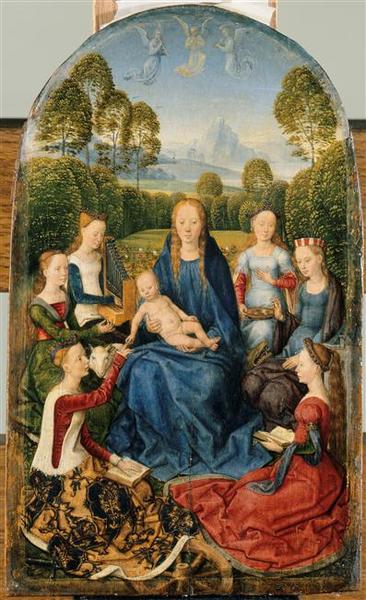
In the quiet, hallowed atmosphere of Hans Memling’s La Vierge et l'enfant entourés de saintes, time seems to suspend itself within a realm of eternal devotion. This masterpiece of Early Netherlandish painting invites the viewer into a serene, sacred assembly where the Virgin Mary cradles the Christ Child amidst a graceful circle of holy figures. The composition is not merely a depiction of religious figures but an immersive experience of piety and peace. As one gazes upon the soft, luminous faces of the saints, there is an immediate sense of being drawn into a divine conversation, a moment captured in the golden age of Bruges where the earthly and the heavenly intersect through the medium of oil on wood.
The painting serves as a profound testament to the spiritual fervor of the 15th century. Through the presence of figures such as Saint James the Elder and Saint Dominic, Memling weaves a narrative of intercession and faith. The arrangement of the subjects creates a rhythmic, circular movement that guides the eye toward the central focus: the tender bond between mother and child. For the collector or the lover of classical art, this work offers more than visual beauty; it provides a window into the soul of the Burgundian era, reflecting a period when art was the primary vessel for theological expression and communal identity.
The Mastery of Light and Texture
To behold a Memling original—or a high-quality hand-painted reproduction—is to witness the pinnacle of technical precision. The artist’s signature style is defined by an almost supernatural attention to detail, a trait inherited from his mentor, Rogier van der Weyden. Every fold of the heavy, velvet drapery and every delicate shimmer on the saints' robes has been rendered with meticulous care. Memling utilized the burgeoning technique of oil painting to achieve a depth of color and a translucency of light that remains breathtaking centuries later. The way light catches the edges of a book or illuminates the soft skin of the infant Jesus demonstrates a mastery of chiaroscuro and texture that defines the Flemish tradition.
For interior designers and decorators, the technical brilliance of this piece offers unparalleled versatility. The subtle interplay of shadows and the rich, saturated palette allow the artwork to anchor a room with a sense of historical weight and sophistication. Whether placed in a sunlit gallery or a moody, library-inspired study, the painting’s ability to capture light makes it a dynamic element of any curated space. The precision of the brushwork ensures that even from a distance, the composition retains its structural integrity and emotional resonance.
Symbolism and the Language of Devotion
Beyond its surface beauty, the artwork is a complex tapestry of symbolic meaning, designed to provoke contemplation. Every element within the frame serves a higher purpose: the books held by the figures are not mere accessories but symbols of divine wisdom and the profound knowledge of scripture. Even the subtle presence of a bird soaring above the group adds a layer of spiritual lightness, perhaps representing the soul or the Holy Spirit watching over the faithful. This layering of meaning ensures that the painting remains an intellectual journey as much as a visual one.
Choosing to display such a work is an invitation to bring a sense of tranquility and wisdom into the home. It is a piece that rewards repeated viewing, revealing new nuances in the facial expressions and symbolic details each time. For those seeking to invest in art that transcends fleeting trends, Memling’s creation stands as a timeless icon of grace, offering an enduring legacy of beauty that continues to inspire awe and reverence in the modern age.