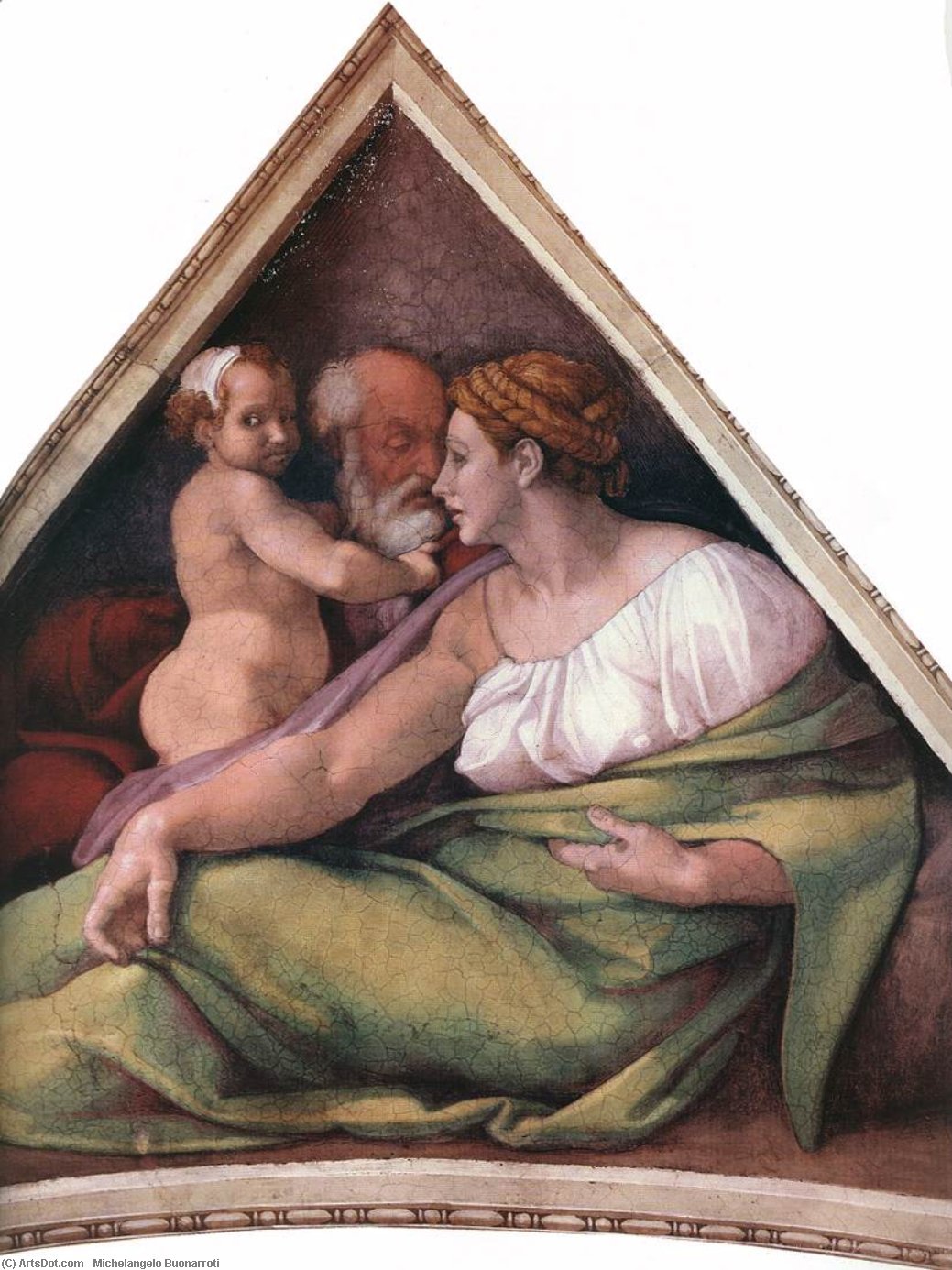
A Divine Lineage: Exploring Michelangelo’s ‘Ancestors of Christ: figures (19)’
Michelangelo Buonarroti's 'Ancestors of Christ: figures (19)' is not merely a decorative element within the Sistine Chapel; it represents a profound meditation on lineage, faith, and the human condition. Painted in 1510 as part of the chapel’s monumental fresco cycle, this work exemplifies Michelangelo’s unparalleled skill and his ability to imbue even seemingly minor figures with dignity and emotional resonance.
Context & Creation: A Ceiling for the Papacy
Commissioned by Pope Julius II, the Sistine Chapel ceiling was a project of immense scale and ambition. Michelangelo, primarily a sculptor, reluctantly accepted the commission, viewing painting as secondary to his true calling. However, he rose to the challenge, spending four years (1508-1512) suspended on scaffolding, meticulously applying pigment to wet plaster. ‘Ancestors of Christ: figures (19)’ occupies one of the lunettes above the chapel windows, forming part of a series depicting the genealogy of Jesus – a visual representation of the biblical narrative connecting the divine with humanity.
Artistic Elements: Form and Narrative
The fresco depicts a woman tenderly holding an infant, flanked by two male figures. The composition is deliberately restrained yet powerfully evocative. Set against a simplified architectural backdrop, the focus remains firmly on the human forms. Michelangelo’s mastery of anatomy is evident in the subtly rendered musculature and graceful poses. The use of *chiaroscuro* – the dramatic contrast between light and shadow – sculpts the figures, lending them volume and presence. The limited color palette, dominated by earthy tones, enhances the sense of solemnity and timelessness. A chair and bowl are included in the background, hinting at domestic life and familial care.
Symbolism & Interpretation: Roots of Faith
The ‘Ancestors of Christ’ series served a specific theological purpose: to legitimize the papacy by visually linking it to the lineage of Jesus. Each figure represents an ancestor in the genealogy outlined in the Gospels of Matthew and Luke. While individual identities are not explicitly stated, their presence underscores the idea that Christ's arrival was foretold and prepared for through generations of faithful ancestors. The maternal pose emphasizes the importance of women in this lineage, a subtle yet significant detail within the patriarchal context of the time.
Technique & Materials: The Art of Fresco
Michelangelo’s choice of fresco – painting on wet plaster – was crucial to the work's enduring quality. This technique demanded speed and precision, as corrections were difficult once the plaster dried. The pigments, derived from natural minerals, bonded with the plaster, creating a remarkably durable surface. The resulting images possess a luminosity and vibrancy that continue to captivate viewers centuries later.
Emotional Impact & Legacy
Despite its relatively small scale within the vastness of the Sistine Chapel, ‘Ancestors of Christ: figures (19)’ possesses a quiet dignity and emotional depth. The tender interaction between mother and child evokes feelings of love, protection, and hope. The work stands as a testament to Michelangelo’s ability to infuse even peripheral figures with humanity and spiritual significance. It remains an essential component of one of the most celebrated artistic achievements in Western civilization, continuing to inspire awe and reverence in all who behold it.
Details
- Artist: Michelangelo Buonarroti
- Year: 1510
- Medium: Fresco
- Dimensions: 245 x 340 cm
- Location: Cappella Sistina (Vatican City, Italy)
This artwork offers a compelling glimpse into the Renaissance master’s genius and provides a powerful reminder of the enduring power of faith and family.