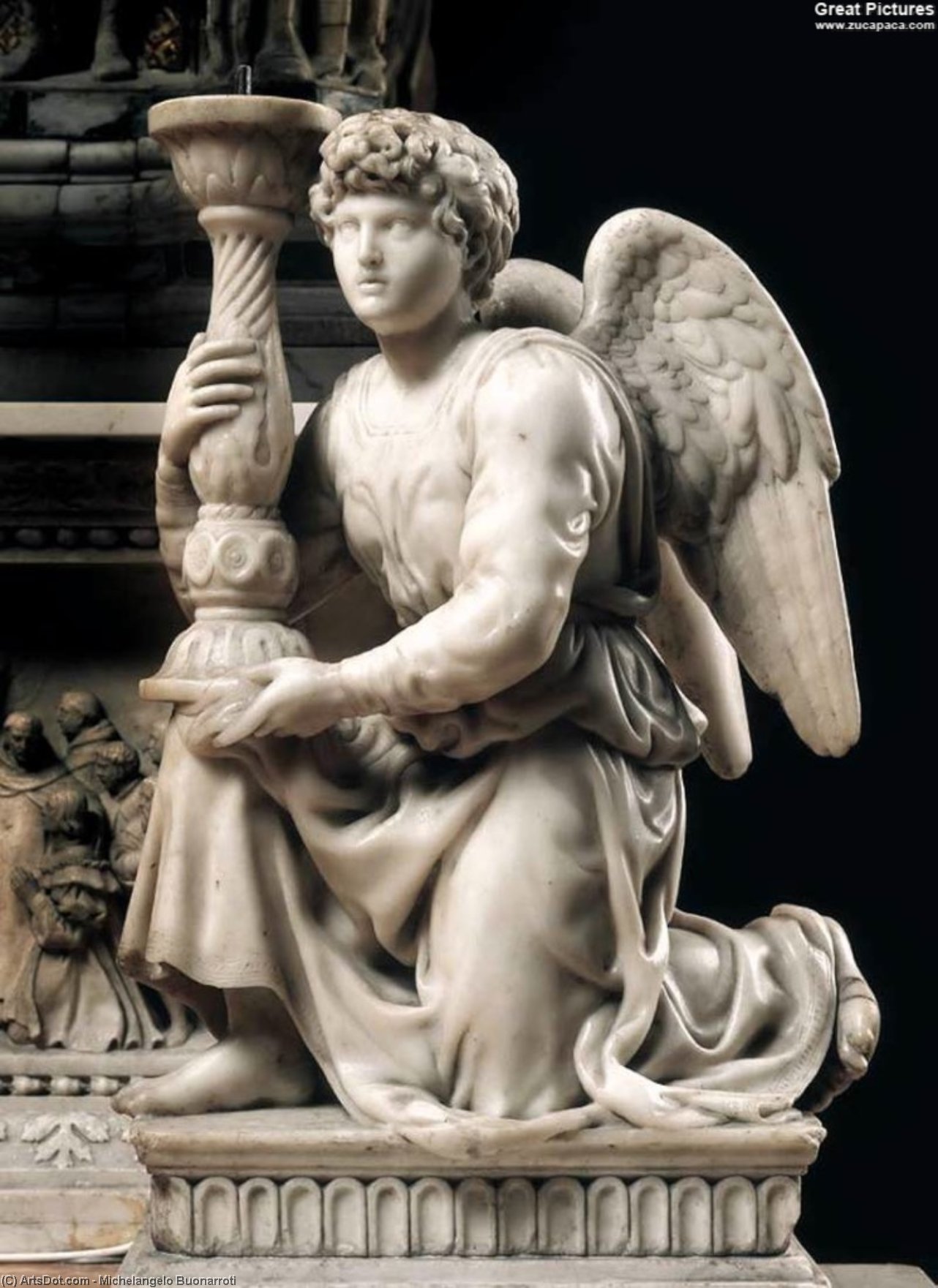
Angel with Candlestick: A Glimpse into Michelangelo's Early Genius
Michelangelo Buonarroti, a titan of the High Renaissance, left an indelible mark on Western art through his sculptures, paintings, and architectural designs. Among his lesser-known but equally captivating works is the "Angel with Candlestick," a marble sculpture created in 1494 when Michelangelo was just nineteen years old. This exquisite piece resides within the Basilica of San Domenico in Bologna, Italy, offering a fascinating window into the artist's developing style and profound understanding of human form and spiritual expression.
Artistic Context and Early Development
The "Angel with Candlestick" emerged during a pivotal period in Michelangelo’s career. Having recently moved to Bologna under the patronage of Cardinal Giovanni de’ Rossi, he was immersed in a vibrant artistic environment influenced by the late Gothic style prevalent in Northern Italy and the burgeoning Renaissance ideals inspired by classical antiquity. This sculpture reflects his early mastery of marble carving while showcasing a unique blend of influences – a departure from the more robust Florentine style that would later define his mature works. The commission itself, part of a larger decorative scheme for the Cardinal’s funerary monument, demonstrates Michelangelo's growing reputation and access to significant artistic opportunities.
Composition, Symbolism, and Emotional Depth
The sculpture depicts an angel seated gracefully on a pedestal, holding aloft a delicately rendered candlestick. The angel’s wings are subtly spread, suggesting a poised readiness for flight, imbuing the figure with a sense of ethereal grace and divine purpose. Michelangelo's skill in capturing movement and energy within the rigid medium of marble is evident in the flowing drapery and the gentle curve of the angel’s body. The candlestick itself carries significant symbolic weight; it represents light, guidance, and spiritual illumination – underscoring the angel’s role as a messenger of divine wisdom and hope. The angel's serene expression and contemplative gaze evoke a sense of quiet devotion and inner peace, inviting viewers to contemplate themes of faith and transcendence.
Technical Brilliance and Lasting Legacy
The "Angel with Candlestick" exemplifies Michelangelo’s innovative approach to sculpture. Despite its relatively small size, the level of detail is astonishing – from the intricate folds of the drapery to the delicate rendering of the angel's face and wings. The smooth, polished surface of the marble enhances the figure’s luminosity, creating a captivating visual effect. While it may not possess the monumental scale of his later masterpieces like David or Pietà, this sculpture demonstrates Michelangelo’s early command of anatomy, composition, and the expressive potential of marble. It serves as a testament to his enduring legacy as one of history's greatest artists, influencing generations of sculptors and solidifying his place at the forefront of the Renaissance.