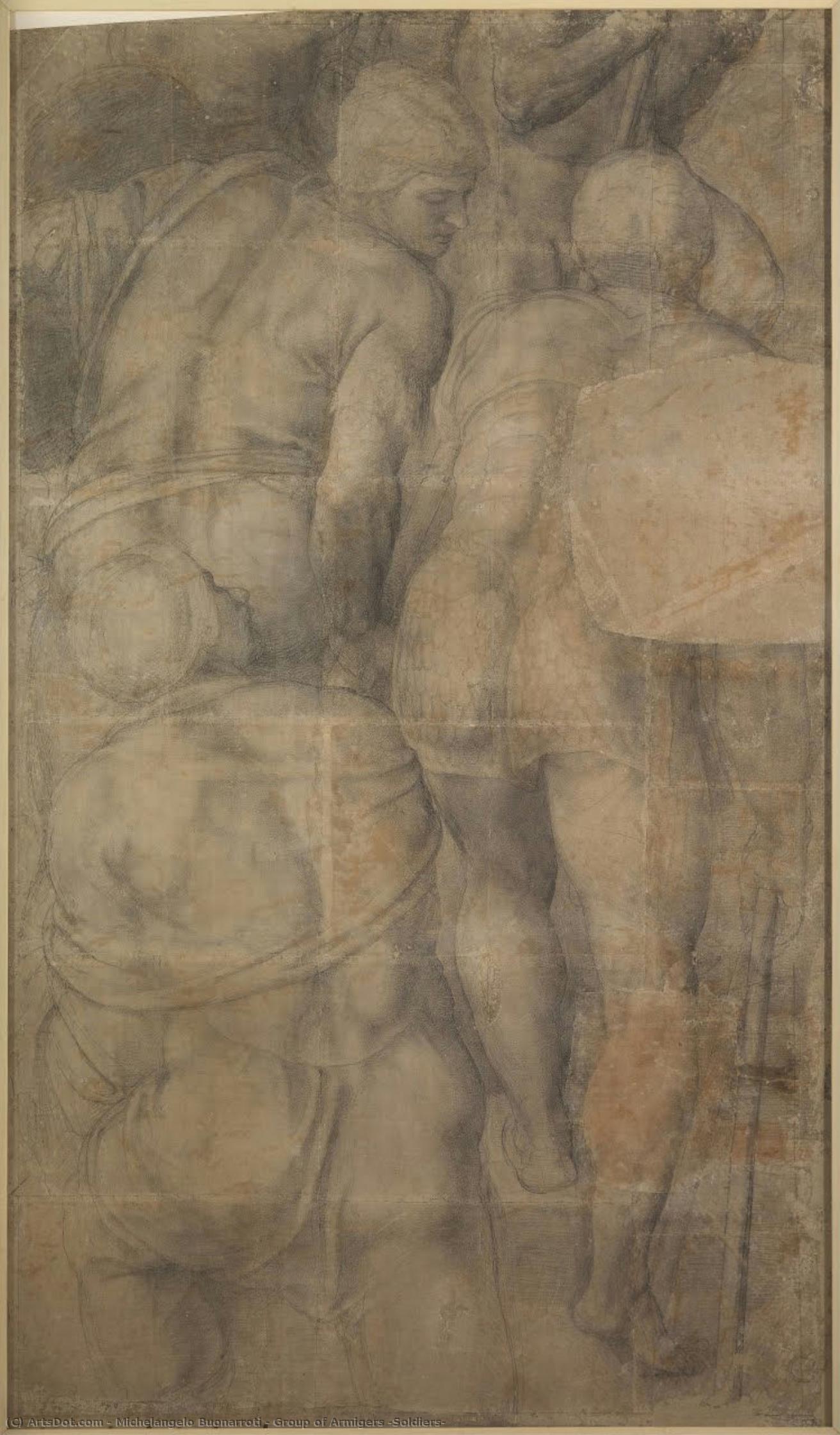
Admire Michelangelo's masterful Group of Armigers (Soldiers), circa 1546 – a charcoal drawing on royal bolognese paper housed in Museo di Capodimonte, Naples. Explore Renaissance art history!
ミケランジェロ・ブオナローティ(1475-1564):ダビデ像やピエタ、システィナ礼拝堂の天井画など、ルネサンスを代表する巨匠の世界。彫刻、絵画、建築における革新的な才能と、美術史への永続的な影響を紐解きます。
ナポリの壮麗な宮殿、パッツィ・ポンティフィチへ!ラファエロの間やシスティーナ礼拝堂など、ルネサンス美術と教皇の歴史に触れる旅。イタリア最大の美術館で芸術と歴史を満喫しましょう!
パッツィ・ポンティフィチ ナポリ イタリア 美術館 カヴァラッジョ ティタン ラファエロ バロック 王室コレクション ファルネーゼコレクション スカルプトゥーラ フレスコ アポスドリー宮殿
イタリア
ナポリ
パッツィ・ポンティフィチ
カヴァラッジョ ティタン ラファエロ バロック
2.5M+
広大なコレクション
美術と王室
1738
イタリアのシンプルな狩猟小屋でした。
1
パッツィ・ポンティフィチの主な歴史的意義は何ですか?
Michelangelo Buonarroti’s “Group of Armigers (Soldiers)” – A Study in Human Form and Renaissance Ideals
The photograph depicts Michelangelo Buonarroti's monumental charcoal drawing, "Group of Armigers (Soldiers)," created around 1546. This artwork resides within the esteemed Museo di Capodimonte in Naples, offering visitors a glimpse into one of the artist’s earliest explorations of human anatomy and sculptural representation. The image itself captures the essence of Michelangelo's genius – raw observation combined with masterful draughtsmanship—a testament to his unwavering dedication to capturing the beauty and complexity of the human form.
A Pioneering Anatomical Study
“Group of Armigers” isn’t merely a depiction of soldiers; it represents a pivotal moment in Michelangelo’s artistic development. Executed on seventeen sheets of royal bolognese paper, this drawing showcases an unprecedented level of anatomical accuracy for its time. Influenced profoundly by the rediscovery of classical sculpture and fueled by his meticulous study of figures like Apollo Belvedere, Michelangelo painstakingly dissected cadavers to understand musculature and skeletal structure—a revolutionary practice that challenged prevailing artistic conventions. The resulting drawings are not idealized representations but rather honest explorations of human anatomy, demonstrating Michelangelo’s commitment to scientific observation alongside artistic expression.
The Charcoal Technique: Precision and Texture
Michelangelo employed charcoal as his primary medium, a technique he honed during his apprenticeship under Domenico Ghirlandaio. Charcoal allows for exceptional tonal range and textural detail—characteristics perfectly suited to capturing the subtle nuances of human musculature and drapery folds. The artist’s meticulous layering of charcoal strokes creates a palpable sense of volume and depth, conveying not only physical form but also psychological tension. Notice how Michelangelo skillfully renders the contours of the figures' bodies, emphasizing muscle definition and highlighting the interplay between light and shadow—a hallmark of Renaissance chiaroscuro that elevates the drawing beyond mere anatomical illustration.
Historical Context: The Medici Patronage and Artistic Innovation
“Group of Armigers” was produced during Michelangelo’s formative years in Rome, a period marked by intense artistic competition and fueled by the patronage of Lorenzo de' Medici—the Magnificent—who championed humanist ideals and supported groundbreaking artistic endeavors. This drawing reflects the broader Renaissance preoccupation with humanism – an intellectual movement that celebrated human potential and rediscovered classical learning. Michelangelo’s work stands as a beacon of innovation, pushing the boundaries of sculptural representation and establishing him as one of the foremost artists of his era. It embodies the spirit of the time—a desire to emulate the grandeur and beauty of antiquity while simultaneously forging new artistic paths.
Symbolism Beyond Representation: Strength and Vulnerability
While seemingly straightforward in its depiction of soldiers, “Group of Armigers” carries deeper symbolic resonance. The figures are posed in various stances – some standing tall with confidence, others slumped in contemplation—suggesting a complex interplay between physical strength and psychological vulnerability. Michelangelo’s masterful rendering captures the human condition itself: striving for excellence while confronting mortality. The drawing serves as a reminder that even amidst martial prowess, there exists an inherent fragility—a poignant observation that underscores Michelangelo's profound understanding of human emotion and experience.
Emotional Impact: Capturing Humanity at Its Finest
Ultimately, “Group of Armigers” transcends its anatomical subject matter to convey a powerful emotional impact. Michelangelo’s unwavering dedication to capturing the human form with breathtaking realism speaks volumes about his artistic vision—a desire not merely to depict figures but to embody them. The drawing invites contemplation on themes of courage, resilience, and the enduring beauty of human anatomy. It remains an inspiring testament to Michelangelo Buonarroti's unparalleled skill and a cornerstone of Renaissance art history.