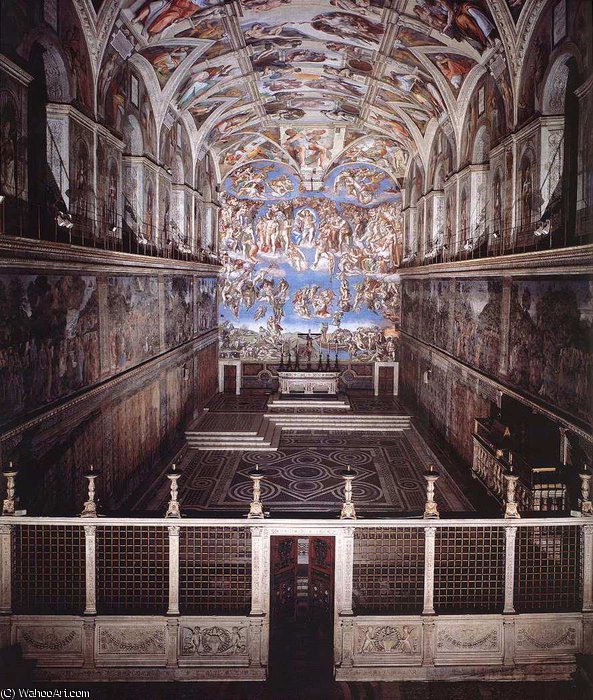
Interior of the Sistine Chapel: A Testament to Divine Vision
The image captures the grandeur and spiritual depth of Michelangelo Buonarroti’s masterpiece, “Interior of the Sistine Chapel,” a monumental fresco adorning the dome of St. Peter's Basilica in Vatican City. Completed between 1508 and 1512 during papal patronage, this artwork represents arguably the pinnacle of High Renaissance artistic achievement—a breathtaking panorama of biblical narratives rendered with unparalleled skill and ambition. Beyond its sheer scale, the chapel’s interior is imbued with profound symbolism reflecting Christian theology and humanist ideals prevalent in the era.
- Subject Matter: Michelangelo meticulously depicted scenes from Genesis – Adam and Eve's expulsion from Paradise, Cain and Abel slaying Abel, Noah's Ark—each panel brimming with detail and conveying a narrative of creation, fallibility, and divine providence.
- Style & Technique: Buonarroti’s mastery is evident in his masterful application of fresco technique – applying pigment directly onto wet plaster – ensuring remarkable durability and vibrancy across centuries. The artist employed linear perspective to create an illusion of depth, drawing inspiration from classical sculpture and furthering the Renaissance fascination with realism.
- Historical Context: Commissioned by Pope Julius II during a period marked by papal ambition and artistic renewal, “Interior of the Sistine Chapel” embodies the humanist spirit championed by figures like Leonardo da Vinci and Raphael. It stands as a symbol of papal authority and spiritual aspiration amidst turbulent political landscapes.
Symbolism: The composition is rich in visual metaphors. Adam and Eve’s posture symbolizes humanity's vulnerability before God, while the depiction of angels underscores divine grace and guardianship. The overarching narrative speaks to themes of redemption and moral responsibility—central tenets of Christian faith during Michelangelo’s time. Buonarroti skillfully utilized color palettes – predominantly reds, blues, and golds – to evoke emotion and convey spiritual significance.
Emotional Impact: Viewing “Interior of the Sistine Chapel” evokes a sense of awe and reverence. The monumental scale combined with Michelangelo's meticulous attention to detail transports viewers into a realm of divine beauty—a testament to human creativity’s capacity to capture transcendent experience. Its enduring influence on Western art continues to inspire artists and captivate audiences worldwide.
- Further Exploration: For a deeper understanding, consult resources like Interior of the Sistine Chapel by MICHELANGELO Buonarroti and Casa Buonarroti.
- Recommended Reproduction: ArtsDot offers exceptional hand-painted reproductions that faithfully recreate Michelangelo’s original vision, allowing you to experience the chapel's majesty in your own home. Explore our collection at here.