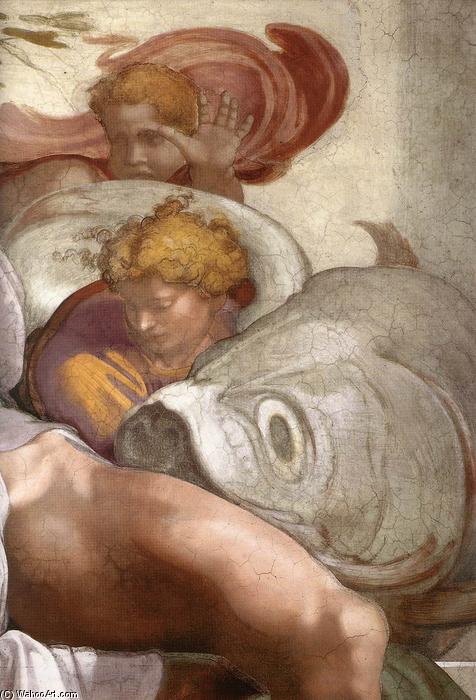
Michelangelo Buonarroti's 'Jonah (detail)' – A breathtaking fresco from the Sistine Chapel depicting Jonah’s encounter with God, showcasing masterful artistry and biblical storytelling.
ミケランジェロ・ブオナローティ(1475-1564):ダビデ像やピエタ、システィナ礼拝堂の天井画など、ルネサンスを代表する巨匠の世界。彫刻、絵画、建築における革新的な才能と、美術史への永続的な影響を紐解きます。
システィーナ礼拝堂
(Vatican City, Italy)
バチカン市国のカペッラ・システィナへ!ミケランジェロの「アダムの創造」をはじめとするフレスコ画を堪能し、数世紀にわたる芸術と歴史を深く探求してください。
#バチカン #システィーナ礼拝堂 #ミケランジェロ #ルネサンス美術
イタリア
バチカン市国
カペッラ・システィナ
ミケランジェロのフレスコ画
礼拝堂/美術館
1481
壮大な芸術の聖域
2
ユリウス2世によってカペッラ・システィナは当初、どのような目的で考案されましたか?
Michelangelo Buonarroti: A Renaissance Titan
Michelangelo Buonarroti (1475–1564) stands as one of the towering figures of the High Renaissance, an artist whose unparalleled mastery of sculpture and painting irrevocably shaped Western art history. Born in Caprese Michelangelo, Tuscany, his early life was marked by familial resistance to artistic pursuits—a sentiment swiftly overridden by his extraordinary talent for drawing. By age 13, he apprenticed under Domenico Ghirlandaio, absorbing foundational fresco techniques that would become synonymous with his distinctive style. His fascination with classical sculpture propelled him to study the works of antiquity in the Medici gardens – a formative influence that instilled within him an unwavering dedication to anatomical precision and idealized beauty.
Early Period: Establishing Mastery (1490–1505)
Around 1496, Michelangelo’s artistic trajectory ascended dramatically with his commission for *The Pietà*, sculpted in Carrara marble – a breathtaking depiction of Mary cradling the lifeless body of Jesus Christ. Completed in 1499, this monumental masterpiece showcased his unparalleled skill as a sculptor and cemented his reputation as Florence's foremost artist. Simultaneously, he undertook the ambitious project of carving *David*, a colossal statue embodying Florentine republican ideals and symbolizing strength and nobility. Finished in 1504, David remains an iconic testament to Michelangelo’s sculptural prowess and artistic vision.
The Sistine Chapel Ceiling
Perhaps Michelangelo's most enduring legacy resides within the Sistine Chapel ceiling—a monumental fresco cycle begun in 1508 and culminating in 1512 during his papal residency in Rome. Commissioned by Pope Julius II, this ambitious undertaking demanded an unprecedented level of artistic dedication and technical innovation. The frescoes depict scenes from Genesis, showcasing Michelangelo’s masterful command of perspective, anatomy, and chiaroscuro—a dramatic interplay of light and dark that imbues the figures with palpable emotion and dynamism. The central panels portray God creating Adam and Eve, while others depict episodes from Noah's Ark and the Flood, conveying profound theological themes alongside breathtaking visual splendor.
Symbolism and Technique
Michelangelo’s artistic approach was characterized by a relentless pursuit of anatomical accuracy—a cornerstone of his sculptural endeavors—and an unwavering commitment to idealized beauty rooted in classical ideals. He meticulously studied human anatomy, dissecting cadavers to gain a deeper understanding of musculature and skeletal structure. This anatomical knowledge informed every aspect of his work, resulting in figures that possess unparalleled realism while simultaneously embodying spiritual grandeur. Furthermore, Michelangelo’s mastery of fresco technique—applying pigment directly onto wet plaster—allowed him to achieve astonishing textural detail and luminous color palettes. The Sistine Chapel ceiling exemplifies this skill, demonstrating the transformative power of artistic innovation and cementing Michelangelo's place as a visionary artist whose influence continues to resonate throughout art history.
Handmade Oil Painting Reproductions
For those seeking to experience the sublime beauty of Michelangelo Buonarroti’s artistry without the constraints of original artwork, ArtsDot offers exquisite handmade oil painting reproductions of iconic masterpieces like *The Sistine Chapel Ceiling* and *David*. Each reproduction is crafted with meticulous attention to detail, utilizing archival pigments and traditional techniques to faithfully capture the essence of the original—a testament to artistic heritage and a celebration of Michelangelo’s enduring legacy. Explore the captivating world of art decoration at /art/list/?Filter=8XZRMZ-Michelangelo-Buonarroti-Jonah-(detail) and immerse yourself in the grandeur of Renaissance art.