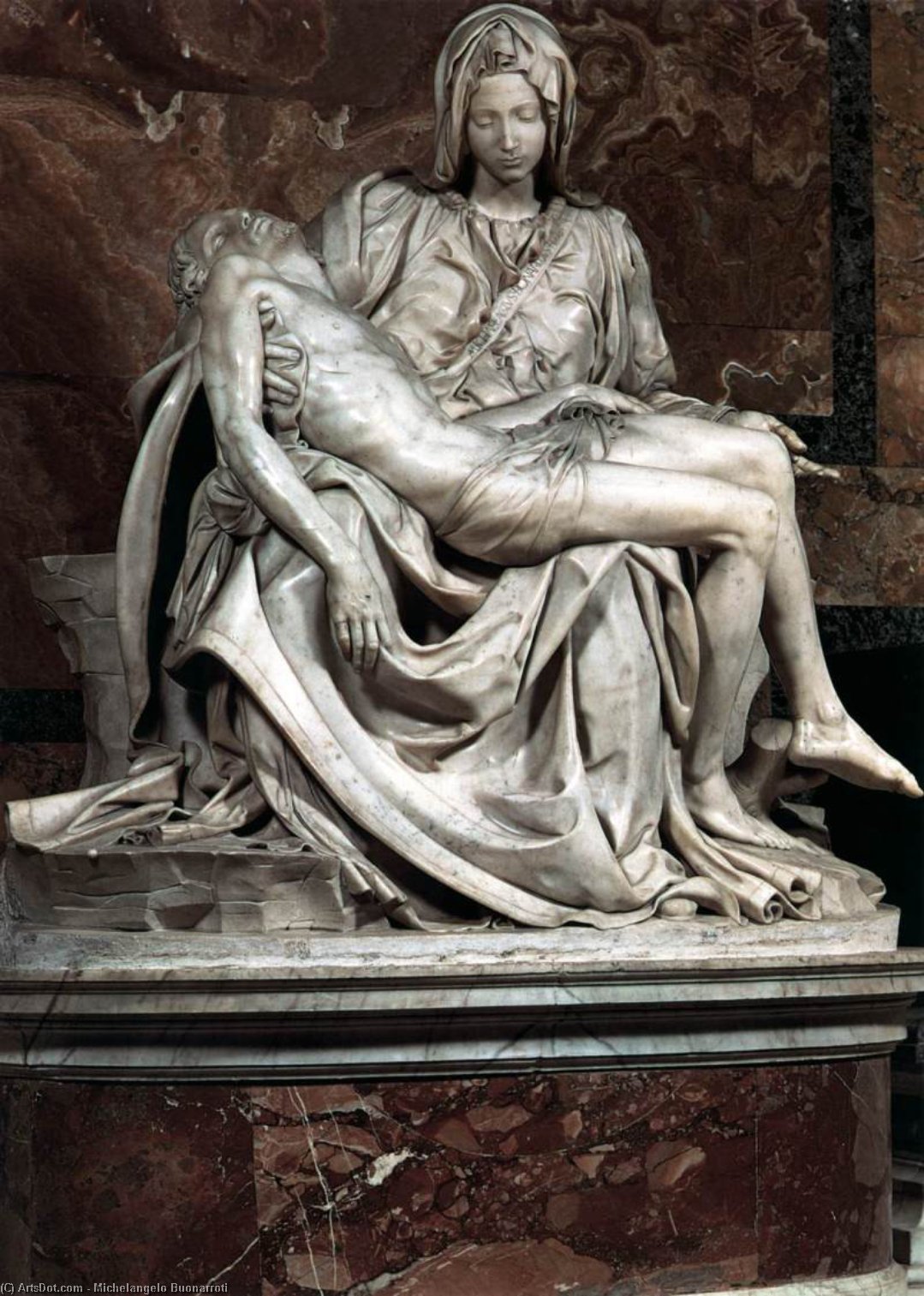
The Pietà: A Timeless Emblem of Sorrow and Divine Grace
The Pietà by Michelangelo Buonarroti stands as arguably the most poignant sculpture born from the Renaissance, an artwork that transcends mere representation to embody profound spiritual contemplation. Located within the solemn grandeur of St. Peter’s Basilica in Vatican City, this masterpiece continues to captivate viewers centuries after its creation, cementing its place among the pinnacles of Western art history.
The Artist's Vision and Inspiration
Michelangelo Buonarroti, a titan of his era—a sculptor, painter, architect, and poet—was profoundly influenced by Dante Alighieri’s *Divine Comedy*, specifically Virgil’s descent into Hell and Beatrice’s ascent to Paradise. This literary pilgrimage instilled in Michelangelo a fascination with the interplay between earthly suffering and divine compassion – themes that would permeate his artistic output. However, it was particularly Dante's depiction of Mary mourning Jesus after the crucifixion that ignited Michelangelo’s imagination. He envisioned Mary not merely as a grieving mother but as an embodiment of maternal grace and unwavering faith—a figure radiating serenity amidst unimaginable sorrow. This unique interpretation distinguishes Michelangelo’s Pietà from earlier depictions of the same scene, elevating it to a level of psychological depth rarely achieved in sculpture.
A Synthesis of Classical Beauty and Naturalism
Executed between 1498 and 1499 during his formative years as an artist—a period marked by intense experimentation and stylistic evolution—the Pietà exemplifies Michelangelo’s masterful synthesis of classical ideals with humanist observation. He meticulously studied the anatomical precision of Greek sculptures, particularly those depicting idealized human forms, striving to achieve a level of realism that mirrored the beauty inherent in divine grace. The sculpture's drapery is rendered with astonishing subtlety, conveying movement and texture—a testament to Michelangelo’s unparalleled skill in manipulating marble. Notice how the folds of Mary’s robe cascade downwards, creating an illusion of depth and emphasizing her posture as she cradles Jesus’s lifeless body. This careful attention to detail underscores Michelangelo's commitment to portraying human emotion with uncompromising honesty.
Historical Context: The Basilica of St. Peter’s and Papal Patronage
The Pietà’s commission by Jean Bilhères de Lagraulas, Cardinal of France, for his funerary chapel in Old St. Peter’s Basilica reflects the pervasive influence of papal patronage during the High Renaissance. Michelangelo was tasked with creating a monumental sculpture that would honor the deceased cardinal and serve as a powerful symbol of Christian faith—a project undertaken amidst the ambitious architectural endeavors of Bramante and Raphael to transform Rome into a new center of artistic splendor. The basilica itself, conceived as a testament to Christendom’s enduring power, became Michelangelo's canvas for conveying spiritual contemplation and commemorating sacred narratives.
Symbolism: Grief, Compassion, and Divine Redemption
Beyond its aesthetic brilliance, the Pietà is laden with symbolic significance—a visual meditation on themes of grief, compassion, and divine redemption. Mary’s serene expression contrasts sharply with Jesus’s lifeless posture, representing not despair but acceptance—the ultimate triumph over suffering. The positioning of Mary's hands—one gently supporting Jesus’s torso while the other cradling his feet—symbolizes her unwavering devotion to God and her selfless embrace of human sorrow. Michelangelo skillfully employs pyramidal composition—a technique borrowed from classical sculpture—to convey stability and grandeur, reinforcing the Pietà’s message of enduring faith and divine grace. The Pietà continues to resonate with audiences today because it speaks directly to the universal experience of loss and longing—a timeless reminder of humanity's capacity for compassion and its yearning for spiritual solace.
- Michelangelo Buonarroti:Pietà (detail)
- Michelangelo Buonarroti:Pietà
- Michelangelo Buonarroti:Pietà (detail)
For more information on Michelangelo and his works, visit
Michelangelo Buonarroti at ArtsDot.