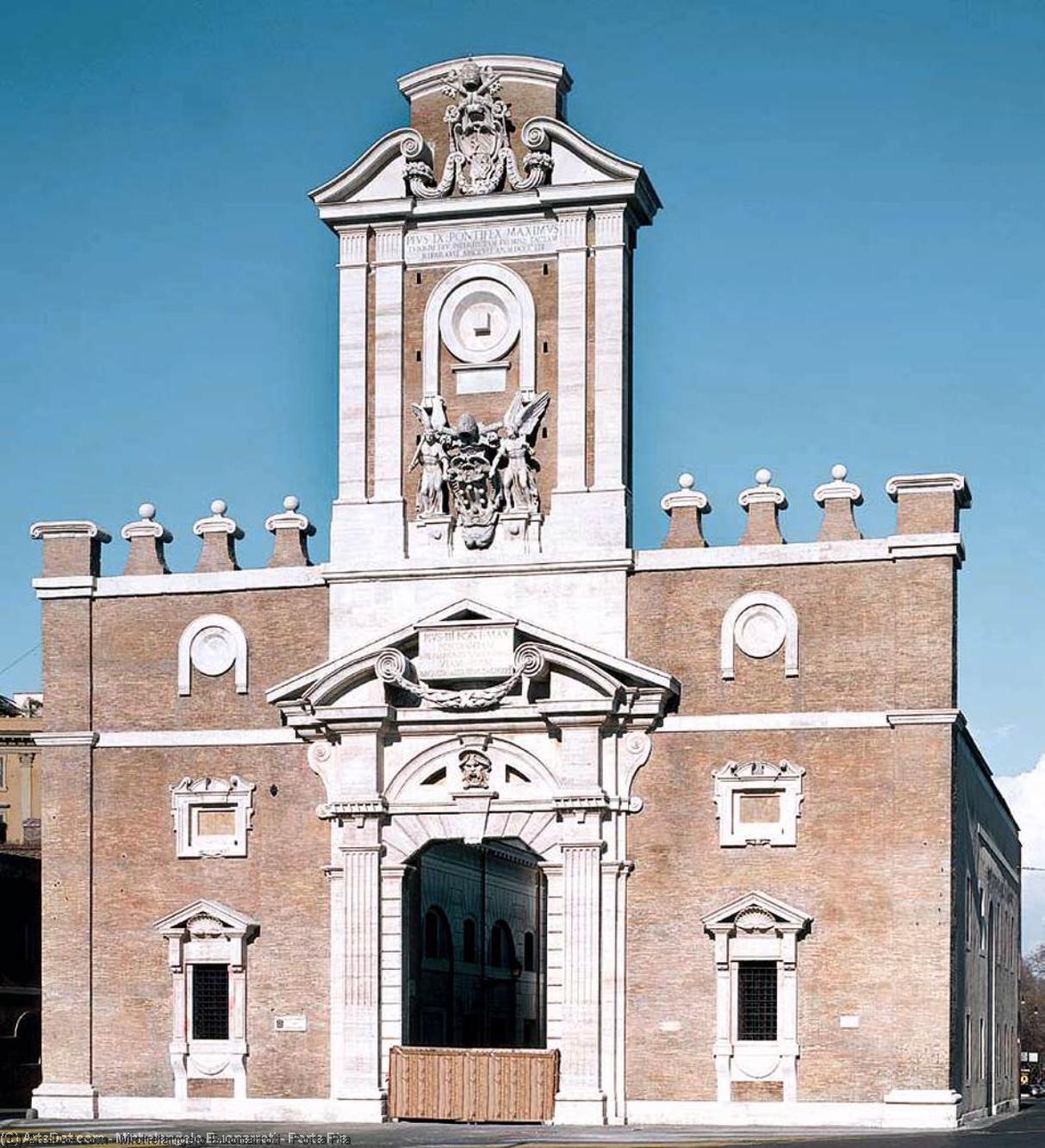
Porta Pia: Michelangelo’s Vision of Rome's Resilience
Michelangelo Buonarroti’s “Porta Pia,” completed in 1560, stands as more than just an architectural marvel; it embodies the spirit of Renaissance Rome and serves as a poignant symbol of papal authority amidst turbulent political upheaval. Commissioned by Pope Pius IV to commemorate the unification of Italy—a momentous occasion that solidified papal dominion—the monumental design represents Michelangelo’s masterful blend of classical ideals with humanist ambition. This ambitious project wasn't merely about constructing a grand gateway; it was about crafting an enduring testament to Rome’s strength and divine providence.
- Subject Matter: The Porta Pia, originally part of Aurelian Walls encircling ancient Rome, served as a powerful visual declaration of papal power. Its sheer scale underscored the Church's influence over the city and its unwavering belief in God’s protection.
- Style & Technique: Michelangelo employed meticulous pen and ink drawings combined with brown wash and gouache—a technique favored for conveying depth and texture—to capture the intricate details of the architectural design. The artist’s masterful draughtsmanship ensured that every curve, angle, and sculptural element was rendered with breathtaking precision.
- Historical Context: Constructed during Pius IV's reign, “Porta Pia” reflects the broader Renaissance preoccupation with reviving classical grandeur and celebrating civic virtue. It coincided with a period of significant political maneuvering as papal diplomacy sought to assert its dominance in the face of burgeoning nationalist sentiments.
Symbolism: The gateway itself is laden with symbolism, representing both earthly triumph—the unification of Italy—and spiritual ascension. The central clock tower symbolizes divine time and order, reflecting Michelangelo’s profound understanding of humanist philosophy and its connection to religious belief. Furthermore, the statues flanking the doorway embody idealized human form and intellect, mirroring Michelangelo's unwavering commitment to artistic excellence.
Emotional Impact: Viewing “Porta Pia” evokes a sense of awe and contemplation—a feeling reinforced by its monumental scale and masterful execution. The artwork’s serene beauty contrasts sharply with the tumultuous political landscape of its time, highlighting Michelangelo’s ability to convey profound emotion through restrained artistic expression. It serves as an enduring reminder of Rome's resilience and the transformative power of art to inspire belief and celebrate human achievement.
Further Exploration
For a deeper understanding of Michelangelo Buonarroti and “Porta Pia,” consider visiting
ArtsDot’s comprehensive resource on Porta Pia or delving into biographical information about Michelangelo Buonarroti at
Michelangelo Buonarroti’s Artist Database. You can also admire a high-quality reproduction of “Porta Pia” at
Porta Pia – Rome’s Historic Aurelian Gate and discover related articles on Michelangelo's artistic legacy.