A Glimpse into Genius: The Sistine Chapel Nude Study
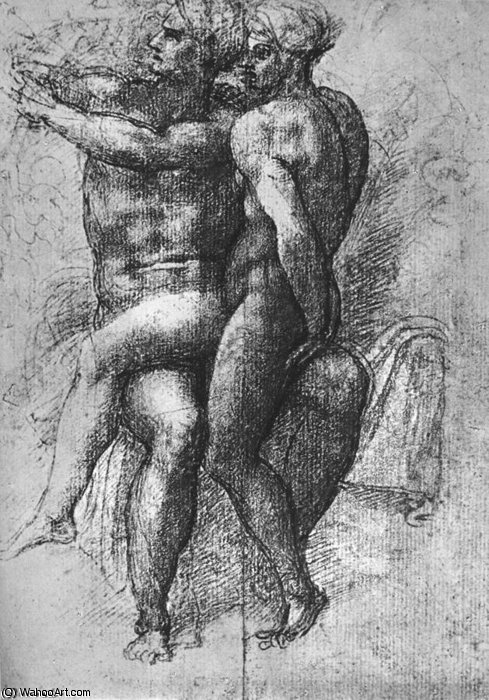
Michelangelo Buonarroti's “Sistine Chapel Nude Study,” a remarkably intimate black-and-white drawing, offers an unparalleled window into the creative process of one of history’s greatest artists. Far removed from the monumental frescoes that define his legacy, this study reveals a meticulous exploration of human anatomy and movement—a foundational sketch brimming with potential for the grand narrative unfolding in the Sistine Chapel ceiling. Dating back to around 1508-1512, during the early stages of his ambitious project, it’s not merely a preparatory drawing; it's a testament to Michelangelo’s relentless pursuit of perfection and his profound understanding of the human form.
The study depicts two male figures in dynamic poses, caught mid-gesture. Their bodies, rendered with astonishing anatomical accuracy, are not idealized or heroic but possess a raw, almost vulnerable quality. The figures engage in an unspoken interaction—one gesturing upwards, seemingly inviting attention, while the other offers support or responds with a subtle shift in posture. This interplay of movement and gesture immediately draws the viewer in, suggesting a narrative tension and hinting at the complex stories Michelangelo intended to weave within the chapel’s vast expanse. The composition is tightly framed, focusing on the upper bodies and portions of their legs, emphasizing the power and grace of the human form.
Line as Sculpture: Technique and Texture
What immediately captivates the eye is Michelangelo's masterful use of line. Executed in charcoal—likely a medium he favored for preliminary sketches—the drawing relies almost entirely on hatching, cross-hatching, and varying line weights to build volume and texture. These techniques aren’t simply employed to outline form; they are integral to creating a sense of three-dimensionality. The density of the lines varies dramatically, suggesting the contours of muscle, drapery, and bone with remarkable precision. The artist's hand moves across the paper with confident energy, layering lines that create a palpable sense of volume and surface quality—as if the figures were sculpted directly from stone.
Notably, there’s no color present in this study, reinforcing its function as a conceptual exploration. The monochromatic palette amplifies the focus on form and line, allowing viewers to appreciate the subtle nuances of Michelangelo's technique. The stark contrast between light and shadow further enhances the dynamism of the figures, highlighting their musculature and creating an illusion of depth.
Symbolism and the Genesis of a Masterpiece
While seemingly simple in its subject matter—two nude male figures—the “Sistine Chapel Nude Study” is rich with symbolic potential. These figures are widely believed to represent biblical or mythological characters destined for inclusion within the larger fresco cycle. Their poses, imbued with strength and vitality, foreshadow the heroic narratives that would adorn the chapel’s ceiling. The study itself embodies a crucial stage in Michelangelo's creative process—a moment of intense investigation and refinement before committing his vision to the monumental scale of the frescoes. It speaks to the artist’s desire to understand not just *what* he wanted to depict, but *how* to depict it with unparalleled skill and emotional resonance.
Considering Michelangelo's broader context within the Renaissance, this study is a powerful reminder of his commitment to classical ideals—particularly the study of human anatomy. His deep engagement with Greek and Roman sculpture informed his understanding of proportion, perspective, and the expressive potential of the human body. The “Sistine Chapel Nude Study” stands as a testament to that influence, offering a rare glimpse into the mind of a genius at work.
A Reproduction for Art Lovers and Collectors
ArtsDot offers meticulously crafted hand-painted reproductions of this extraordinary study, capturing its intricate detail and emotional depth with unparalleled fidelity. Whether you’re an art historian, a collector seeking to expand your collection, or simply an admirer of Michelangelo's genius, our reproduction provides a beautiful and authentic representation of this pivotal work. Experience the power and grace of Michelangelo’s hand firsthand—a timeless masterpiece brought to life through the artistry of our skilled painters.