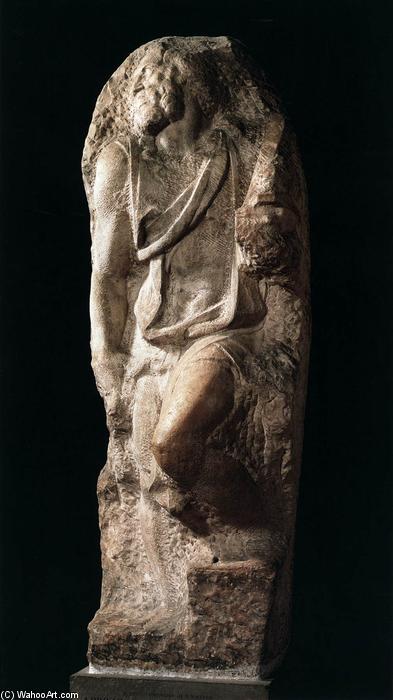
Michelangelo Buonarroti: A Renaissance Titan
Michelangelo Buonarroti (1475–1564) stands as one of the towering figures of the High Renaissance, an artist whose unparalleled mastery of sculpture and painting irrevocably shaped Western art history. Born in Caprese Michelangelo, Tuscany, his early life was marked by a father who initially resisted artistic pursuits but ultimately yielded to his son’s extraordinary talent for drawing—a pivotal moment that ignited a lifelong passion for creative expression. At the tender age of thirteen, he embarked on an apprenticeship with Domenico Ghirlandaio in Florence, absorbing foundational techniques of fresco painting and honing his observational skills. Yet, it was sculpture that truly captivated Michelangelo's soul, propelling him to study classical sculptures in the Medici gardens—a formative experience that instilled within him a profound appreciation for idealized human form and proportion.
- Early Training: Domenico Ghirlandaio’s workshop provided invaluable experience in fresco painting.
- Classical Influence: Studying sculptures in the Medici Gardens fostered an understanding of classical ideals.
The David Controversy
Perhaps Michelangelo's most celebrated achievement—the colossal statue of David (1501–1504)—became a symbol of Florentine republican values during the tumultuous period preceding the Sack of Rome in 1527. Crafted from Carrara marble, David embodies strength, courage, and moral virtue—qualities that resonated deeply with humanist thinkers of the era. The statue’s dynamic pose—a deliberate departure from traditional depictions—captures a moment before David confronts Goliath, conveying an intense concentration and anticipation. Despite initial skepticism regarding its artistic merit, David swiftly ascended to iconic status, cementing Michelangelo's reputation as a visionary sculptor who dared to challenge conventions.
- Symbolism: David represents Florentine republican ideals and embodies courage.
- Dynamic Pose: The statue’s pose captures anticipation before confronting Goliath.
The Sistine Chapel Ceiling
Michelangelo's monumental fresco cycle adorning the ceiling of St. Peter's Basilica—the Sistine Chapel—represents arguably his most ambitious artistic undertaking and remains one of the greatest achievements in Western art. Commissioned by Pope Julius II, Michelangelo labored tirelessly for four years under grueling conditions to depict scenes from Genesis, capturing biblical narratives with breathtaking detail and expressive dynamism. The frescoes’ vibrant colors—primarily reds, blues, and yellows—create a dramatic visual experience that transports viewers into the realm of divine creation. Michelangelo's masterful use of perspective and anatomical accuracy underscores his unwavering commitment to realism while simultaneously conveying profound theological themes.
- Technique: Michelangelo employed fresco painting with meticulous attention to detail and perspective.
- Theological Themes: The frescoes explore biblical narratives and convey divine creation.
Legacy and Influence
Michelangelo Buonarroti’s influence on subsequent generations of artists is undeniable—his sculptural innovations, compositional principles, and stylistic refinements continue to inspire creativity today. He elevated sculpture to new heights of artistic expression, establishing a standard for anatomical accuracy and emotional depth that endured for centuries. Furthermore, Michelangelo's exploration of humanist ideals—characterized by rational thought and reverence for human beauty—contributed significantly to the intellectual landscape of the Renaissance. His enduring legacy serves as a testament to his genius and his transformative role in shaping Western artistic tradition.
- Sculptural Innovation: Michelangelo revolutionized sculpture with anatomical accuracy and emotional depth.
- Humanist Ideals: His work championed rational thought and reverence for human beauty.
For more information on Michelangelo Buonarroti, visit Michelangelo Buonarroti on Wikipedia.