A Moment Frozen in Marble: The Soul of Michelangelo’s Preparatory Vision
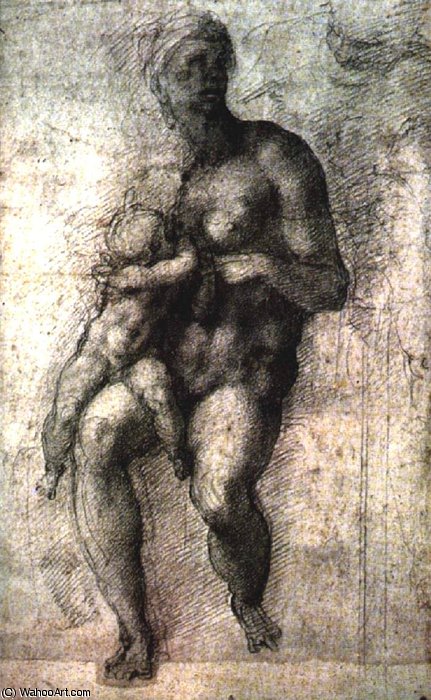
To gaze upon Michelangelo Buonarroti’s "Study for a Madonna and Child" is to witness the very heartbeat of the High Renaissance captured in a moment of profound stillness. Though often viewed through the lens of a black and white photograph, this preparatory sketch transcends its monochromatic medium, offering a rare, intimate glimpse into the mind of a master. The artwork presents a tender, almost sacred communion between a mother and her infant, where the weight of the child is balanced by the grace of the woman’s embrace. It is not merely a study of figures, but an exploration of maternità—the divine tenderness that bridges the gap between the earthly and the celestial. For the collector or the lover of classical beauty, this piece serves as a window into the raw, unpolished genius that preceded some of history's most monumental marble masterpieces.
The technical brilliance of this study lies in Michelangelo’s unparalleled command of disegno. Even in this preliminary stage, one can perceive his relentless pursuit of anatomical truth. The artist does not merely draw lines; he carves them into the paper, using subtle tonal gradations and masterful shading to suggest the soft musculature of a newborn and the protective strength of the Madonna. His devotion to the study of human anatomy—a practice involving the rigorous dissection of cadavers—is evident in the way light and shadow dance across the contours of the figures. This meticulous approach creates a sense of three-dimensional volume, making the figures feel as though they possess the weight and presence of stone, foreshadowing the breathtaking realism of his later sculptures like the Pietà.
Historical Resonance and the Spirit of the Renaissance
Created during the transformative years of approximately 1503–1504, this study emerged from the vibrant, humanist atmosphere of Florence. It was an era defined by the rediscovery of classical antiquity, where the patronage of the Medici family fueled a revolution in artistic thought. Michelangelo, deeply influenced by the unearthed Greek and Roman sculptures of his youth, sought to imbue his subjects with both physical perfection and spiritual depth. In this study, we see the echoes of that classical influence blended with a burgeoning Christian mysticism. The composition, though fragmentary, suggests a larger, more complex narrative, inviting the viewer to speculate on the divine figures that might have inhabited the surrounding space.
For those looking to integrate such a profound piece into a curated interior, "Study for a Madonna and Child" offers an unparalleled emotional anchor. Its monochromatic palette provides a sophisticated, timeless elegance that complements both minimalist modern spaces and richly textured classical rooms. It is a piece that demands contemplation, acting as a focal point that invites quiet reflection and conversation. Whether displayed as a high-quality reproduction in a sunlit study or as part of a larger gallery wall, this artwork brings with it the enduring legacy of the Renaissance—a testament to the eternal beauty of human connection and the divine spark found within the simplest of gestures.